









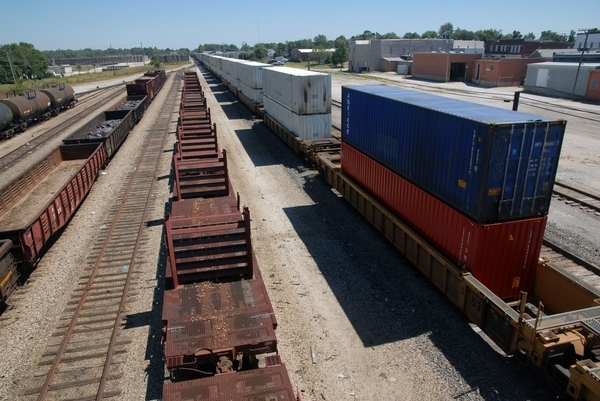
Dangerous goods currently account for approximately 8% of the total mass of all transported cargo in Poland, which applies to both road and rail transport. Rail transport, due to its specific traffic organization and safety measures, is particularly predisposed to this type of transport.
In order to limit potential incidents (leaks, spills, or violent reactions in the case of explosives) caused by various reasons during transport, we are guided by very detailed regulations. These regulations are subject to constant modification forced by technical progress and the emergence of new technological solutions that allow for increasing the level of transport safety. Political situations also create new, previously unknown threats. An example could be the 2001 attacks on the WTC in New York. Since then, it has been noted that some transported goods can be used by terrorists to cause massive devastation to the environment and pose threats to the population. A group of goods called high-consequence dangerous goods (HCDG) has been identified. The transport of these goods is carried out in compliance with additional procedures. The second trend in the technology of transporting dangerous goods is the effort to protect cargo against excessive longitudinal forces in crisis situations, such as wagon collisions. Improvement of the situation can be achieved through the use of a new generation of buffers with increased energy dissipation capacity. Safety can also be guaranteed by applying new systemic procedures and programs, risk assessment methods, and the implementation of the ISO 31000 system. Since 2001, new Safety Management System (SMS) standards have been applied. The purpose of this paper is to draw attention to trends in the field of ensuring higher safety for the transport of dangerous goods in rail transport than before.
Regulations governing the rail transport of dangerous materials
The beginning of organizing the rules for the transport of dangerous goods was initiated by the United Nations in the form of Guidelines for the development of a catalog of dangerous materials subject to transport, the so-called Orange Book. This book contains an organized list of approximately 3,000 chemical substances that can be transported provided that detailed procedures regarding packaging, positioning in means of transport, labeling, handling methods, and transport technology are followed. The catalog of these substances assigns each substance an appropriate classification number and defines the primary and secondary hazards associated with that substance in the event of its release into the natural environment. This catalog became the basis for developing procedures for handling dangerous materials during packaging, loading, handling, unloading, and transport.
The article contains 27,220 characters.
Source: Logistyka Magazine