











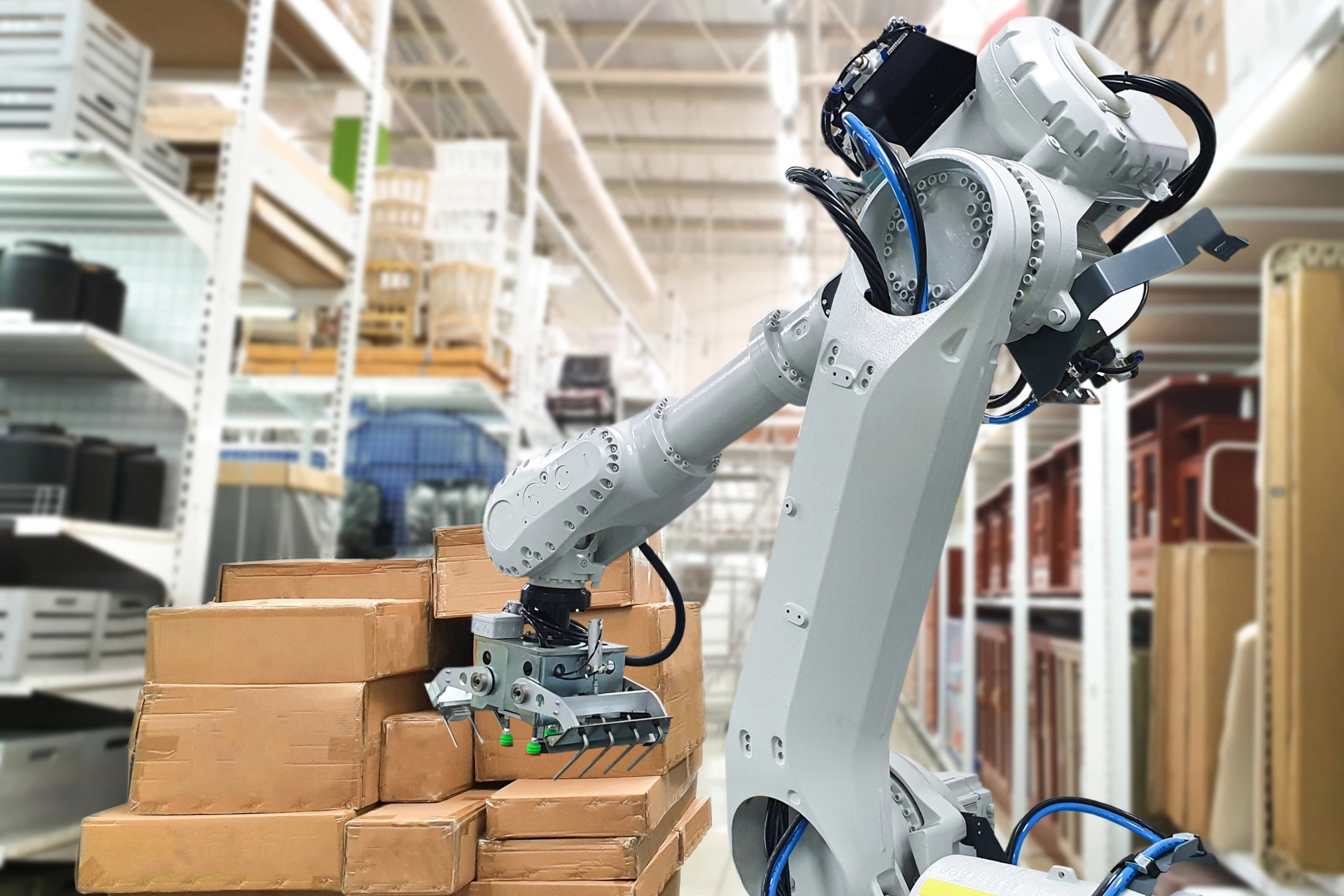
The constantly growing share of post-productive age people in society and the shrinking base of professionally active individuals are causing automation and robotization to accelerate significantly. Experts reassure that this does not mean job cuts, but rather adapting operations, especially in production, warehouses, and logistics centers, to the needs of a changing world and labor market. For employees, this may mean the need to develop new competencies, but also an opportunity for growth – emphasize IKEA experts.
Robotization and automation are crucial for our operations, and at the same time, they result from the demographic challenges we face. There is a growing shortage of workers willing to work on the production floor. Therefore, even though the automation of our factories has been important for many years, we have now significantly increased the pace of its implementation.
– says Małgorzata Dobies-Turulska, President of IKEA Industry Poland and Managing Director of IKEA Industry Zbąszynek, in an interview with the Newseria agency.
Data from Statistics Poland (GUS) shows that the percentage of the population of post-productive age in Poland increased from 7 percent in 1950 to almost 24 percent in 2024. According to population projections, by 2060, people aged 65 and over will account for about 30 percent of the population, and their number will increase by 2.5 million compared to 2022. The number of professionally active people in the fourth quarter of 2024 was over 17.8 million, which was 56,000 lower than in the third quarter of 2024 and 128,000 lower compared to the fourth quarter of 2023.
At IKEA, we constantly strive to maintain the affordability of our products while upholding the principles of democratic design. This means that our products are not only functional and aesthetic but also sustainable. Our commitment to automating production processes allows us to introduce innovative materials and solutions, which translates into improving the quality of our products. By optimizing production efficiency, we are able to react faster to changing market demands, ensuring that our customers’ needs are always met.
– explains Małgorzata Dobies-Turulska.
According to plans announced a few years ago, IKEA plans to automate 800 workstations worldwide by the end of 2025. In the case of the factory in Zbąszynek, investments in this area will allow reaching an automation level of around 80–85 percent. Another example is the use of robots in the warehouse in Wiskitki near Warsaw, which are used to fulfill parcel orders from across the country.
According to the “2025 Labor Market Barometer” by Gi Group, 41.6 percent of companies in Poland have implemented automation solutions, and 23.5 percent are planning such actions. Among the barriers they encounter, they mention technical limitations, lack of knowledge among management, or high costs. Among employees, opinions on new technologies are divided. 32 percent are not afraid of the consequences of technological changes, but 18 percent fear losing their jobs because of them.
The accusation often arises that automation threatens employees by taking away their jobs. This is not true. Changing demographic trends affect the availability of workers, and competitive advantage translates into the ability to increase production and development. Automation significantly contributes to making the jobs we offer more attractive and ergonomic, which makes the work easier. Generational diversity in the workplace is an additional asset – automation enables the employment of both younger and older workers. Being an operator can be an interesting job, requiring appropriate competencies but not requiring great physical effort, which is beneficial for older people.
– argues the President of IKEA Industry Poland.
The aforementioned report shows that although 28 percent of employees use artificial intelligence in their daily work, access to knowledge is still limited. Every third employee rates education as insufficient, and 23 percent have no opportunity at all to learn about these technologies at work. Therefore, experts point to the need to invest in new employee competencies.
Changing competencies is one aspect, but in the era of digitalization, automation, and artificial intelligence, the growing role of leadership is noticeable. The ability to listen and identify the needs of employees is becoming a unique competency. It is important that leaders focus on connecting people and setting directions for development and work.
– assesses Małgorzata Dobies-Turulska.
IKEA Industry owns over 30 factories in seven countries and employs 15,000 people. In Zbąszynek, there is the world’s largest complex of furniture factories, consisting of five plants in the neighboring towns of Zbąszyń, Zbąszynek, and Babimost in western Poland, employing a total of nearly 3,000 people.
Source: Newseria