










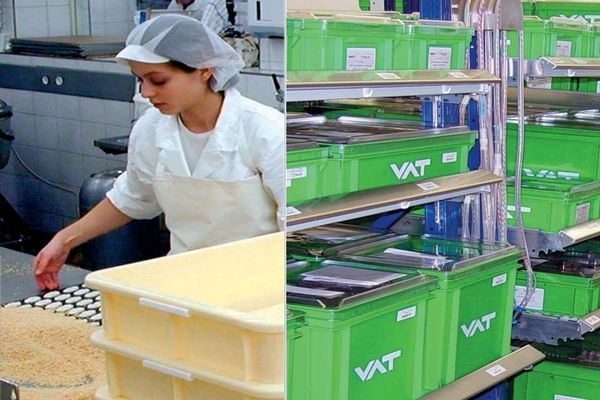
Although single-use packaging and containers are still most commonly used in logistics, transport, shipping, and warehousing, their disposal and recycling remain a significant burden for consumers. Less popular, yet offering many advantages, reusable plastic packaging can save a great deal of time and resources for any enterprise.
Reusable packaging logistics
A few years ago, this concept was virtually unknown. Today, however, reusable packaging logistics is gaining increasing interest. Single-use containers most commonly used in trade, transport, production, or warehousing generate constant, high costs associated with their procurement, disposal, and shipping. The proper choice of packaging, integration into existing logistics chains, and optimal management of load carriers, especially in retail, have become a factor in a company’s success. Using systems that utilize more durable and convenient packaging is economically beneficial for every company. In the era of compliance with EU regulations, they also gain an advantage in terms of ecology. The idea behind plastic container systems allows for their repeated use – even after wear or damage, the containers can be processed into regranulate and used to produce new ones.
– Unlike single-use packaging, such as cardboard packaging, reusable systems made of plastic can create a closed-loop circuit during their use between the goods manufacturer and the logistics center, distributor, or retail outlet. Reusable containers can function in such a circuit for 5 to 20 years – says Wojciech Bytner from Utz Group.
Such solutions not only streamline shipping procedures and the logistics of trade and production but also bring measurable savings to the company’s budget. However, they must be viewed comprehensively.
Cheaper in the system
When evaluating packaging solutions, a common mistake is to compare or assess only the direct prices of different types of packaging. When comparing the most frequently chosen cardboard with plastic, or simply single-use packaging sets with reusable systems, one cannot limit oneself to the costs associated with purchasing the packaging. Real savings for a company can be brought by comprehensive solutions that increase direct expenditure but reduce fixed expenses in the continued use of logistics systems.
– This problem also concerns new production plants, large warehouses, and logistics centers being built in our country. These facilities, which look impressive and modern from the outside, are often equipped with modern production lines or racking systems, but it is completely forgotten to equip them with equally modern pallet or plastic container systems – adds Wojciech Bytner.
Long-term benefits that should determine the business plan of every enterprise include many factors. Well-chosen reusable container systems significantly simplify the packing process and thus reduce relevant handling costs. Reusable systems also provide a benefit to the client using the services of a logistics center or cooperating with a regular supplier of production components, because the problem of collecting and then disposing of packaging is eliminated. The client can simply send the containers and all filling material used to secure the packed goods back to the forwarder, or the supplier collects the containers themselves during the next delivery. An example of a company truly benefiting from such a solution is the Swiss self-service store chain Migros, which, after switching from cardboard packaging to an appropriate plastic container system, saves 60,000 tons of single-use packaging materials annually.
– Reusable sets within a system such as a “pool system” reduce the storage of packaging materials and thus lower the costs associated with warehouse operations. Additionally, expenses for the disposal of used packaging materials such as paper, wood, styrofoam, or foil are significantly reduced – explains Wojciech Bytner.
Modern and intelligent logistics
Specialized plastic packaging systems are not only more economical and durable solutions; they are primarily more convenient and easier to adapt than traditional materials. The containers available on the market, by using multiples of standard 1200×800 mm Euro-pallet dimensions, gain an advantage over them through factors such as a reinforced double bottom and a more stable construction. Wooden pallets themselves can also be replaced with a more ecological solution. Plastic pallets are increasingly appearing in the production process in various sectors of the food or pharmaceutical industry, where high hygiene requirements apply. Thanks to their design and durability, they are perfectly suited for use in logistics centers and warehouses equipped with pallet racking. The pallet has no external cutouts or ribs where dirt and water residues could collect after cleaning. On high-bay racks, the pallet – reinforced inside with a steel pipe – can easily be loaded with goods up to 1000 kg. However, the most popular are containers that facilitate not only the transport and storage of goods but also the storage of the containers themselves when they are not in use.
– Without foldable container systems, transport and order picking can no longer be imagined. Thanks to their obvious advantages, they can successfully replace single-use packaging. When filled, they provide their contents with optimal protection in the warehouse or during transport. On the other hand, the volume of empty ones is reduced by 75% while maintaining the same number of containers. With a few simple movements, they can be folded flat, and they wait for their next use while taking up little space – says Wojciech Bytner.
Economical and ecological logistics
Plastic container and pallet systems have become an indispensable piece of equipment for high-bay warehouses and production plants in various sectors of European enterprises. The benefits of their use should also be recognized as early as possible in Poland. Thanks to their durability and the possibility of applying a completely new approach to logistics and warehousing, companies involved in distribution, trade, and storage have a chance to obtain measurable benefits from savings on the constant, high costs of procuring and disposing of single-use materials.
– One should also remember the important aspect, not only financial but also ecological. We reduce the use of wood and paper; plastic containers used in a closed loop are processed into regranulate after their life cycle ends and reused for production – adds Wojciech Bytner.
Reusable plastic containers and packaging are of particular importance where warehouses are operated by automated systems and various types of conveyors. They also work well where requirements regarding hygiene and the reduction of losses of transported products are set.