











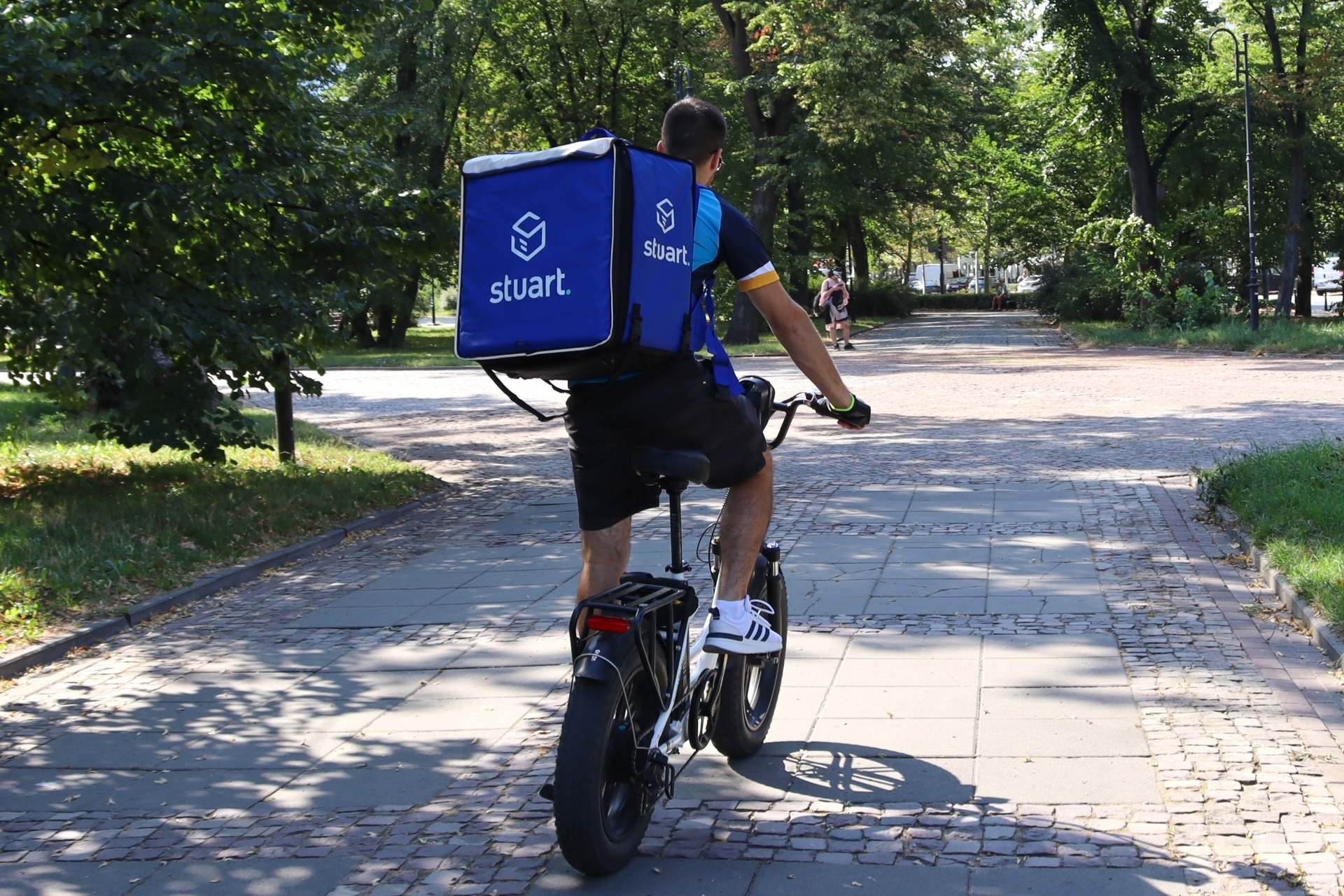
According to a study conducted by Stuart, every second Polish retailer declares that their customer delivery offer needs improvement. Where should they look for opportunities to improve? Retailers are struggling with challenges related to the need for innovation and shortening order fulfillment times. Meanwhile, for nearly half of the companies, delivery takes anywhere from several business days to over a week. At the same time, the fact that just as many respondents declare a need to deepen their knowledge about possible improvements may indicate that the market is ready for transformation.
Shortcomings and errors in logistics are not just an organizational issue, but real losses. From abandoned shopping carts to declining customer satisfaction – inefficient logistics can affect financial results, which many companies persistently ignore. Interestingly, however, half of retailers admit that improvements in delivery could increase their revenue or minimize losses, which for one in three currently amount to tens of thousands of zlotys annually – according to the study “(Un)Delivered Trust. When logistics runs out of breath?” from the logistics platform Stuart.
One in three consumers today prioritizes speed in the context of deliveries, which is becoming even more important in large cities and for “on-demand” purchases, such as food, cosmetics, or essential products. Meanwhile, delivery within 30 minutes is offered by only 6 percent of the surveyed companies, and same-day delivery is the domain of one in four. The rest still operate on a 2–3 day or longer model. This is a clash of two worlds – the habits of retailers and the growing expectations of consumers.
Cost versus time
The most expensive option – according to as many as 44 percent of respondents – turns out to be their own delivery channel, even though it is the one that provides the greatest flexibility and best meets customer needs regarding fulfillment time. Right behind it is… traditional delivery with a multi-day fulfillment time, indicated by over 1/3 of respondents as expensive. The study clearly shows: merchants, wanting to meet customer expectations, often face a difficult choice between speed and profitability.
Retailers who decide to act on their own often face many difficulties such as high costs of hiring a driver, purchasing a vehicle, or its potential repair. Many of them do not see a more effective model while wanting to meet expectations regarding fulfillment time. They are caught between a rock and a hard place, while the solution often lies right next to them, because the market has already moved on. That is why they appear, for example, on websites and marketplaces, but also establish cooperation with a logistics partner with an external fleet of vehicles and couriers. In this way, they gain deliveries in the spirit of q-commerce, without the need to build infrastructure from scratch. They maintain autonomy while limiting costs and obligations. It is also worth reminding many that q-commerce works not only in the catering and food industry. Books, cosmetics, clothes – all this can be delivered on the same day today.
– comments Agnieszka Majewska, General Manager at Stuart.
As the study shows, companies also prefer a hybrid approach. Every second retailer already uses several delivery channels in parallel, trying to find a balance between costs, speed, and availability. Many of them are also looking for ways to increase flexibility and independence without having to invest in full infrastructure.
It is therefore not surprising that 57 percent of the surveyed merchants declare a willingness to expand their knowledge about express logistics and its innovative solutions. This shows that many companies are ready for change – they are just looking for the right tools, partners, and business models that will allow them to raise the level of service without unnecessary costs and sacrifices.
Source: Stuart