











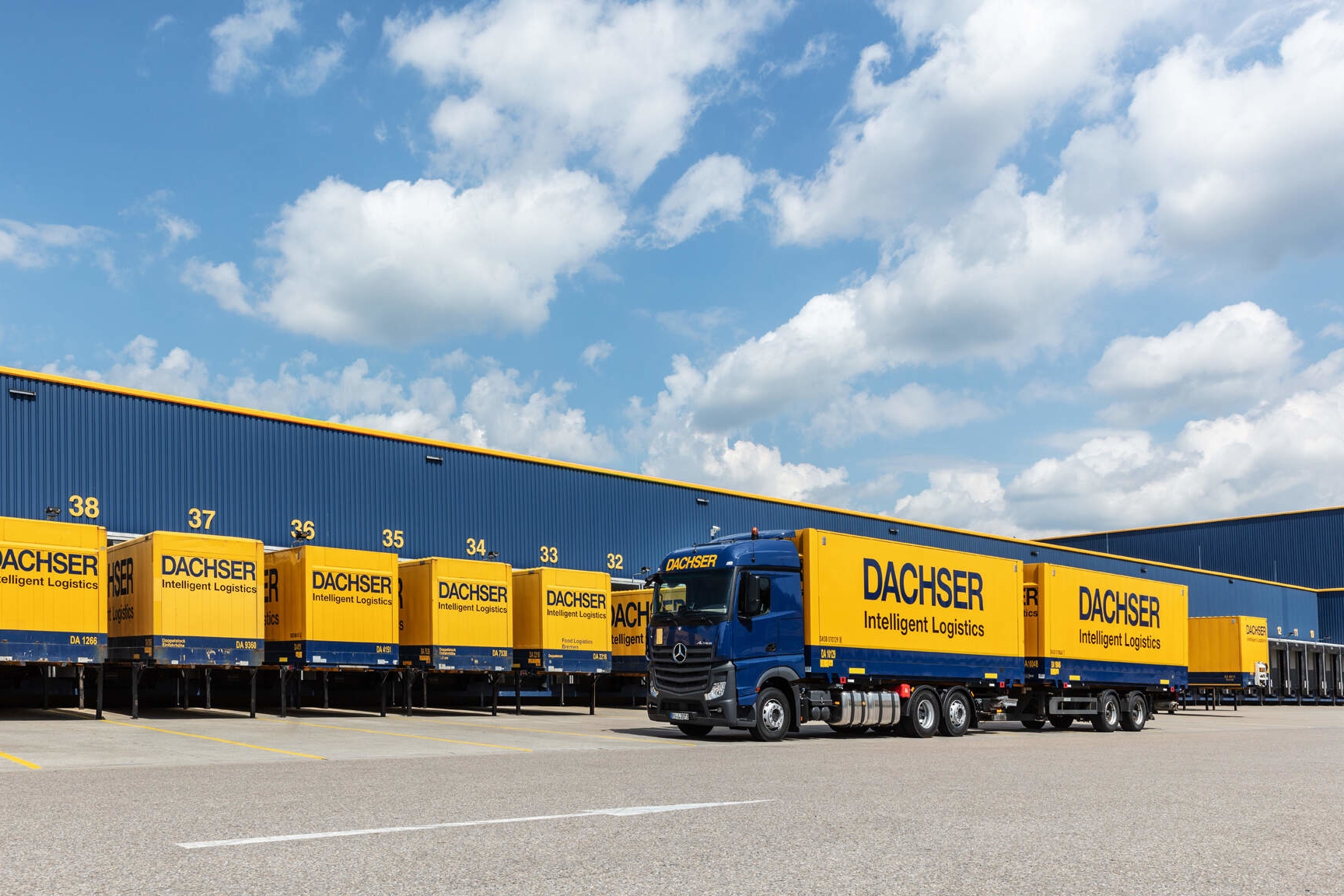
In the face of growing pressure on global supply chains and economic instability, the implementation of flexible and integrated logistics solutions is becoming crucial. Conflicts, geopolitical tensions, and customs barriers highlight the fragility of international goods flows. An example of an effective response to these challenges is the cooperation between Lenze – a company specializing in industrial automation – and the global logistics operator DACHSER.
Lenze SE is a global company offering mechatronic products, automation systems, software, and cloud and IoT solutions. As Gregor Wiesinger, Sales Manager Area West Austria at DACHSER Air & Sea Logistics, explains, advanced logistics plays a key role here, as Lenze must import components from all over the world and deliver finished products to global markets.
Flexible logistics changes the rules of the game
The company places special emphasis on the efficiency and transparency of logistics processes.
In practice, this means that delivery routes must be as short as possible, easy to plan, and trackable in real time. Components must arrive on time to reduce the need for inventory storage, and finished machines and systems must reach customers on schedule.
– says Markus Gerhart, Sales Executive, European Logistics DACHSER Austria.
That is why Lenze relies on flexible solutions and trusted partners. DACHSER offers Lenze comprehensive “door-to-door” transport solutions, combining sea freight less-than-container load (LCL) with efficient road transport in Europe. LCL means shipments smaller than a full container, which allows for more frequent shipments without waiting for a full load to be consolidated. “Thanks to LCL, our global supply chain remains flexible and predictable,” emphasizes Wiesinger. Regular connections between Asia and Europe ensure consistency, reduce costs and carbon footprint, and limit the need for storing large inventories.
Integration of different modes of transport
To understand the effectiveness of the cooperation between Lenze and DACHSER, it is worth looking at the logistics process. Automation system components are shipped from China to the Lenze plant in Asten (Austria). They first reach Shanghai and Ningbo, where they are labeled, and then travel by sea to Europe. After unloading at the port, the containers go directly onto freight trains to Austria, bypassing traffic jams and congestion at ports. In Hörsching, the goods reach the DACHSER logistics center, from where they are sent to the production plant in Asten. Finished products are then delivered to customers in Western and Central Europe. “DACHSER Road Logistics handles between 20,000 and 24,000 shipments annually from the Austrian Lenze plant,” says Gerhart. Wiesinger emphasizes that a major advantage of the cooperation is that shipments do not leave the DACHSER network after being loaded in Asia – which ensures full transparency up to the destination, including customs clearance.
Transparency at every stage
The foundation of success is the digital integration of both companies’ IT systems – all data, orders, and shipment statuses are exchanged electronically, which enables real-time tracking of shipments and a quick response to potential delays. “Transparency in the supply chain is our priority. Thanks to intelligent shipment management, we have full control over the flow of materials,” says Zijad Besic, Supply Chain Manager at Lenze.
Resilience in times of crisis
In an era of global crises, rising freight costs, or container availability issues, the logistics model combining LCL sea freight, rail, and road transport has allowed Lenze to maintain supply continuity. In urgent cases, critical components were delivered by air.
Our cooperation with DACHSER is based on direct, partner-like contact that goes beyond standard video conferences. Only in this way can trust be built and the efficiency of logistics processes be ensured. Close cooperation allows us to constantly focus on quality and the realization of common development goals.
– concludes Besic.
Source: Dachser