








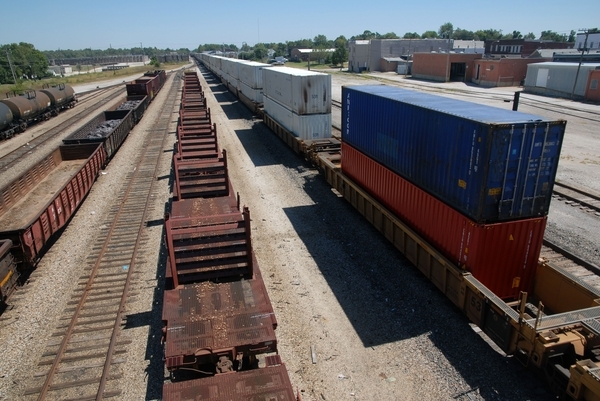
An analysis of documents such as the White Paper and the Blue Paper shows that EU policymakers treat the development of intermodal transport as one of the alternatives for sustainable transport development in Europe, especially in the face of constantly increasing road traffic and the need for better utilization of the existing rail transport network in the area of freight transport.
The promotion of rail-road intermodal transport is currently an integral part of transport policy in the EU, as well as in the USA. Implementation requires not only the introduction of new methods to stimulate the development of this form of freight transport but also the restructuring of the currently existing, heavily subsidized system. Intermodal transport operators are currently facing challenges regarding how to effectively compete with road hauliers, especially in terms of service quality. A decisive qualitative leap is required. One such problem is answering the question of how to better control and manage the intermodal transport network.
Transport technologies in the intermodal transport network
The development of rail-road intermodal systems in Europe has led in practice to the development of four basic transport technologies in the intermodal transport chain:
- direct train system,
- linear train system,
- feeder system,
- hub-and-spoke train system.
Furthermore, within the transport process organization systems presented above, some researchers additionally distinguish several subsystems.
The basic paradigm in the organization of rail-road transport is the direct train system, organized as part of the so-called night jump, running between large intermodal terminals.
Starting from the 1980s in Germany, and then in the 1990s in the Netherlands, this system became dominant, connecting maritime terminals with large terminals located deep within the European continent. Both in terms of economics and organization, the direct train system is the most favorable solution and is readily used by intermodal transport operators. (…)
The article contains 16,619 characters.
Source: Logistyka Magazine