








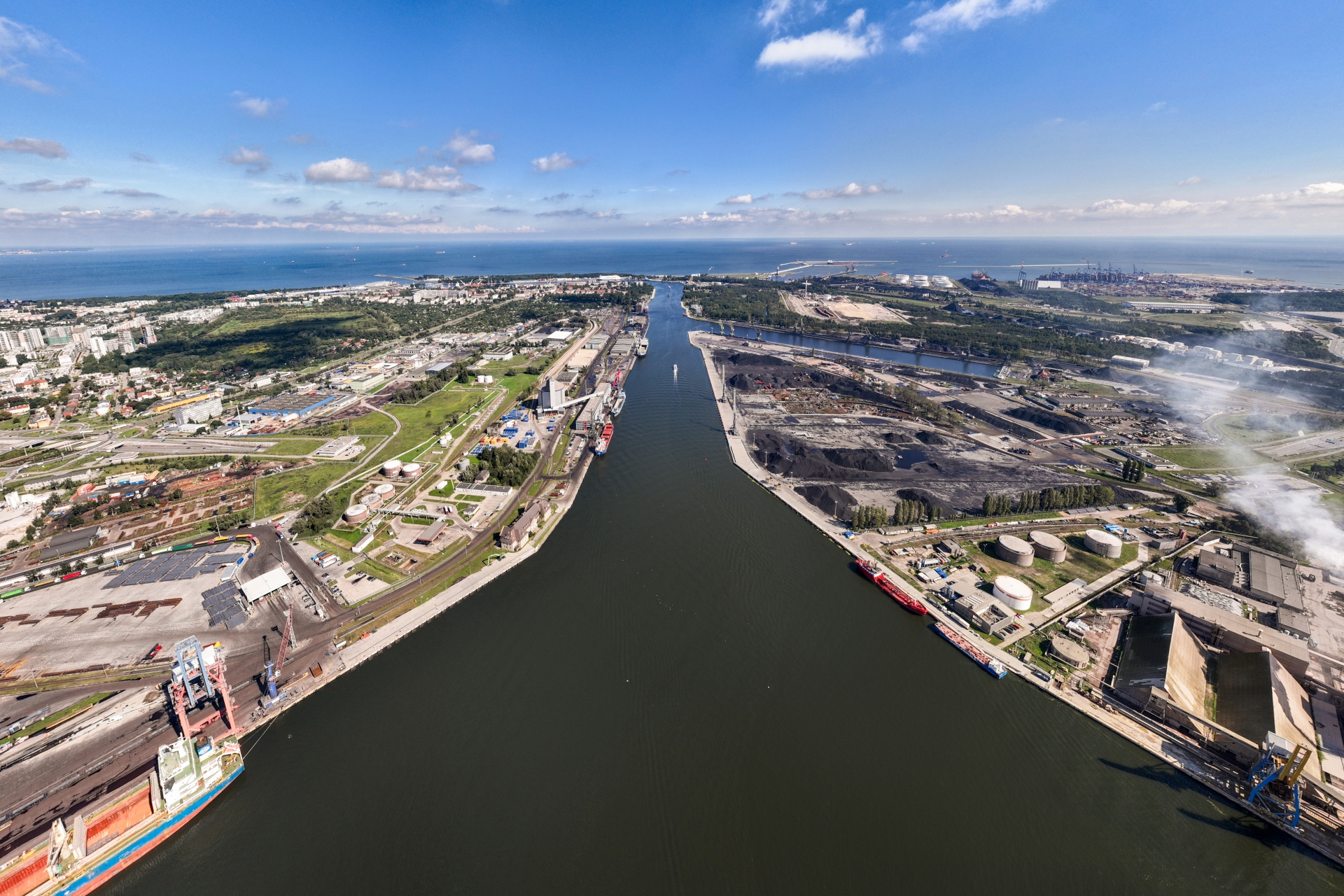
Strong ports mean a strong maritime economy. This is evident in the example of the Port of Gdańsk. This largest Polish seaport is constantly developing, achieving very good results. In 2024, it handled 3,559 merchant ships, transshipping 77.4 million tons of cargo. It also generated a record net profit, estimated at approximately PLN 264 million.
The year 2024 was a year of further records in terms of liquid fuels (an increase of over 1.8 million tons, or nearly 5 percent) and general cargo (an increase of about 430,000 tons, or almost 2 percent), with container traffic recording an increase of nearly 10 percent. Ore transshipments also increased by 28,000 tons, or 11 percent. Ro-ro cargo (roll-on/roll-off) is also in the black (an increase of 3.6 percent). Last year also brought a 4.5 percent increase in the number of passengers handled (cruise ships, ferries).
Last year, transshipments at the Port of Gdańsk amounted to 77.4 million tons. However, if we exclude one cargo group that was handled in exceptionally large quantities in 2022 and 2023, the data looks slightly different. We are talking, of course, about coal.
– Ports of fundamental importance to the national economy handled over 136 million tons of goods in 2024. Excluding coal, this is nearly 126 million tons. Comparing this data with the data for 2023, we see that transshipments are at the same level. The difference is literally 0.67 percent. Transshipments in our ports are at a safe level that allows us to continue developing and increasing our potential – explains Arkadiusz Marchewka, Deputy Minister of Infrastructure.
In the case of the Port of Gdańsk, if we exclude coal transshipments from the statistics, we have a total of 69.5 million tons in the remaining cargo groups, which means a result better by nearly 2 million tons (2.8 percent) than the previous year.
Records not just in fuels
Since Russia’s aggression against Ukraine in February 2022, we have been dealing with changes in the structure of transshipments in Polish ports. The crisis in the energy raw materials market has influenced the increase in bulk dry and liquid cargo transshipments, which currently account for the bulk of cargo in ports. In 2024, the dominant cargo group at the Port of Gdańsk remained liquid fuels, amounting to nearly 40 million tons. For two years, liquid fuel transshipments have been hitting records and account for 51 percent of total transshipments. In second place is general cargo (including containerized cargo) – 30.2 percent. Transshipments here reached 23.4 million tons. At the same time, container operators, mainly Baltic Hub Container Terminal – the largest container terminal in the Baltic Sea, handled 21 million tons (2.25 million TEU). Next is coal – 7.8 million tons (10.2 percent), other bulk cargo such as aggregates or sulfur – 3.5 million tons (4.5 percent), and grain – 2.9 million tons (3.7 percent).
The change in the structure of transshipments is also related to the average capacity of merchant ships that called at the Port of Gdańsk in 2024. During the year, 3,559 ships were handled (43 fewer than in 2023), while the average GT in 2024 was 1.6 percent higher than in 2023 and amounted to 25,025 (the port handled more tankers and ocean-going vessels). In 2024, 60 cruise ships also called at the Port of Gdańsk – 18 more, and 293 ferries – 6 fewer than in 2023.
– We have achieved a stable and sustainable financial and investment position, which measurably influences the implementation of business strategies by our contractors and the results of the Port of Gdańsk. We are also conducting our own investments and constantly commercializing previously undeveloped spaces. We care about the competitiveness and brand of the Port of Gdańsk by continuously improving management procedures, taking into account the needs of our stakeholders. All this contributes to good financial results, even in such difficult times – summarizes Dorota Pyć, President of the Port of Gdańsk. – We have also started work on the Port of Gdańsk Development Strategy until 2060. We want to be a sustainable port in the blue and green economy.
Higher profits and a stable financial situation
According to preliminary data, the Port of Gdańsk will close 2024 with a financial result of approximately PLN 264 million, higher compared to 2023 by PLN 51.7 million (by 24 percent). The main factors determining this increase are sales revenues that were nearly 6 percent higher year-on-year and lower costs, including sales costs that were 3 percent lower.
– The financial situation of ZMPG S.A. should be assessed as very good. Financial liquidity has been maintained at a stable, rational level. Net sales profitability is estimated at nearly 49 percent, also higher than last year’s – adds Alan Aleksandrowicz, Vice President of the Port of Gdańsk for Finance and Security. – Taking into account the long-term time horizon and the scale of investments planned for the coming years, the Company’s financial condition is analyzed on an ongoing basis, and the generated cash, in accordance with the Act on Ports and Seaports, is effectively allocated primarily for the development of the port, i.e., investments and repairs of port infrastructure.
Source: Port of Gdańsk