











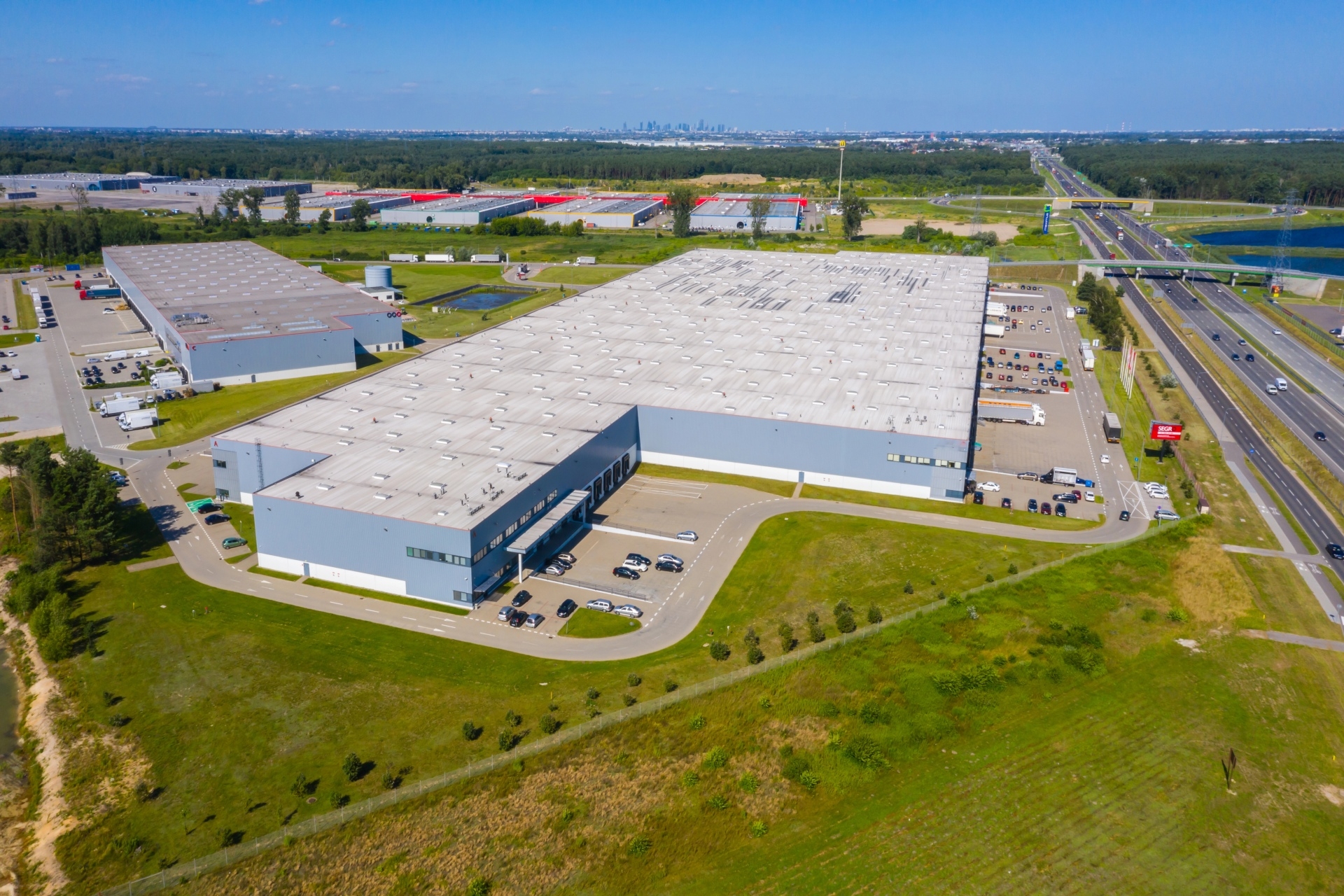
The summer months of 2025 did not bring significant changes to the domestic warehouse market – both developers and tenants remained cautious regarding investments. Lease renewals dominated the demand structure, and the volume of sale & leaseback transactions also increased. It is worth noting, however, that thanks to this, gross demand from January to September 2025 amounted to over 4.5 million sq m, which is 17% more than a year ago and only 6% less than in the corresponding period of the record-breaking 2021. Experts from the advisory firm JLL summarize the third quarter in the domestic warehouse and logistics real estate market.
The European warehouse market remains calm – although new demand on the Old Continent recorded another increase compared to the previous quarter, tenants maintain a conservative approach to investment risk. Demand for warehouse space in the first three quarters of 2025 was as much as 21% lower than the 5-year average for such a period.
As a result, the average vacancy rate for European markets recorded another slight increase to 6.3%, which translated into an even more pronounced reduction in speculative construction. The 5.4 million sq m currently under construction is the lowest result since 2021. Persistent difficulties with high financing costs and geopolitical uncertainty continue to have a significant impact on investment decisions. Poland’s solid economic foundations (according to Oxford Economics, our country’s economic growth will be 3.4% in 2025 and 3.5% in 2026) should allow for market growth and development, albeit in a long-term perspective free from major shocks.
Demand: renegotiations still dominate
The current situation in the warehouse market in Poland reflects pan-European trends. New demand, which reached 2.2 million sq m in Poland in Q1-Q3 2025, although growing quarter-on-quarter, did not exceed the result from the corresponding period of 2024 (-12%). Calm but relatively stable new demand was compensated by renewals and extensions of existing contracts. The Polish market, based on modern, high-quality infrastructure, favors decisions to maintain leases in existing locations, and record volumes of renegotiations are additionally supported by the 3- and 5-year lease cycles signed in the unprecedented years of 2021 and 2022. As a result, renewals reached a result exceeding 2.35 million sq m in the Q1-Q3 2025 period.
If we add the volume of increasingly popular sale & leaseback transactions to net demand and lease extensions, we get a gross demand of almost 4.5 million sq m in the analyzed period, which is 17% more than a year ago and only 6% less than in the corresponding period of the record-breaking 2021. This remains a confirmation of the resilience, gradual improvement in condition, and the continued attractiveness of the Polish industrial and logistics sector.
– comments Maciej Kotowski, Director, Research & Consultancy, JLL Poland.
Geography of demand: the safe “Big Five”
The high volume of renegotiations and limited propensity for intensive expansion among many tenants supported activity in the safe “Big Five” markets. In total, almost 75% of the total demand recorded so far in 2025 was concentrated there.
Warsaw remained the most active logistics market in the country, where 23% of total gross demand was realized (over 1 million sq m). Wrocław, Silesia, and Central Poland accounted for approximately 15% each. Coastal markets also stood out on the warehouse map of Poland – the Tri-City (270,000 sq m) and Szczecin (270,000 sq m), which are consistently strengthening their strong position and closing the gap to the other major markets.
Vacancies: cosmetic declines
Gradually increasing absorption and still limited developer activity led to another slight (0.4 pp y-o-y) decline in the vacancy rate. In Q3 2025, this index was 7.8%, which corresponded to approximately 2.9 million sq m of available space. It is worth emphasizing, however, that these resources remain fragmented and dispersed across many different buildings and modules.
The vacancy rate fluctuated between markets. In the case of the “Big Five”, it ranged from 4.3% in the Warsaw area to 10% in Wrocław. In turn, markets such as Kraków, Szczecin, Opole, Olsztyn, and Białystok maintained rates below 3.5%.
Supply: developers increasingly less active
Limited developer activity significantly affected the new supply result, which amounted to only 400,000 sq m in Q3 2025. So far in 2025, approximately 1.5 million sq m have been completed, i.e., about 30% less than in the same period a year ago.
Expansion was driven by Wrocław and Upper Silesia, where developers completed 344,000 sq m and 275,000 sq m, respectively. Additionally, both the Warsaw market and Central Poland recorded new supply exceeding 200,000 sq m.
In the third quarter of 2025, the total area of projects under construction increased slightly to 1.56 million sq m at the end of Q3. Speculative activity covered a total of 700,000 sq m. The slight increase in speculative space under construction may indicate that developers remain optimistic about future absorption capacity in key markets.
Rents: no significant changes
Stabilized developer activity ensured the strengthening of current rent values, and most locations maintained similar rates. Nevertheless, pressure for rent increases continues, especially in the case of the best locations and newly completed assets.
Rents for suburban logistics parks within the “Big Five” markets ranged from 3.5 to 5.5 euros per square meter per month. Urban locations maintained rates of up to 8 euros per square meter per month, and even more for the best space in Warsaw.
Employee comfort in the focus of tenants
JLL experts point out that the slowdown in the market is being used by tenants and warehouse owners to improve the standard of occupied space, implement changes in internal work culture, and introduce innovations such as robots and advanced automation.
Although at first glance the warehouse market is calmer, in reality, a quiet revolution is taking place there. It is clear that today it is the human being and the conditions offered to them that are becoming one of the key elements of company strategy. Therefore, taking care of work comfort – comfortable social areas or greenery around – is no longer a nice addition, but a concrete investment that helps to attract the best employees in a difficult market. At the same time, robots and intelligent systems are entering warehouses on a large scale. In addition to continuous performance improvement, a new goal is now coming to the fore: building resilience to supply chain disruptions. As a result, the warehouse is changing from a simple building for storing goods into the heart of a modern company. Those companies that best combine satisfied employees with modern technology today will gain a key advantage as soon as the economy accelerates again.
– says Mateusz Iłowiecki, Senior Director in the Warehouse and Industrial Department, JLL Poland.
Source: JLL