








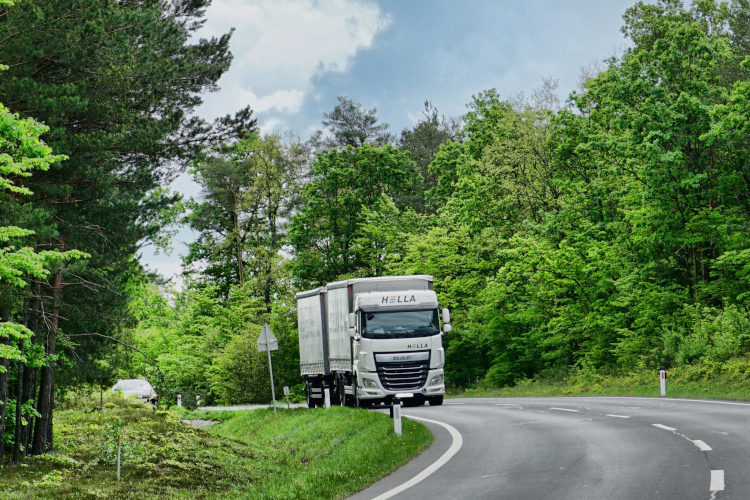
Data from CEPIK shows that by the end of May 2022, nearly 13,000 fewer heavy goods vehicles (60,568) were registered in Poland compared to the same period in 2021 (73,514), but this has nothing to do with a decline in interest in fleet development. New models are being bought up immediately, and waiting times for a new vehicle are generally extending. According to Tomasz Czyż, Technology Expert for the TSL industry at Inelo Group, transport is constantly developing, including technologically, which translates into a high demand for new vehicles, with prices reaching up to 100,000 euros per vehicle, whereas just a few years ago, a new truck could be bought for around 70,000 euros. It is worth noting that this refers to a base-version fleet. For trucks that are better equipped with electronic systems, one definitely has to pay more. Nevertheless, high prices do not deter Polish transport companies from investing in fleet expansion and equipping it with telematics systems due to limited supply and high demand.
I will buy a used truck immediately
According to the Truck Production Index, truck production in 2021 increased by over 17 percent compared to 2020 in the Central and Eastern Europe region, but this year, a further decline in the production of these vehicles in the EU is forecast due to the situation in Ukraine. Do these problems reflect on investments in a modern fleet?
– The TSL industry continues to feel difficulties with the availability of various parts necessary for vehicle production. This situation will not return to normal anytime soon. The only solution to this would be to open more European plants producing vehicle components or electronic parts in order to shorten supply chains. However, it is worth noting that even if a manufacturer decided to build a factory in our region, it would not lower the final price of the vehicles due to higher labor and energy costs – notes Tomasz Czyż, Technology Expert for the TSL industry at Inelo Group, and adds – While the availability of the vehicles themselves has improved slightly, we cannot say that this situation on the market has stabilized. Predicted delivery dates for new vehicles are almost always pushed back by several weeks or months.
Carriers’ appetite for trucks
The problem with vehicle availability has not stopped the industry’s development, and according to Tomasz Czyż, all available trucks are being bought up almost immediately – even despite the high price. According to the TLP report “Road Transport in Poland 2021+”, developed jointly with the Inelo Group and the Wielton Group, as many as 72 percent of transport companies plan to purchase new trucks in the near future. In recent years, the volume of cargo transported by vehicles under 5 years old has also increased – from 48 percent in 2010 to over 50 percent currently, and this trend is expected to continue growing in the coming years. The fastest-growing segment is heavy goods vehicles with a gross vehicle weight of over 16 tons, used for transporting the heaviest loads. Within 5 years, their number has increased by one-third. According to the report’s authors, there are several reasons why Polish transport companies decide to purchase trucks.
– In recent years, Polish transport has developed significantly, especially in international transport, and this generates demand for increasingly newer vehicles that consume less fuel and allow carriers to reduce operating costs when covering extremely long routes. Also of particular importance are the increasing customer expectations regarding the fulfillment of environmental standards by their transport companies. Carriers are focusing on light, modern vehicles and on reducing the harmful impact of transport on the natural environment. At the same time, comfort and safety of professional drivers are also very important to customers, which is why they choose vehicles equipped with innovative systems that facilitate their work. – says Mariusz Golec, CEO of the Wielton Group.
The Inelo Group expert points to the still-developing industry and the oversupply of cargo that needs to be transported.
– Companies handling contracts must rely on new equipment – it guarantees reliability, and every newer model means lower fuel consumption or better working conditions for the driver. New trucks are ordered in the maximum quantities that vehicle sellers can afford. If dealers had more vehicles available, I assume they would also be sold, because currently, there are no vehicles waiting for buyers. Everything is sold several months in advance, even up to more than a year ahead. It is also worth noting that repairs of used trucks are becoming more expensive – the cost of labor hours is rising, and the cost of spare parts has increased. In such a situation, it is better to buy new equipment and equip it with a full service package, which is paid for monthly, but in the event of a breakdown and after taking the car to an authorized point, the vehicle is serviced or repaired free of charge – comments Tomasz Czyż, Technology Expert for the TSL industry at Inelo Group.
Paradoxically, the rising prices can be seen as an opportunity to refresh the fleet. Money obtained from the sale of used, appreciating vehicles can help buy trucks directly from the manufacturer, provided that carriers prepare for long delivery times. These can continue to extend even after an order has been placed.
40 percent of carriers will invest in telematics
Constantly rising costs lead to interest in telematics, which allows for monitoring transport and keeping costs in check. The “Road Transport in Poland 2021+” report shows that over 40 percent of carriers want to invest in telematics in the coming years.
– Fuel savings or the reduction of unnecessary kilometers traveled, which we can achieve thanks to telematics, are invaluable. The transport sector is now looking for comprehensive solutions, i.e., advanced telematics combined with the driver’s on-board computer, an integrated TMS system, and software for calculating driver working time – says Tomasz Czyż, Technology Expert for the TSL industry at Inelo Group, and adds that, as in the case of GBox Assist 3.0, telematics can be settled in a cost-effective subscription system.
The integration of these systems allows for the optimization of transport processes: route planning in terms of distance, fuel consumption, potential traffic jams, as well as transport corridor management and driver working time in accordance with the provisions of the mobility package. An additional advantage is easier communication between the driver and the person managing the transport and the transition to digital documents.
– It must be remembered that the higher price of new vehicles also results from the fact that more advanced technologies have been used in them, the purpose of which is, among other things, to facilitate the driver’s work. A vehicle from a manufacturer, which we additionally equip with telematics integrated with, for example, a TMS, is a modern solution thanks to which the driver can focus on their primary task, which is safe driving, and the carrier can save money. It is precisely thanks to investment in such tools that Polish fleets are among the most modern in Europe. Otherwise, we would not have achieved a record share in European transport, in which Poland has been a leader for years – concludes Tomasz Czyż, Technology Expert for the TSL industry at Inelo Group.