








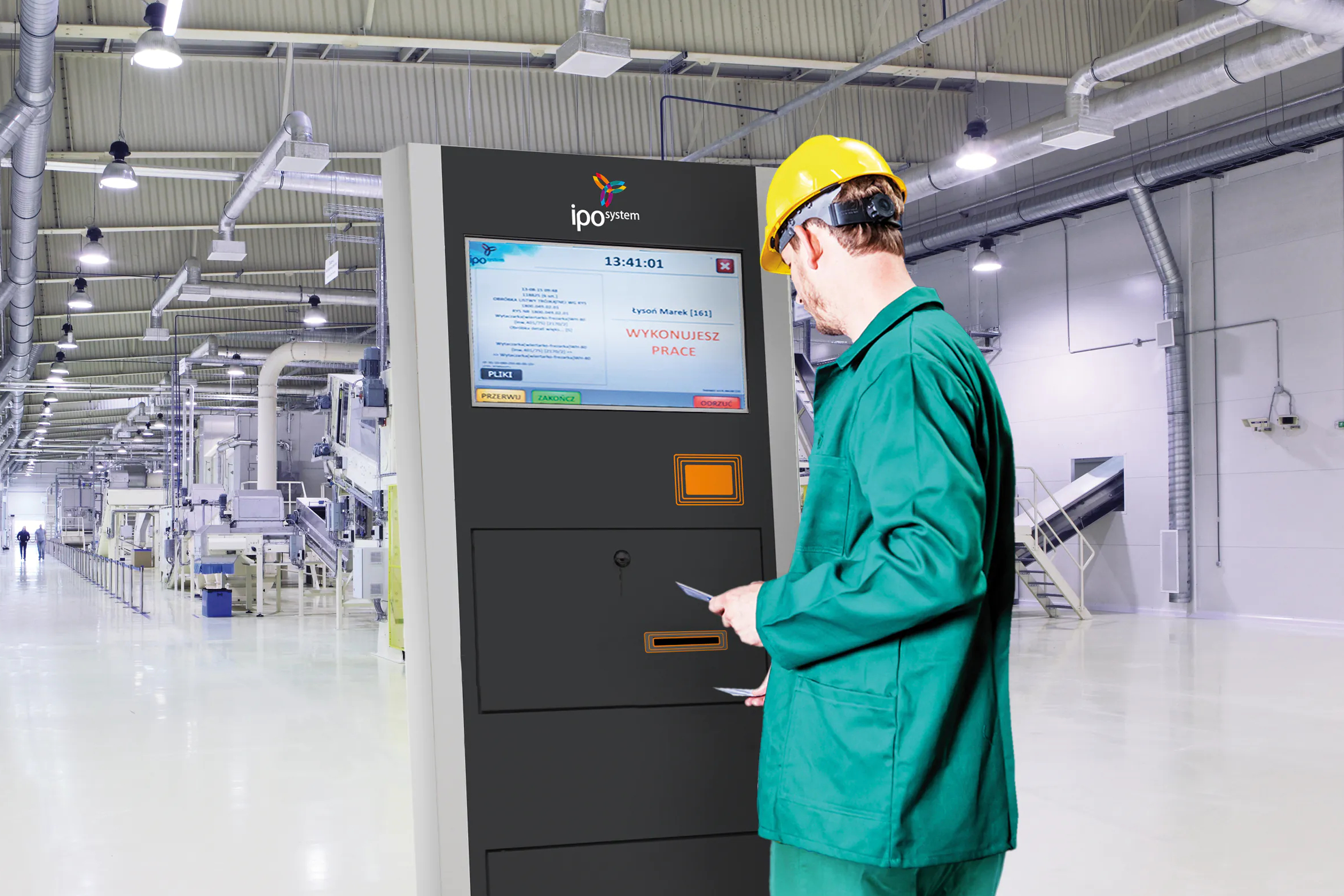
What do exploring alien planets, maritime shipping, and factory production management have in common? In each of these environments, unforeseen events are a daily occurrence, and plan adjustments are the norm. The way these decisions are made can define the success of a space mission, a sea voyage, or production processes. The common denominator is artificial intelligence (AI), which supports humans in making optimal operational decisions in real time. In this context, IPOsystem deserves special attention – the world’s first autonomous decision-making system (ADS) for production management.
The era of digital operational decisions
The world of autonomous vehicles, machines, and entire factories is already a reality. Technology can support humans in making decisions in the operational area, at the human-machine interface, doing so faster, more accurately, and more efficiently, which significantly increases the productivity of managed processes.
– Currently, production in factories is carried out according to a plan that requires frequent adjustments in the face of unforeseen events, such as absences, breakdowns, changes in orders, or deviations from the execution times of individual technological operations. This generates downtime and micro-downtime, and thus costs – notes Krzysztof Fiegler, board member of UIBS Teamwork, the creator of the innovative IPOsystem decision-making system, which creates a new class of ADS among IT systems. – Even the fastest planning cannot eliminate the need to make ongoing operational decisions. – he adds.
Meanwhile, proper, accurate, and quickly made operational decisions are crucial for the smooth execution of production processes. IPOsystem, developed by UIBS Teamwork, is the world’s first autonomous decision-making system (ADS) that manages production in real time without scheduling, without the participation of planners and direct supervisors. The system manages the process independently, calculating and issuing subsequent tasks to resources on an ongoing basis. It turns out that autonomous algorithms work well not only in a factory, but also on the ocean or on Mars.
ADS solves cosmic problems
Planetary rovers, such as those sent to Mars, receive a set of instructions from scientists on Earth every day. However, unexpected events that occur on the surface of Mars are part of the daily life of the mission. Every unforeseen situation causes the rover to enter safe mode and wait for new instructions from Earth. Due to communication delays, this procedure takes even several days. This is a waste of time and money. Therefore, scientists from the University of California and NASA engineers equipped the rover with an integrated, modular architecture for autonomous decision-making. Thanks to this, the robot, based on the collected data, is able to analyze the situation independently and make decisions about further steps, which significantly saves time and resources.
The future of maritime transport based on decision-making algorithms
Despite enormous technological progress, ocean routes are not yet traversed by unmanned transporters. Even advanced navigation systems require the vigilance and decisions of the crew in the face of sudden weather changes, sea currents, or other unforeseen events. The autonomous marine vessel project MAS 400 (Mayflower Autonomous Ship), created by IBM, uses three layers of technology – sensor data, machine learning, and real-time analysis. Thanks to this, the system is able to make decisions independently based on the collected data, ensuring the continuity and safety of the voyage. Research and development of autonomous marine vessels are being carried out in various countries, including Poland, and their introduction into commercial use is only a matter of time.
A digital robot creates self-organizing factories
Revolutionary solutions are not the domain only of NASA or market giants like IBM. IPOsystem, a digital robot of Polish production, is in no way inferior to them. Using data entered into the system regarding the availability and skills of all production resources (employees and machines) and production orders, IPOsystem independently manages the production process. It calculates and assigns subsequent tasks to be performed by employees, robots, and automated transport means on an ongoing basis.
– A key feature of management in IPOsystem is the autonomous assignment of tasks to employees throughout their time on the production floor. The system can be compared to navigation that communicates to each employee what they should be doing at any given moment. Thanks to this, the system optimizes the flow of production processes on an ongoing basis, eliminating downtime and waste.– explains Krzysztof Fiegler. – Such production management is possible thanks to unique decision-making algorithms supported by narrow artificial intelligence, which effectively control available production resources. Thanks to this, every order is executed in optimal time with maximum utilization of all resources. – he specifies.
By eliminating the need for planning and taking over ongoing operational decisions, IPOsystem creates a self-organizing factory and frees production managers from ongoing operational decisions.
In each of the three cases cited above, the working time and potential of resources are used effectively, minimizing personnel costs and eliminating human error. A human, supervising remotely, gains full knowledge of the status of the mission, voyage, or production, thanks to which they can effectively achieve the set goals.
Source: Commplace Sp. z o. o. Sp. K