








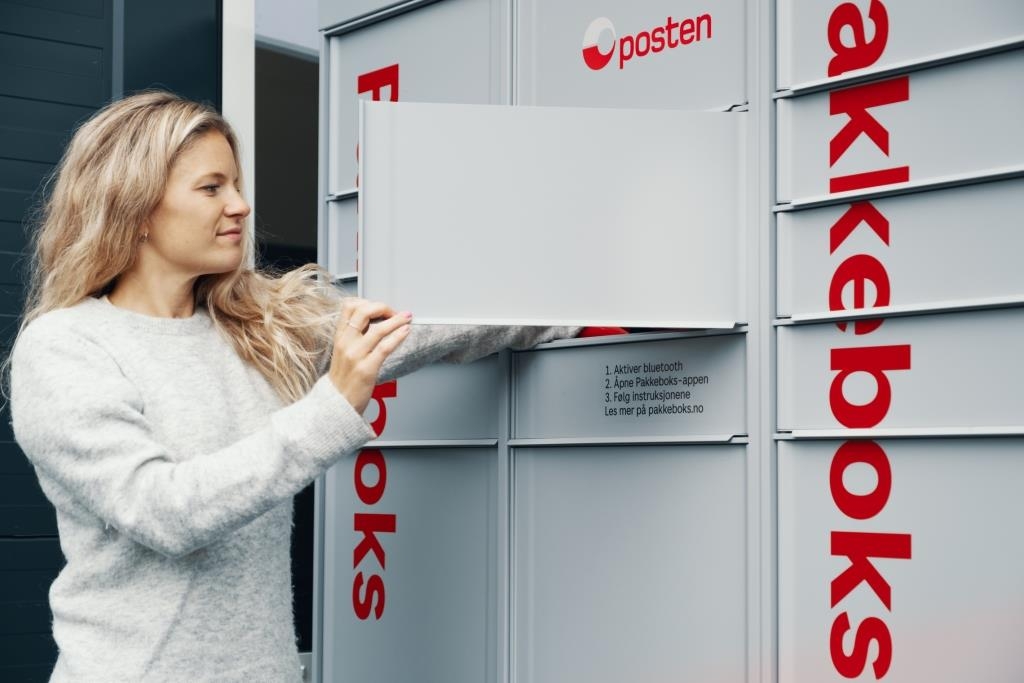
The “E-commerce in Poland” study prepared by Gemius for the Chamber of Electronic Economy shows that 77% of internet users already shop online, and for nearly half of them, parcel lockers are the preferred form of delivery. In this growing trend of contactless and self-service collection, it is worth noting not only the user convenience but also deeper changes in the structure of urban logistics and the role of the last mile in the entire supply chain.
The development of the e-commerce market is driving changes in logistics models that must meet both consumer expectations and environmental and infrastructural challenges. The classic door-to-door delivery model – dominant a decade ago – is slowly giving way to more diverse and distributed forms of delivery. In this context, parcel lockers are no longer just an alternative option for those who prefer to pick up their parcels at a convenient time. They are becoming an essential element of a new urban architecture, in which logistics and transport infrastructure increasingly respond to the needs of decentralization and automation.
Distributed logistics – a response to the challenges of modern cities
The phenomenon of delivery decentralization has gained importance with increasing urban traffic congestion, rising fuel costs, and expectations placed on logistics companies regarding sustainable development. Moving parcel collection points closer to the consumer – to residential estates, small towns, or peripheral zones – not only shortens the distance covered by couriers but also reduces CO₂ emissions and eases the pressure on urban distribution centers. Consequently, the delivery network is no longer concentrated on large hubs and main arteries, but becomes more distributed, flexible, and adaptable.
Parcel lockers fit into this model almost naturally. Their presence in public spaces – from large metropolitan areas to smaller towns – changes the way we think about deliveries. They are no longer an activity that must be adjusted to one’s own schedule and presence at home, but become an on-demand service, available at any time and place. This shift in perspective is possible thanks to the combination of the physical infrastructure of the devices with advanced technology for data management, shipment tracking, and route optimization. In this way, parcel lockers become not only a collection point but also a node in the logistics network that influences the overall flow of transport processes.
It is also worth noting that the development of parcel lockers affects not only the delivery model but also the way courier services are designed and vehicle fleets are managed. Instead of making dozens of individual deliveries within one district, companies can concentrate deliveries at selected points, which significantly improves operational efficiency. As a result, last-mile logistics ceases to be a bottleneck in the entire process and becomes its asset – predictable, scalable, and capable of further optimization.
Inclusivity and convenience as a new standard
The functional and social aspect is also significant. Parcel lockers are often designed to be integrated with their surroundings, resistant to weather conditions, and intuitive to use. Their presence not only makes life easier for residents but also promotes equal opportunities in access to logistics services – especially in places where there was previously a lack of infrastructure for efficient parcel collection. Thus, automation and decentralization do not mean excluding humans from the process, but on the contrary – they adapt services to changing lifestyles, working hours, and the rhythm of the day.
Behind these changes are specific technological solutions – often developed by companies that specialize not only in designing devices but, above all, in integrating them with logistics systems, digital maps, and optimization algorithms. Although it is not talked about loudly, it is this integration and flexibility that determine competitive advantage in the area of automated deliveries today. Companies that can quickly scale their networks, respond to changes in order structures, and provide solutions that are friendly to both operators and end recipients are becoming key players not only in the CEP industry but in the entire TSL sector.
Importantly, parcel lockers are also evolving in terms of functionality. They are increasingly becoming points for sending, returning, and even exchanging shipments between users. In this way, they fit into broader trends of the sharing economy, local logistics, and the circular economy. The future of this segment is therefore not limited to physical devices but also includes business models that prioritize openness, interoperability, and decentralization as the foundation of modern delivery systems.
In a world where the pace of life is constantly accelerating and consumer expectations are rising, parcel lockers are becoming a symbol of a paradigm shift: from centralization and mass scale – towards locality and individualization. And although the technology itself may seem simple, its impact on the shape of modern logistics is already invaluable.
Source: SwipBox Poland