











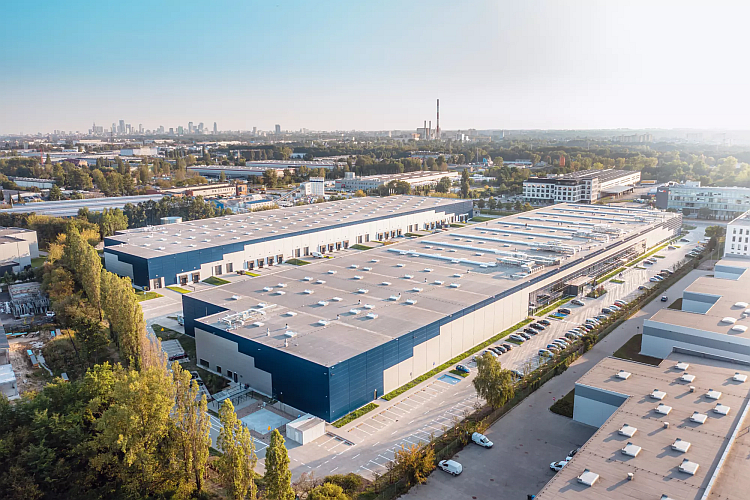
Panattoni, the most active industrial real estate developer in the world, summarizes its investment financing for 2023. For projects in Poland, the company secured 29 bank loans totaling over 800,000,000 euros.
“In 2023, we secured 801 million euros from banks for the implementation of 29 investments. This demonstrates the trust financial institutions have in our operations and confirms the solid foundations of the industrial real estate market in Poland,” comments Karina Trojańska, Chief Financing & Operating Officer at Panattoni. “Our projects attract both domestic and foreign banks, and warehouse investments remain the most attractive asset within financial investments,” she adds.
Last year, the developer obtained loans from 12 banks: Aareal Bank, Alior Bank, Bank Gospodarstwa Krajowego, Bank Pekao, Berlin Hyp AG, BNP Paribas Bank Polska, Credit Agricole, Erste Bank, mBank, Millennium Bank, PKO Bank Polski, and Santander Bank Polska. Investments financed by bank loans include, among others, the project for the H&M Group as part of Panattoni Park Poznań A2, industrial parks – including Panattoni Park Bytom, Panattoni Park Lublin II, Panattoni Park Lublin IV in Świdnik, Panattoni Park Nadarzyn II, Panattoni Park Ruda Śląska V, Panattoni Park Sosnowiec III, and Panattoni Park Tricity East V in the Gdańsk Port area, as well as BTS facilities – the Action distribution center in Zakroczym, the Fortaco production plant in Knurów, and the Poczta Polska logistics center in Radzymin.
Financing with a focus on sustainable development
The financial sector is intensively adapting its operations to the requirements set by the European Union’s legal framework, which was created following the European Green Deal and, among other things, the goal of achieving zero emissions by 2050. Risks related to sustainable development – especially climate risk – have become the main focus of EU institutions that shape regulations and guidelines for the financial sector, such as the European Commission (EC), the European Banking Authority (EBA), the European Securities and Markets Authority (ESMA), and the European Central Bank (ECB).
Therefore, both financial institutions and their partners, including Panattoni, are subject to assessment for compliance with current ESG standards and the impact of these factors on business models.
“Projects that stand out for their high energy efficiency, use of renewable energy sources, and innovative ecological solutions are being promoted. In accordance with current standards, beneficiaries of ‘green’ loans are encouraged to implement advanced technologies that reduce CO2 emissions, manage waste effectively, and use environmental building certifications such as BREEAM at the Excellent level. Panattoni meets these requirements and is also committed to implementing EU taxonomy criteria, and as the most active developer on the market, it has an undeniable contribution to the warehouse sector taking first place in the preferences of banks financing real estate in CEE,” explains Karina Trojańska.