








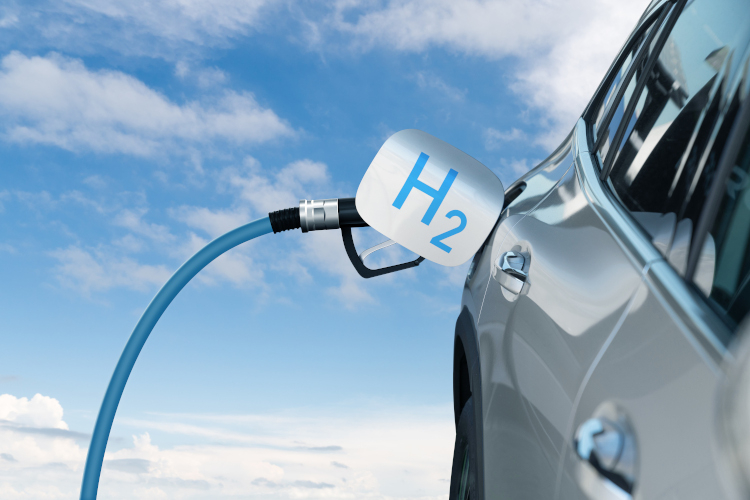
Bielsko-Biała, Gorzów Wielkopolski, Kraków, Piła, and Warsaw are the cities where additional public hydrogen refueling stations will be commissioned by mid-2025. PKN ORLEN and the European Climate, Infrastructure and Environment Executive Agency (CINEA) have signed an agreement for a non-repayable grant for the construction of these facilities. The agreement concerns over PLN 60 million awarded under the EU’s CEF Transport Alternative Fuels Infrastructure Facility program.
Since June 2022, Poland’s first mobile hydrogen refueling station has been operating in Kraków. Furthermore, in March of this year, a hydrogen refueling station was launched in the Barrandov district of Prague at an ORLEN Benzina facility. Later this year, this new eco-friendly fuel will also be available for refueling at stations in Poznań and Katowice. There are also plans to build a station of this type in Wałbrzych in 2024.
The five facilities covered by the signed agreement will be built as part of the awarded funding for the second phase of the “Clean cities – hydrogen mobility in Poland” project. They will be designed to supply public transport buses, passenger cars, and eventually heavy-duty vehicles. According to the plans, the stations in Bielsko-Biała, Gorzów Wielkopolski, Kraków, Warsaw, and Piła will be commissioned in mid-2025. The total value of the project is over PLN 120 million, of which approximately half will be co-financed under the EU’s CEF Transport Alternative Fuels Infrastructure Facility program.
The development of infrastructure related to hydrogen fuels is part of the ORLEN Group’s Hydrogen Strategy and simultaneously an important element of the ORLEN2030 strategy. It is the company’s response to the challenges associated with energy transition and the search for green, ecological solutions. Hydrogen as an alternative to conventional fuels is currently one of the key elements of transport sector decarbonization.
By 2030, PKN ORLEN plans to build a network of over 100 hydrogen refueling stations for individual, public, and cargo transport, as well as road and rail, in Poland, the Czech Republic, and Slovakia. Approximately 57 stations will be built in Poland, about 28 in the Czech Republic, and about 26 in Slovakia. Hydrogen will be supplied to these facilities through the construction of a European network of hydrogen hubs powered by renewable energy sources and innovative installations converting municipal waste into zero- and low-emission hydrogen. The total assumed capacity of electrolyzers in the ORLEN Group by 2030 will amount to approximately 1 GW, which, combined with waste-to-hydrogen projects, will enable the production of over 130 kt of renewable hydrogen by the end of the current decade.
Furthermore, the flagship project prepared by the company, titled “Hydrogen Eagle,” will allow for the construction of comprehensive infrastructure for the production and distribution of low- and zero-emission hydrogen in Central Europe. For its hydrogen projects, PKN ORLEN has secured funds from the Innovation Fund, CEF (Connecting Europe Facility), the National Fund for Environmental Protection and Water Management, and notification from the European Commission for the Polish part of the “Hydrogen Eagle” project under the IPCEI Hy2Use (Important Projects of Common European Interest) mechanism.