Efficient document management is one of the greatest challenges in the TSL industry. Often, contracts concluded just before the start of a service require quick changes, cooperation frequently takes place remotely, and due to the repetitive nature of many tasks, saving time is crucial, which is hindered by bureaucracy. In such circumstances, only the digitization of the formalities area seems to be a real solution to the problem.
Cloud solutions are one of the strongest business trends according to which companies design their development. The value of the global cloud market already exceeds 250 billion euros and is growing systematically. This comes as no surprise when we consider that digitized cloud solutions streamline numerous business processes, allow for better use of organizational resources, and their application translates into greater efficiency, the company’s credibility as a partner, and ensures a level of security that one can forget about in the case of traditional methods of cooperation on processes and data. Cloud tools accessible from any device connected to the internet are also used in administration. Properly programmed, they allow for the integration of various systems to automate data flow.
The most popular solutions and challenges in the TSL industry in the area of contracts
The area of concluding contracts and working on documents in the TSL industry, despite its dynamic development, is still insufficiently digitized. This was not changed by the very noticeable acceleration that cloud solutions recorded during the pandemic. Meanwhile, transport, forwarding, and logistics service contracts need to take into account individual, client-specific conditions, such as the scope of services or various forms of payment. Very often, to finalize the aforementioned contract, negotiations with larger partners with strong arguments are needed. Working with such contracts and other documents in a traditional form, i.e., using a text editor, can be tedious and blocks actions that require flexibility and a quick response to client needs. Word still reigns supreme in the industry, which is so difficult to abandon due to habit and its widespread use among contractors. Track changes mode is used for negotiations, and before acceptance is reached, subsequent versions of the document are created, making it easy to make a mistake, overwrite a file, and as a result – delay the finalization of the contract. These steps are crowned by obtaining a signature on a printed document, sending the contract between parties by courier, or exchanging scans of documents that do not allow for the identification of the signer.

Untapped potential of automation
Perhaps the greatest loss is that, in a broader business perspective, paper, printed documents, just like those saved in PDF format, have no analytical value – the data derived from them cannot be used as a basis for optimizing processes in the company in the future. And yet, many companies in the TSL industry already have a CRM (usually with an API) implemented, in which business data is stored in tables and which allows for communication with other systems. It is a waste that the obtained data is not used when preparing and negotiating a contract. It is worth noting that a large number of handled transport and forwarding orders generates a high risk of errors and involves time-consuming processes, but at the same time, it allows for reaping significant benefits from automation precisely in the area of contracts. It follows that the TSL industry has potential and definitely needs modern document automation, which will simultaneously ensure a connection with a flexible electronic signature. This is a necessary requirement in the face of dynamically changing client expectations before or during a transport or forwarding service. Flexibility and speed of response are two factors that determine the advantage in a competitive market. The time that elapses from submitting a service inquiry to closing the formalities can determine the client’s decision on choosing a service provider.
Market digitization initiatives in TSL
EDI (Electronic Data Interchange) systems have long been used in the sector, within which solutions such as the Electronic Bill of Lading have developed. Recently, there has been a lot of talk about PCOL (Polish Digital Logistics Operator), which is intended to popularize the electronic consignment note and eCMR, as well as allow for verification of whether an invoice has been attached to them. Significantly, this scope of improvement is to apply to the service at the stage of the consignment note and invoice, and this does not solve the administrative problem. For now, there is no information about the desire to improve the earlier stage, i.e., the preparation and conclusion of the contract, from which data can then be used to generate a CMR or invoice. The Model Law on Electronic Transferable Records issued in 2017 by the UN Commission on International Trade Law (UNCITRAL) even allowed for the use of so-called smart contracts, but for existing needs, the potential of automation systems remains untapped. Practice shows that qualified signatures have not brought the expected change because their acquisition is formalized and both parties must possess them to meet the requirements of the electronic form. Flexible electronic signatures, however, come to the rescue, allowing for the submission of declarations of intent in document form. An obstacle to the expansion of this solution may still be the relatively low awareness regarding flexible electronic signatures in document form, i.e., enabling the conclusion of contracts, e.g., via email and SMS. Meanwhile, most contracts used in the TSL industry can be concluded precisely in document form. A transport contract, forwarding contract, warehouse space or vehicle lease agreement, or a Logistic Services Agreement does not require either a handwritten signature or a qualified signature. Apart from machine and transport equipment leasing contracts, a qualified signature is not needed. This means that most contracts can be managed mobile and online using modern platforms for creating, signing, and archiving contracts.

Automation of contract conclusion at Volvo Trucks
One of the companies already supporting its operations with automation in the area of contract conclusion is Volvo Trucks. The truck manufacturer decided to use the Pergamin platform, which facilitates document collaboration and was intended to support the business and sales department in fast and comprehensive document management and signing. The goal of implementing the system was to create a digital ecosystem allowing many people to work on a document in one place. In this way, Volvo Trucks ensured the quality of contact with the client and also relieved the sales staff, who, thanks to this, efficiently open and close issues related to truck sales and rental contracts. Signing a contract via SMS, one of the most important functionalities, allows for conveniently closing transactions in the field. The company abandoned previous solutions that proved insufficient in favor of a tool thanks to which sales staff create contracts using proven, secure templates consisting of modules. As a result, the sales department breathed a sigh of relief because it has ready-made templates compliant with legal policy at its disposal, which allows it to focus on contact with the client. The use of such cloud solutions is the only way to optimize work with contracts in the TSL industry. Will it show openness to improvements and decide to use tools that tie all systems into one coherent flow, crowned by signing a contract? Time will tell.
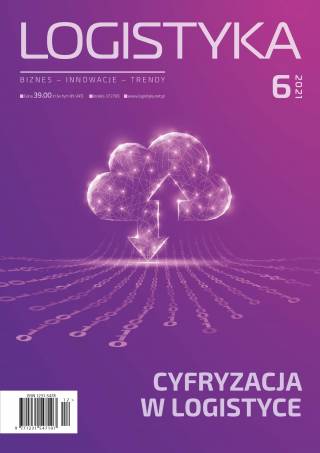
The article comes from the magazine LOGISTYKA 6/2021.
The e-edition of the magazine is available in our offer!
Stay up to date, subscribe to the LOGISTYKA magazine!