











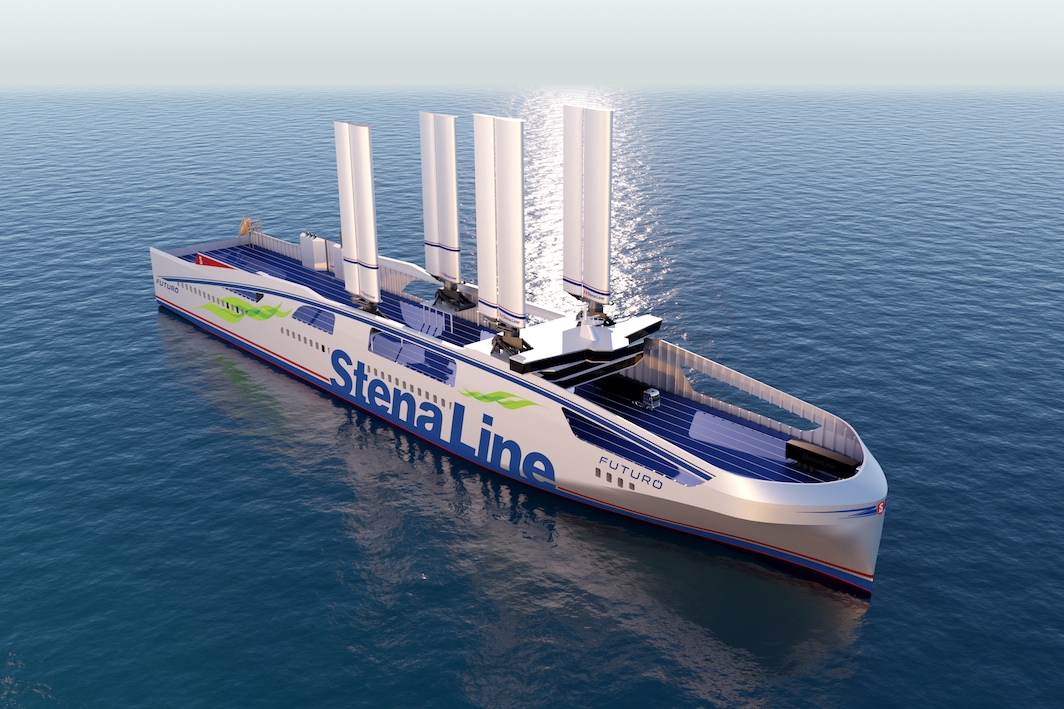
Thanks to an optimized design and modern technologies, the new Stena Futuro concept ship can reduce energy consumption by 20 percent or more.
One of Stena Line’s key goals is to reduce CO₂ emissions by 30 percent by 2030. Achieving this goal requires taking action in many areas, including the decarbonization of the fleet. This is being implemented both by increasing the efficiency of current vessels and by developing a new generation of ships with optimized parameters and innovative technological solutions.
Stena Line’s latest concept for future ships is Stena Futuro – a 240-meter RoRo vessel designed for transporting trailers and cars.
Our mission is to develop the most efficient and competitive ship for a specific cargo capacity, using technologies available today. The goal is for the ship to have the lowest fuel consumption on the market.
– says Nicolas Bathfield, project manager at Stena Teknik, who was involved in the development of the concept.
The ship’s hull and superstructure have been optimized for maximum utilization of cargo space. At the same time, low weight and optimized hydro- and aerodynamics are crucial for achieving low fuel consumption. The low and streamlined design of Stena Futuro is the result of these efforts.
Modern technologies to reduce environmental impact
In addition to its innovative design, the Stena Futuro vessel will be equipped with modern technologies to reduce its environmental impact. The ship will feature a hybrid propulsion system, batteries, and low-consumption engines adapted to run on various types of fuel. The battery system will allow the ship to be partially powered by electricity, for example, when entering and leaving ports. Additionally, solar panels will support the onboard energy systems.
The vessel’s hull will utilize air lubrication technology, where small air bubbles are released below the waterline, reducing friction between the hull and the water. Furthermore, a waste heat recovery system will allow for the reuse of hot exhaust gases from the engines for heating purposes and to support the generation of electricity on board.
Wing sail tests
The Stena Futuro concept also includes the use of four 40-meter wing sails, which can be folded when necessary, for example, when passing under bridges. Stena Line, in cooperation with the Swedish research institute RISE, has conducted tests and simulations of the use of the sails, analyzing their impact on energy consumption as well as the vessel’s maneuverability and safety.
The tests showed that the sails can provide up to 15 percent fuel savings. We also confirmed that the ship meets all stability and maneuverability requirements, even in scenarios such as sudden changes in wind direction or rapid course corrections.
– says Nicolas Bathfield.
Ship of the future
The Stena Futuro project will play an important role in planning Stena Line’s future fleet in the coming years. Currently, there are no concrete plans for the construction of the vessel.
We want to support our industry in achieving global climate goals. We work on this every day in our current operations, but it is equally important that we set the direction for the development of the ships of the future. The Stena Futuro concept is an important step in this direction.
– emphasizes Niclas Mårtensson, CEO of Stena Line.
Source: Stena Line