











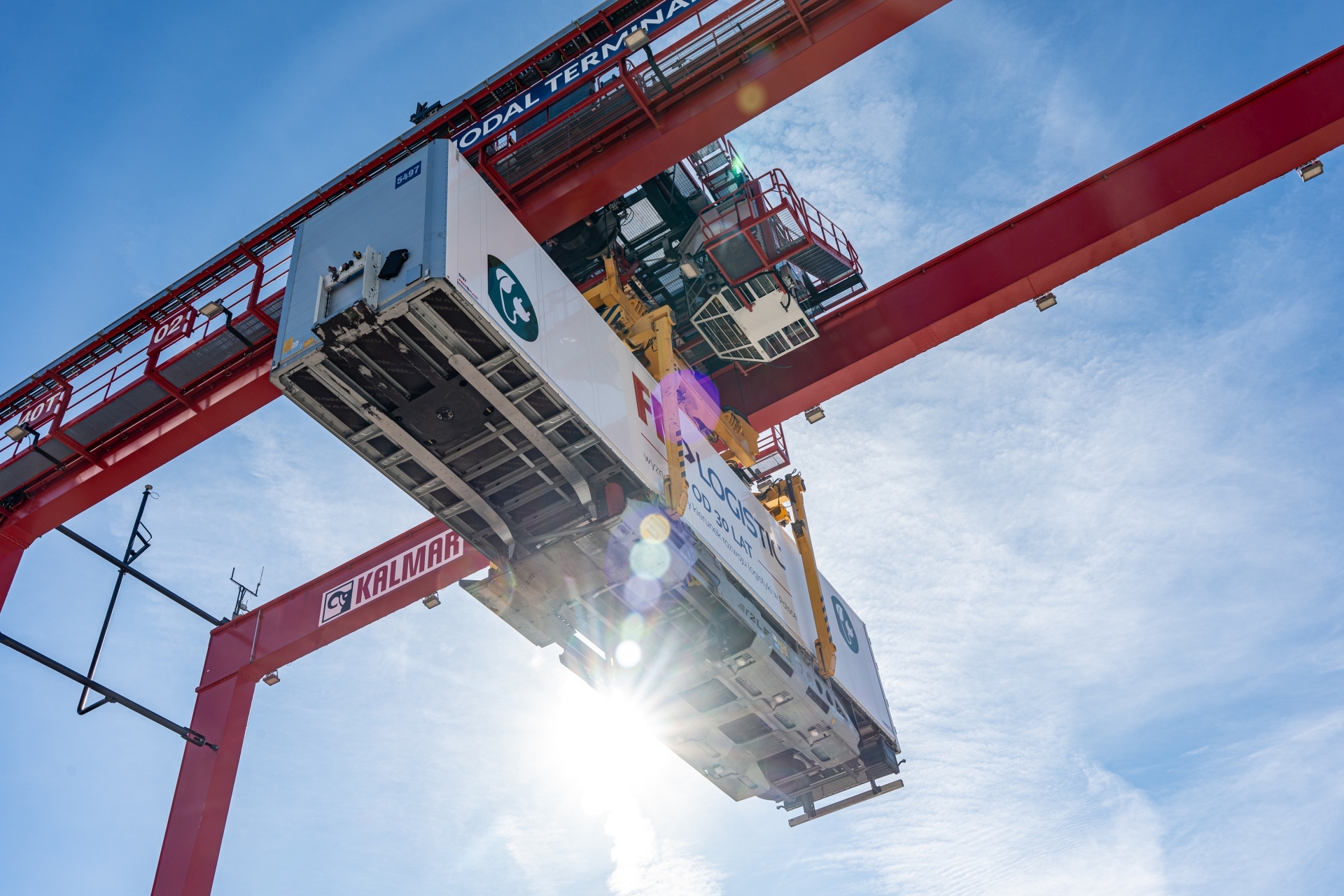
FM Logistic is introducing a new intermodal connection on the Krzewie–Dourges route to its offer. The corridor combines rail and road transport, enabling regular deliveries to northern France and the Paris region.
Intermodal transport is becoming an increasingly important element of European logistics. This is due to several factors: limited availability of drivers in road transport, the need to relieve road infrastructure, and growing regulatory requirements related to sustainable development. Based on FM Logistic’s calculations, for the Krzewie–Dourges route, each trip allows for an average reduction of CO₂ emissions by 1.8 tons, which translates to a reduction of approximately 68% compared to road-only transport.
Intermodal transport is our answer to two key industry challenges – the need to reduce the carbon footprint and the growing difficulties in finding drivers and vehicle availability. By combining rail and road transport, we not only significantly reduce CO2 emissions but also ensure supply continuity in the face of limited market capacity. Moreover, departures from Poland on Fridays allow us to make deliveries to France at the beginning of the week, which is a solution difficult to achieve in road transport and often expected by our clients.
– emphasizes Łukasz Łasa, Intermodal Transport Manager at FM Logistic.
The new connection is part of a broader strategy to develop FM Logistic’s intermodal services. The operator already carries out transport between Poland and Germany, the Netherlands, Spain, Portugal, and the UK, and also handles transport within the New Silk Road. Thanks to this, clients have access to diverse routes and flexible solutions tailored to the nature of the cargo and delivery destinations. Last year, the operator also launched daily connections between Valenton and Avignon – between warehouses located in the north and south of France. On this route, units travel alternately in both directions. The train travels at speeds of up to 140 km/h, ensuring better transit times than road transport.
Intermodal transport is used in many sectors – from industry, cosmetics, retail, and apparel to pharmaceuticals. The profitability of this solution depends, among other things, on the number of shipments per week, the direction of transport, and the availability and connectivity of the terminal with the loading point. The higher the volume and the longer the distance, the higher the efficiency of this transport model.
From the clients’ point of view, additional services such as cargo consolidation, customs clearance, contract logistics, or even full supply chain management are also important. At FM Logistic, we can implement all these elements as a package, which allows for increasing both operational and cost efficiency.
– explains Łukasz Łasa.
The launch of the Krzewie–Dourges corridor is part of a broader trend of strengthening the role of intermodal transport in Europe. In the coming years, due to rising emission costs and restrictions on road transport, we can expect a further increase in the importance of this transport model in the logistics strategies of many companies.
Source: FM Logistic Central Europe