








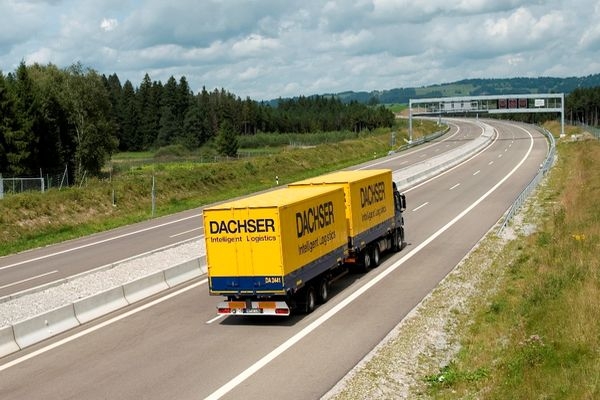
At the beginning of June, Dachser Poland, a logistics operator representing the international Dachser group, launched a new daily connection from Stryków to Clermont-Ferrand in France. This is one of the company’s longest lines.
Thanks to the new Stryków – Clermont-Ferrand connection, Dachser shipments from Poland to all of western and south-eastern France under the entargo service will arrive within three business days. Shipments from all over France to Poland will also be transported in a maximum of 3 days. The use of swap bodies will allow for a direct connection with the Azkar branch in Barcelona as well – a container from Stryków with shipments for Spain will travel via the Clermont-Ferrand transshipment hub to Barcelona, allowing shipments to reach even the most remote Spanish branches, such as Malaga or Seville, in just 4 business days.
– This is one of our longest connections; the Stryków – Clermont-Ferrand – Barcelona route is over 2300 km long – says Grzegorz Lichocik, President of Dachser in Poland. – Thanks to the use of swap bodies, transport will be carried out without interruption. 5 vehicles and at least 10 drivers will be involved in the implementation of such a connection. As part of the entargo services, a pallet collected from a sender in, for example, Rzeszów on Monday will be delivered to the recipient in Barcelona by Thursday.
The new connection will increase capacity between Poland, France, and Spain, and will also take over some shipments from the busy line from Stryków to Überherrn, one of Dachser’s three eurohubs.
– For transport to the Iberian Peninsula, our customers can use the entargo family of services: targospeed, targofix, and targoflex, depending on how quickly their shipments need to be delivered. The launch of this project shows the high effectiveness of cooperation within our network – using three platforms – Stryków, Clermont-Ferrand, and Barcelona, we also enable more efficient and faster transport of shipments to France and Spain imported from Lithuania, Latvia, and Estonia – concludes Grzegorz Lichocik.