











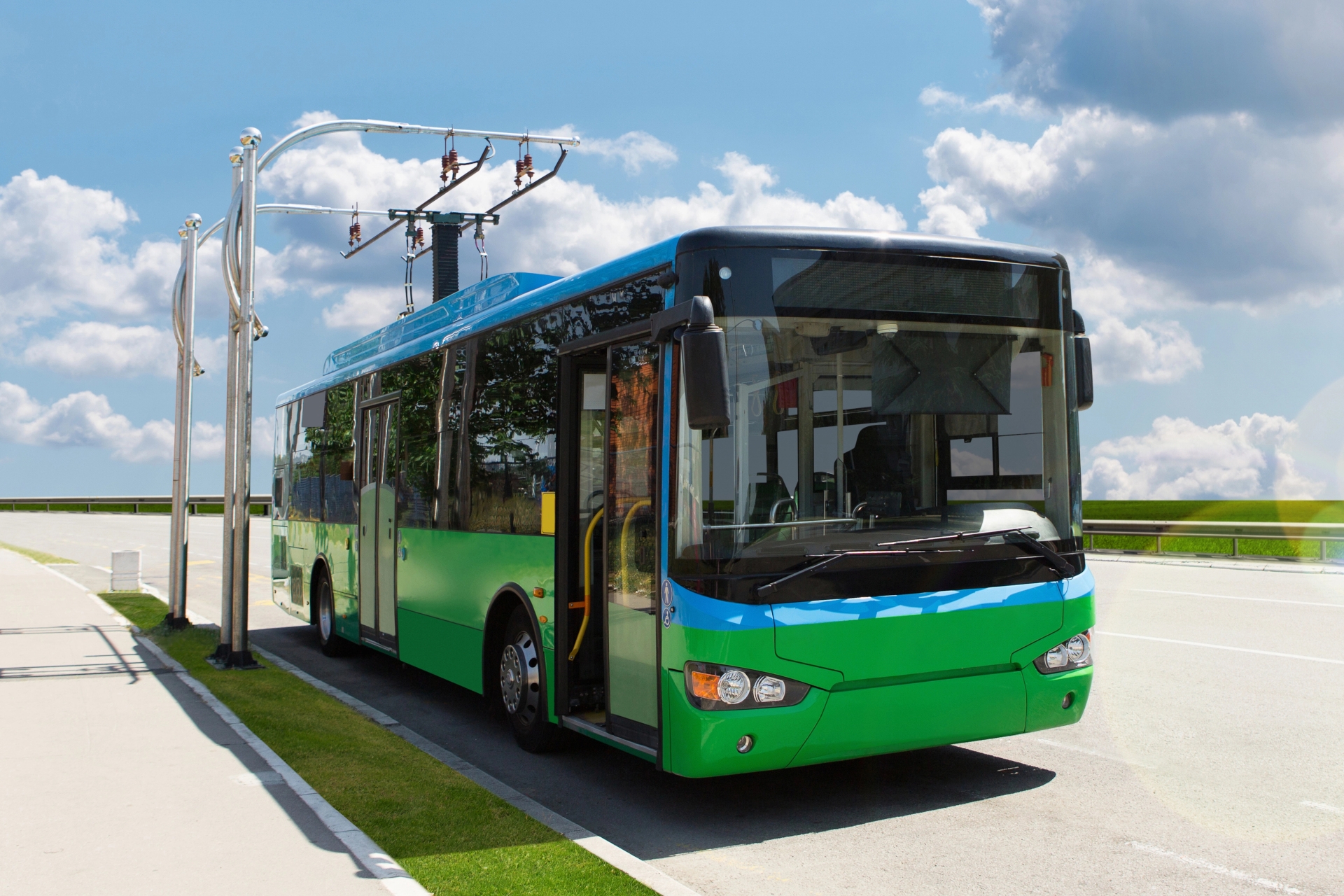
Electromobility industry representatives predict that within a maximum of 25 years, electric vehicles will account for 90 percent of the bus fleet in cities. “Replacing combustion-engine buses with electric ones is not dictated solely by climate policy, but by pure economic calculation,” assesses Katarzyna Pindral from Impact Clean Power Technology.
The electromobility industry, which mainly consists of electric buses, is developing very dynamically, and we hope that it will continue to develop at the same or even faster pace. This is related not only to regulations regarding energy transformation, the climate policies of individual countries, and regulations in this area, but it is also dictated strictly by economic calculation. Already today, if we compare the total cost of ownership of an electric bus and a combustion-engine bus, the electric one wins. Hence, according to forecasts, and we hope that this will actually be the case or even faster, by 2050, up to 90 percent of the bus fleet could be electric.
– assesses Katarzyna Pindral, Vice President of the Management Board of Impact Clean Power Technology, in an interview with the Newseria agency.
In accordance with the amendment to the Act on Electromobility and Alternative Fuels, from 2026, cities with over 100,000 inhabitants will be required to purchase only zero-emission buses. At the same time, local governments with a population of over 50,000, which currently have to carry out this public task using zero- and low-emission vehicles, will be relieved. The new regulations abolish these requirements.
More and more electric buses
As indicated by ACEA and PZPM data, in the first half of 2025, the share of electric bus registrations in the EU increased to 21.6 percent from 16.4 percent in the first half of 2024. Germany, the largest market in terms of volume, recorded an impressive growth of over 100 percent. In turn, Belgium achieved the second-largest number of registrations, 523 electric buses compared to 110 in 2024. During this time, registrations of hybrid-electric buses decreased by double digits, by 35.5 percent, which accounts for 6.9 percent of the market. Registrations of diesel-engine buses shrank by 6.7 percent, but they still account for almost two-thirds of the market.
The competitiveness of Polish and European manufacturers of batteries and other components for buses or electric vehicles has two sides. On one hand, Poland and other European countries have very good battery manufacturers known for their flexibility, the safety of their solutions, and good engineering facilities, and in this respect, this competitiveness, understood as the ability to develop the industry, is certainly very high. However, a major challenge is the competition from Chinese suppliers, both in terms of battery solutions, components, and entire vehicles.
– says the Vice President of Impact Clean Power Technology.
As she emphasizes, competition from Chinese manufacturers, based, among other things, on a price war, is a threat to European production plants. Especially since the European industry cannot count on adequate support.
The lack of support for European manufacturers is largely a lack of regulations that would support, first, the development of electromobility, and second, the local, in this case, European supply chain. These regulations can provide significant support for European manufacturers of batteries and other components in the value chain of entire electric vehicles. This is, as is well known, customs policy, but these are also regulations enabling support programs that allow European manufacturers to develop their business, expand geographically, and also protect local production. These are solutions that even force the use of local production in some countries; these are subsidy and grant solutions that in many cases force the use of a local supply chain.
– lists Katarzyna Pindral.
The road to good regulations
An example of such supporting regulations could be local content requirements in public tenders.
There are no simple solutions to introduce these regulations, but there is great openness on the part of entrepreneurs to develop and discuss these solutions that support European manufacturers, so that the rest of the world does not drive away from us with their own electric vehicles and so that we get on this train called energy transformation, the transformation of the transport fleet towards zero-emission transport.
– emphasizes the expert.
Impact Clean Power Technology is a leader in the production of battery systems for electric buses and heavy-duty vehicles. In August, the company signed an agreement with the NCBR for funding of PLN 6.6 million from the European Funds for a Modern Economy program for an innovative Battery Management System platform. It is intended to be a tool for managing lithium-ion batteries (BMS) with built-in artificial intelligence (GenAI) algorithms, which will make it possible to increase efficiency and optimize battery usage while maintaining the highest safety standards.
Source: Newseria