











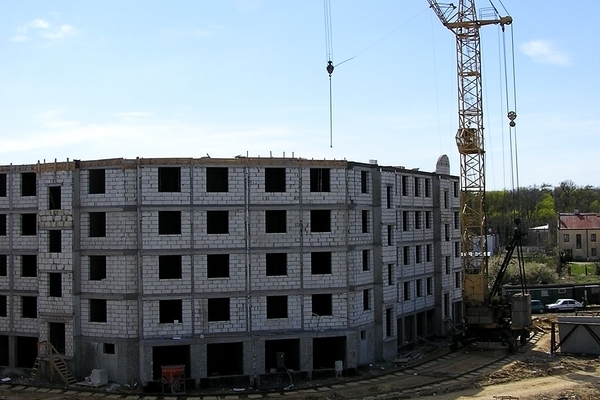
Logistics in the implementation of construction investment projects has a specific character resulting from the nature of these projects. It must be viewed both at the macroeconomic level, as it supports projects implemented in various places of the “global village”, and at the microeconomic level, as it concerns individual organizations – implementers of investment and construction processes, often enterprises operating on the international market, grouped around individual projects. Construction investment projects are closely linked to supply logistics, which is at the input of the logistics system.
Its main goal is to acquire raw materials, materials, and semi-finished products needed to ensure the continuity and rhythm of construction processes. To achieve this goal, specific logistics activities are necessary. For this reason, supply logistics can be viewed functionally. This means that it includes activities related not only to warehousing and inventory creation but also to the entire procedure of processing orders and purchasing raw materials and materials. The development of the raw materials and materials market has increased the role of activities related to purchasing on the global market. Important for the effectiveness of supply have become: the organization of the purchasing process, forms of cooperation with suppliers, and elements of negotiating delivery and payment terms. From the point of view of the efficiency of delivering purchased raw materials and materials by suppliers in accordance with the logistics idea: exactly to the place, on time, the analysis of costs and effects related to the supply process has also become an important issue.
The role of logistics in construction projects
Logistics can be defined as the process of managing the entire supply chain, which is understood as activities related to the flow of products and services. It is most often associated with the broad activities offered by transport and forwarding companies, such as transport – distribution – warehousing. It is relatively rarely highlighted in the implementation of construction projects, which indicates an underestimation of its role in project management. Where logistics management methods have been introduced, they have had a positive impact on the course of construction investment projects. One can emphasize, above all, the reduction of costs and the improvement of project management indicated by project managers. “Today, logistics is defined as the planning, implementation, and control of the placement and movement of goods and/or people and activities supporting these functions in a system created to achieve specific goals. On the other hand, the term enterprise logistics is understood as the organization, planning, implementation, and control of the flow of goods from their acquisition, through production and distribution to the final customer in order to meet market requirements at minimal costs and with economical capital involvement”. Construction projects require to a significant extent supply logistics, as well as logistics related to waste. The mission of supply logistics is to maximize the security of all material needs of the enterprise at the minimum logistics costs of implementing market supplies. In relation to the supply logistics of construction projects, three methods can be distinguished: independent supply chains of individual contractors, centralized supply of the entire project by the general contractor, and the use of logistics organizations. The use of a mixed model of the above methods is also noted. The tasks of supply logistics are carried out by specialized supply services. Great importance is attached to the organization of deliveries that minimizes the level of material stocks. This means the need for precise planning of deliveries in terms of quantity and deadlines.
The primary goal of logistics processes is to ensure the efficiency of flow and proper organization of customer service (while minimizing incurred costs). The efficiency of flow should be viewed from the point of view of delivering the logistics product to subsequent participants in economic processes according to the “5R” principle, i.e.: delivering the needed goods (right goods), required quantity (right quantity), required quality (right quality), appropriate place (right place), and the right time (right time).
The article contains 17,810 characters.
Source: Logistyka Magazine
L3-1_Bizon-Gorecka_Gorecki_Koszty_logistyczne_przedsiewziec.pdf