











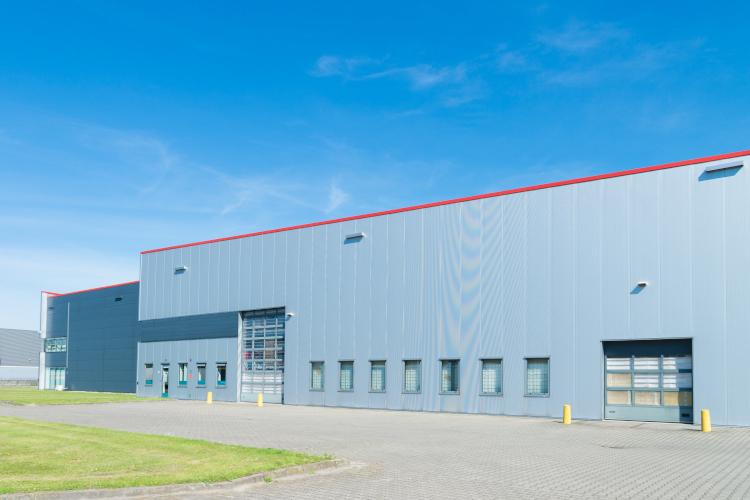
The latest report from international real estate advisor Savills shows that office and logistics buildings in Europe are the two commercial real estate sectors that are relatively most resilient to soaring energy prices, as utility costs represent a relatively small proportion of the total operating costs incurred by tenants in these cases.
According to Savills’ calculations, the share of energy costs in the expenditure structure of tenants in these two real estate sectors ranges from 2 to 4 percent. Employees generate more than 50 percent of all costs incurred by office tenants, while combined transport and labor costs account for over 75 percent of the budgets of companies in the warehouse sector.
At the opposite end of the spectrum are data centers and the life science industry, which are highly dependent on energy supplies. However, power usage effectiveness metrics in data centers are improving, and operators of such facilities are analyzing the potential for using alternative and greener energy sources, such as hydrogen fuel cells, which could also be introduced for use in the life science sector.
According to Savills, retail chains that consume a lot of energy may, in turn, decide to implement other, simpler solutions, such as lowering the temperature in stores, turning off lighting outside opening hours, or closing entrance doors. Research conducted by the University of Cambridge shows that closing store doors in winter can reduce energy consumption and carbon dioxide emissions by up to 50 percent.
– The commercial real estate sector is significantly exposed to the effects of the energy crisis and will face many challenges in the near future related to securing reliable and affordable sources of clean and green energy. These challenges can and should be addressed by both landlords and tenants through investments in energy-efficient solutions and the modernization of building fabric or electrical installations, which would allow for reduced energy consumption and lower costs in the long term – says Dan Jestico, Director at Savills Earth.
– Rising energy prices have made it so that there is probably no one who does not treat the issue of improving the energy efficiency of their properties as an absolute priority for the coming months. New regulatory requirements related to ESG reporting by companies also require immediate action regarding energy management in commercial buildings. New technological solutions, such as so-called Climate Tech, are extremely helpful in this regard, but one must start with the absolute basics, which should be kept in mind as early as the facility design stage. These are: insulation and airtightness of the facility, reducing the building’s energy demand, contracting green energy to reduce the facility’s CO2 emissions, and where possible, using renewable energy sources. In addition to savings and reducing CO2 emissions, sustainable management of other resources is also an important action; for this purpose, we can use systems that allow for the reuse of scarce resources, such as water – says Katarzyna Chwalbińska-Kusek, Head of ESG and Sustainability, Savills.
The report is available at the link.
Source: Savills