











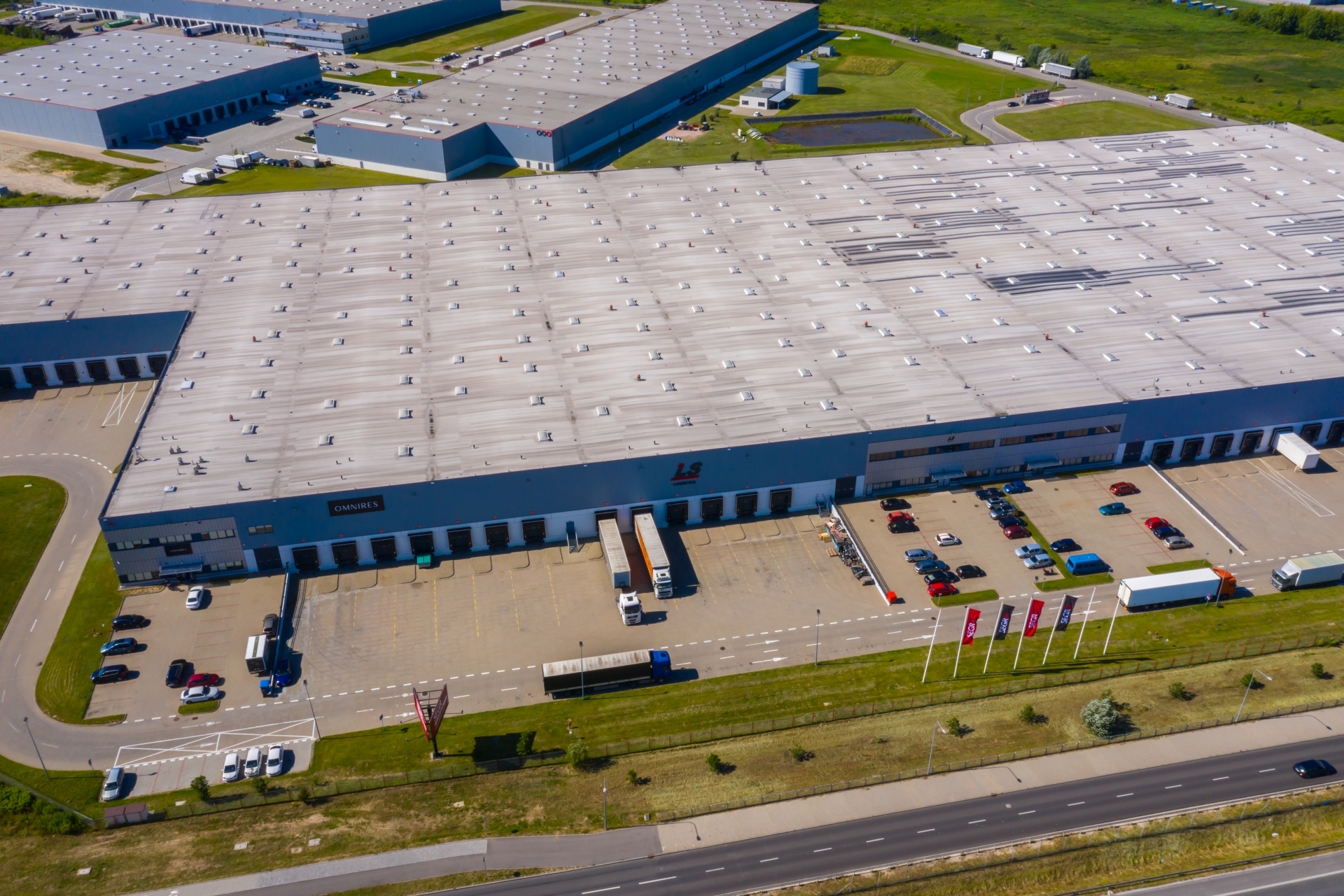
The expansion of one of the largest Asian e-commerce players in the Wrocław area may trigger a new wave of logistics investments from the Far East. In just the last two years, Shein has launched as many as nine warehouse centers in the agglomeration. For other Asian platforms, this may be a clear signal that Lower Silesia is a proven logistics hub for serving the European market.
With future tenants in mind, including the largest e-commerce platforms, developers launched several major projects in the region last year, including those in a speculative formula – without pre-lease agreements, but with the assumption of rapid demand. As a result of these decisions, 674,550 sqm of modern production and warehouse space entered the Wrocław market in 2024 – the second-highest volume of new supply in the region after 2022, and another 318,800 sqm were delivered in the first quarter of this year. Thus, Wrocław (with resources of 5,254,400 sqm of warehouse and industrial space) overtook Central Poland (with resources of 4,941,100 sqm) and became the third-largest warehouse market in the country.
– says Anna Domańska, Associate at the advisory firm Newmark Polska.
E-commerce-ready halls waiting for tenants
One of the most modern investments that hit the market at the beginning of this year is a 67,550 sqm hall, completed as part of the GLP Wrocław V Logistics Centre park. Located right next to the S8 route, just half an hour from the center of Wrocław, the investment was designed with the requirements of modern e-commerce in mind. One of the key features supporting the logistics processes of this sector is the 12-meter height of the buildings. The facility also uses a number of pro-ecological solutions – all tenants have access to a smart metering system, allowing for individual monitoring of utility consumption.
Among the more interesting investments available for lease is the modern EQT Exeter Park Wrocław South III complex, consisting of two halls with a total area of 50,600 sqm. The facility is located in Bielany Wrocławskie, right next to the A4 motorway, which guarantees convenient access to both Wrocław and other strategic points in the country and abroad. Since the beginning of 2024, three new halls in the P3 Wrocław project and investments such as another hall within Panattoni Park Wrocław Logistics South and ECE Kąty Wrocławskie have also entered the Lower Silesian market.
Wrocław’s growing logistical advantage
The appearance of such a large player as Shein on the Wrocław market certainly did not escape the attention of the competition, which is eager to enter proven locations, taking advantage of ready-made solutions. At the same time, our experience shows that companies from this sector make quick decisions and expect immediate access to warehouse space – in this context, developers’ decisions regarding speculative construction may prove to be a very good strategy that will bring the expected results in the long term.
– claims Anna Domańska.
Despite the slowdown in the growth dynamics of e-commerce in Poland compared to the years 2020–2023, the forecasts remain optimistic. According to a PwC report, the e-commerce market should reach a value of PLN 192 billion by 2028, with an average annual growth of 8 percent.
The expert emphasizes that Wrocław has long been an excellent place for the development of the e-commerce sector. – The region offers access to the A4 and A8 motorways, the S8 expressway, an extensive distribution network, and a strong labor pool, which are key elements for operations related to handling online orders. A huge asset of the capital of Lower Silesia, sometimes called the second Silicon Valley, is also the strong presence of companies from the IT and new technologies industry, which can serve as an operational background for global platforms – notes Domańska.
Stable demand and strong players
Tenant interest in warehouse space in Lower Silesia remains at a stable level. In the first quarter of this year, demand in the region amounted to 113,600 sqm, which is a result close to the average for the same periods in the last five years. Tenants most willingly chose locations in Nowa Wieś Wrocławska (19 percent of demand), Magnice (14 percent), Bielany Wrocławskie (10 percent), Wrocław (9 percent), and Wojtkowice (8.5 percent). These five locations accounted for nearly 60 percent of total demand in the last four quarters.
It is also worth noting that since 2021, the average annual demand in Lower Silesia has exceeded 900,000 sqm, while previously we were talking more about levels of around half a million. This is proof of the rapid development of the modern warehouse market in the region.
– comments Anna Domańska.
Among the largest transactions since the beginning of 2024, the expert mentions a contract signed by an e-commerce tenant (126,000 sqm) at Panattoni Park Wrocław Logistics South Hub, the renewal of a contract by LX Pantos (98,700 sqm) at Prime Logistics Wrocław in Pietrzykowice, and a new contract by a fashion industry company (56,200 sqm) at Panattoni Park Legnica.
The Lower Silesian warehouse market has several strong pillars on the demand side. In the last year, alongside the e-commerce sector, the most active tenants were from the 3PL industry related to online retail, as well as from the traditional retail sector. An important, though recently less active player – due to the slowdown of the German economy – remains the automotive industry.
– says Anna Domańska.
After the record boom. Tenants have plenty to choose from
Despite stable tenant interest, the pace of new investments in the region has clearly slowed down. Developers, reacting to the rising vacancy rate, which stood at 11.6 percent at the end of the first quarter – the highest level since 2012 – have limited their activity and focused on commercializing existing space. As a result, just over 36,000 sqm of warehouses are currently under construction in the region. One of the investments being built is the expansion of the largest Panattoni park in Lower Silesia – the Wrocław Campus 2 park. Another 25,000 sqm of modern warehouse space is under construction, which remains entirely available for future tenants.
The high level of available warehouses also translates into greater negotiation flexibility among owners. The average asking rent in the region is currently 4.20 – 4.40 euros per sqm, and in the case of older facilities, it may drop to approx. 3.80 euros. Urban spaces reach rates of around 5 euros, which still remains an attractive and stable level for business development.
High availability of space is not a negative signal for the market in this case. It is a natural phase of adjustment after years of intensive growth. Between 2019 and 2025, almost 3.4 million sqm of new space was delivered in Lower Silesia – this is as much as 65 percent of all current resources. Currently, the difference between Wrocław and the second-largest region – Upper Silesia – is just over 600,000 sqm, and between Wrocław and the market leader – Warsaw – 1.8 million sqm. – informs Anna Domańska. – After a period of very intensive development, during which we witnessed record levels of activity from both tenants and developers, the Wrocław market is entering a stabilization phase, creating space for the next wave of demand. Importantly, tenants have gained a wide choice of available locations, making Lower Silesia an exceptionally attractive market from their perspective today.
– concludes the Newmark Polska expert.
Source: Newmark Polska