











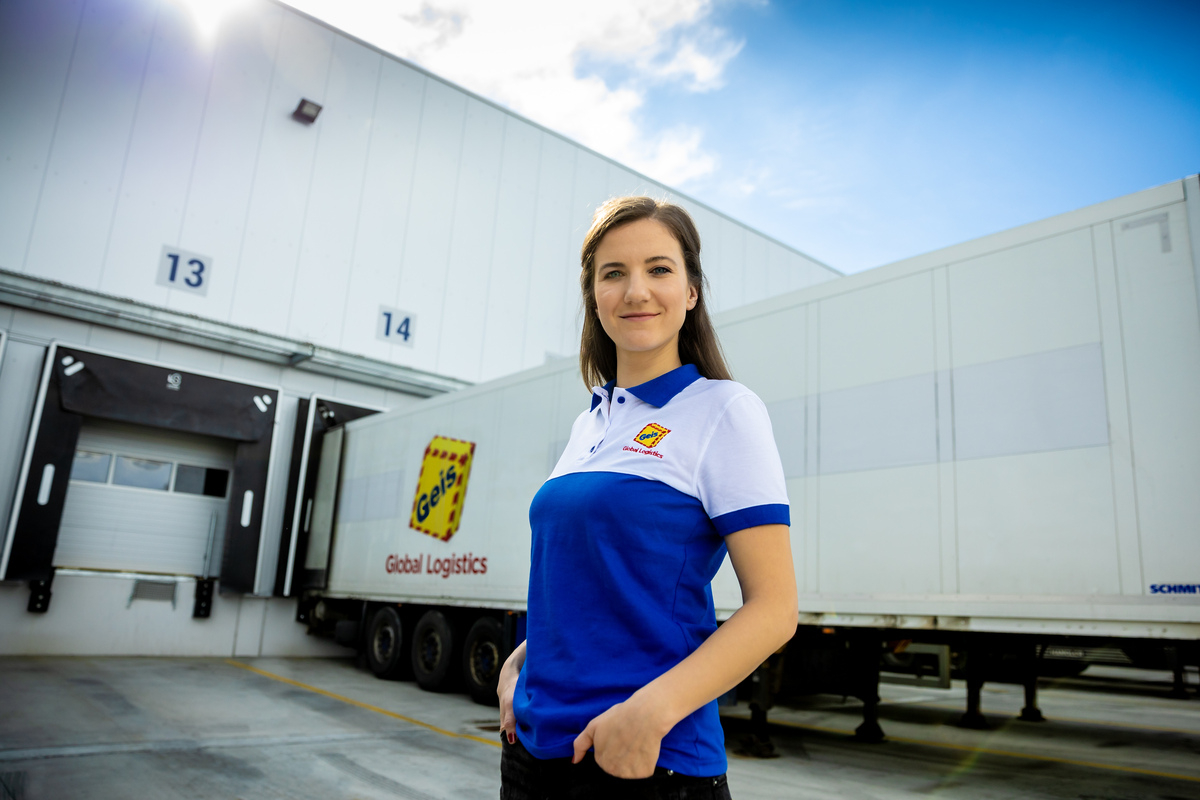
Women currently account for approximately 20 percent of all employees in the transport sector in Poland and are increasingly interested in working in the logistics industry. It is predicted that in the face of ongoing changes and evolving customer needs, their number will grow every year, and gender diversity will become even more important in the development of industries.
Although the supply chain may seem to be dominated by men, the trends of recent years clearly indicate the growing role of women, who currently make up 41 percent of professionals in this field worldwide.[1] In Poland, in the transport sector, almost every fifth employee is a woman.
Changing perceptions of these industries, their development, as well as the growing diversity of positions, are only some of the factors driving this trend. Women working in logistics find flexible forms of employment here, which allows them to more easily balance professional duties with their private lives. Furthermore, the industry offers many opportunities for development and acquiring new skills.
A larger number of women in logistics may be the answer to the labor shortage and difficulties in recruiting new employees that the industry has been struggling with for years. According to PwC data, the staff deficit amounted to as many as 100,000 positions. This issue was partially compensated by citizens of Ukraine, however, since the outbreak of the war, 33,000 drivers from that country have left Poland[2]. Staff shortages do not only affect us. An example of this is the situation in Great Britain, where a shortage of professional drivers caused shortages in the supply of essential products for several weeks. All these aspects contribute to the fact that every year there are more women in the transport and logistics sector, bringing their skills to both office and operational work.
– At Geis PL, approx. 35 percent of the entire staff are women, performing diverse roles and functions – they operate forklifts, perform warehouse work, work in forwarding and distribution departments, and in specialized positions, such as in the IT department; there are also Managers and Division Directors. Their presence is particularly important in the Customer Service Center, where they make up as much as 71 percent of the staff, acting as consultants or specialists. Additionally, women work in administrative positions, from executive assistants to accountants and sales representatives, both at the company’s headquarters in Stryków near Łódź and in the other 20 branches in Poland. We value their attentiveness when handling the transport process of shipments and their meticulousness in performing assigned tasks, and customers particularly pay attention to their support in operations and skillful feedback. That is why for years we have been committed to supporting their personal and professional development through the “Ladies First” campaign. As part of this initiative, we organize, among other things, workshops with psychologists, training sessions, and lectures on a healthy lifestyle and work-life balance – says Dorota Wójcik, HR Manager at Geis PL.
Why is gender diversity in logistics important?
Companies that actively strive to create gender-diverse teams achieve significantly better financial results. Where the share of women in management positions is higher, companies record an average of 35 percent higher return on equity and 34 percent higher return to shareholders. Additionally, companies with at least three women on their boards experience as much as 66 percent higher return on invested capital, 42 percent higher return on sales, and 53 percent higher return on equity.[3] Companies indicate that such diversification on boards can lead to greater independence, innovation, and effective management, which in effect allows for the maximization of business efficiency.
Gender diversity in transport and logistics has a significant impact on making the industry more customer-friendly. Since women make up over 50 percent of the population and make up to 85 percent of all consumer decisions, they can demonstrate greater understanding and satisfaction of customer needs.
Greater diversity in the workplace allows companies to solve problems more efficiently. According to research published by the Harvard Business Review, diverse teams have the ability to solve problems faster and more effectively. Differences in brain chemistry between women and men mean that individual employees have different perspectives and experiences, which enables them to propose diverse solutions.
– Gender diversity in the logistics industry, analogous to other business fields, is a key success factor. Thanks to different perspectives and experiences, stronger, more innovative teams are created, which is crucial for dealing with the challenges and dynamic changes taking place in the market – adds Dorota Wójcik.
Currently, men make up the vast majority of employees in the logistics industry. Some aspects of work, such as loading, unloading heavy goods, or operating machinery, require their physical strength and endurance. However, the optimal solution for companies is to achieve diversity that utilizes the strengths of both genders and thus contributes to the further development of the enterprise.
[1] Gartner’s “The Women in Supply Chain Survey 2023”
[2] Data from the Association of International Road Carriers
[3] Study among Fortune 500 companies
Source: Geis Group