











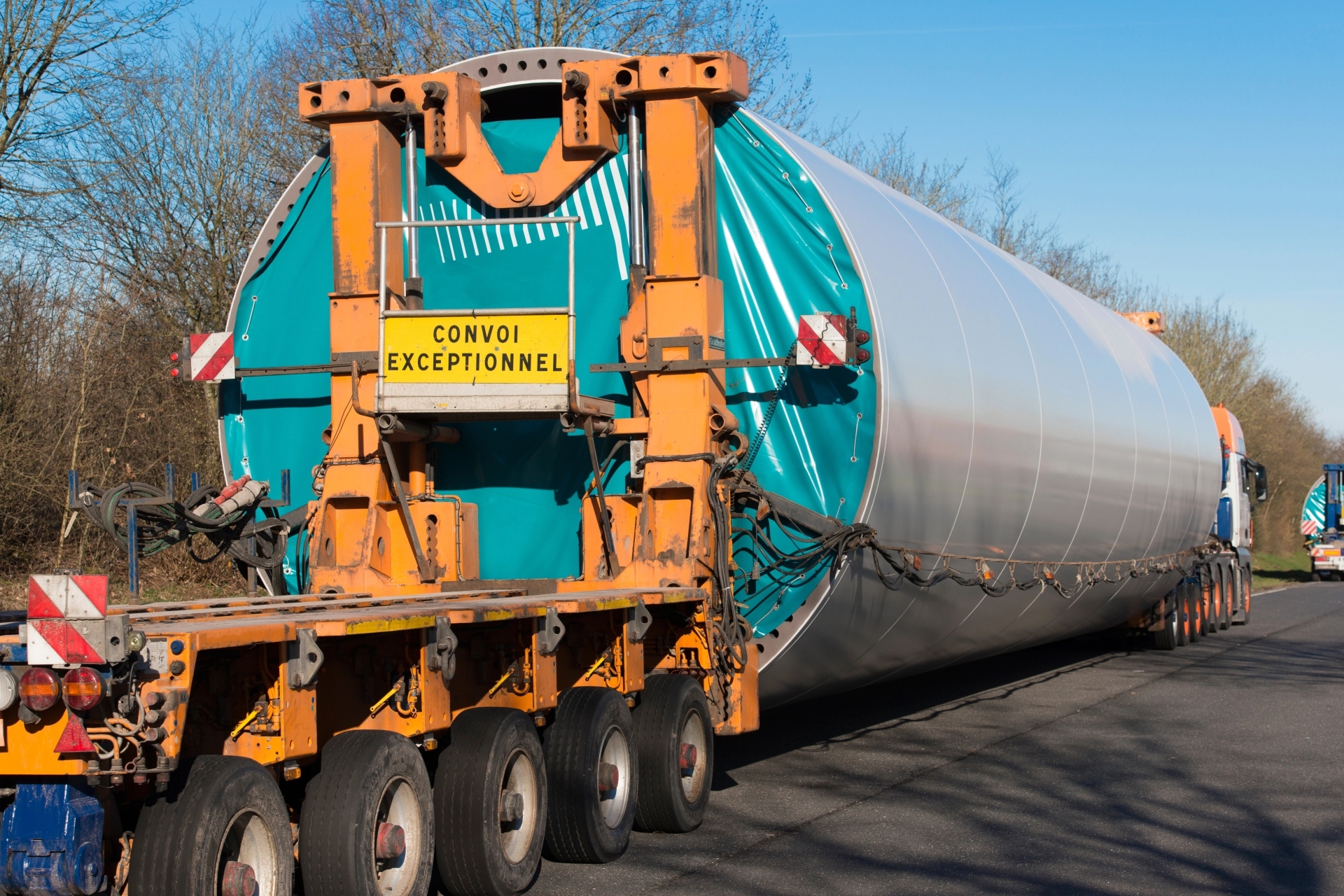
Oversized transport, referred to in regulations as non-normative transport, is the carriage of loads that, together with the vehicle, exceed the permissible limits defined by law. Each country can adopt its own standards – the Ministry of Infrastructure is considering modifying those currently in force in Poland. According to the proposal, vehicle combinations with greater weight and length, which currently require special permits as they exceed the standards, could be allowed into traffic.
The discussion on allowing longer combinations into regular traffic was initiated by a recent announcement from the Polish Chamber of Forwarding and Logistics. It indicates that work has begun on the conditional admission of vehicle combinations with a length of 25.25 m into traffic.
– These are preliminary assumptions, however, it can be assumed that the new regulations will be based on those functioning in other European countries. In connection with the lengthening of combinations, one of the topics of discussion is also the threshold of their permissible total weight. For example, in Germany it is 40 tons, and in the Czech Republic it is 48 tons. According to the Polish Chamber of Forwarding and Logistics, 40 tons of GVW is too low a value. In the institution’s opinion, such a low threshold will make the use of such long combinations unproductive, inefficient, and unecological – comments Mateusz Pernak, a lawyer at TC Kancelaria Prawna.
Other aspects are also being discussed, such as additional training for drivers, adapting infrastructure to the needs of larger combinations, or the types of roads on which they will be allowed to travel. Final decisions in this regard will be made by the Ministry of Infrastructure.
Features of non-normative transport
According to the regulations still in force, to speak of non-normative transport, the vehicle or load must exceed one of the permissible values, i.e.:
- A weight of 40 tons – this is usually the standard, permissible total weight of a vehicle or vehicle combination.
- A length of 16.5 m for a tractor unit with a semi-trailer or 18.75 m for a vehicle combination with a trailer, a width of 2.55 m or 2.6 m for isothermal vehicles, or a height of 4 m.
- Permissible axle load on the road surface amounting to 10 tons for a single drive axle, although in some places it may be 11.5 tons.
Transport only on the basis of a permit
As Mateusz Pernak explains, the movement of a non-normative vehicle is permitted under specific conditions:
– It is necessary to obtain a permit of the appropriate category, comply with the conditions included in it, pilot the passage in accordance with the regulations, and exercise special caution when driving a non-normative vehicle – says the expert.
The aforementioned permits are currently divided into five categories and differ in their scope of application, requirements, and area of validity.
Category I concerns non-normative vehicles with length, height, axle loads, and actual total weight not exceeding the permissible limits, and a width not exceeding 3.5 m. Non-normative vehicles holding a Category I permit may travel on public roads, excluding expressways and motorways, and permits are issued by the district governor (starosta) for a period of 12 months.
Category II also covers non-normative vehicles with permissible weight and axle loads, but with a width not exceeding 3.2 m, a length not exceeding 15 m for a single vehicle and 23 m for a vehicle combination, and no higher than 4.3 m. Non-normative vehicles holding a Category II permit may travel on all public roads. When submitting an application, one can apply for a permit for 4 periods, i.e., a month, 6 months, 12 months, or 24 months. The permit is also issued by the district governor, and the fee for issuing it increases with the length of its validity period and ranges from 200 to 2000 PLN.
Category III is almost identical to Category II, with one exception – it also applies to vehicle combinations with steered axles with a maximum length of 30 m. A Category III permit also entitles the holder to travel with vehicles and on roads specified for a Category II permit. An application for a Category III permit is subject to the same rules as Category II, with the difference that permits are issued not by the district governor, but by the GDDKiA (General Directorate for National Roads and Motorways).
Category IV concerns non-normative vehicles with a width not exceeding 3.4 m for a single-carriageway road and 4 m for a dual-carriageway road of class A and S, with a length not exceeding 15 m for a single vehicle, 23 m for a vehicle combination, and 30 m for a vehicle combination with steered axles, a height not exceeding 4.3 m, an actual total weight not exceeding 60t, and axle loads not exceeding the permissible limits.
In terms of issuing the permit, Category IV has also been regulated by the legislator identically to Categories II and III. The application must again be submitted to the GDDKiA with an indication of one of the 4 periods.
Category V includes non-normative vehicles with dimensions and actual total weight greater than those mentioned in Categories I-IV and with axle loads exceeding the permissible values. Category V can be treated as a special category because it applies to routes individually agreed upon with the road administrator. It requires detailed route coordination, analysis of the load-bearing capacity of bridges and viaducts, and organization of piloting. Fees for the permit are also set individually depending on the scale of the operation.
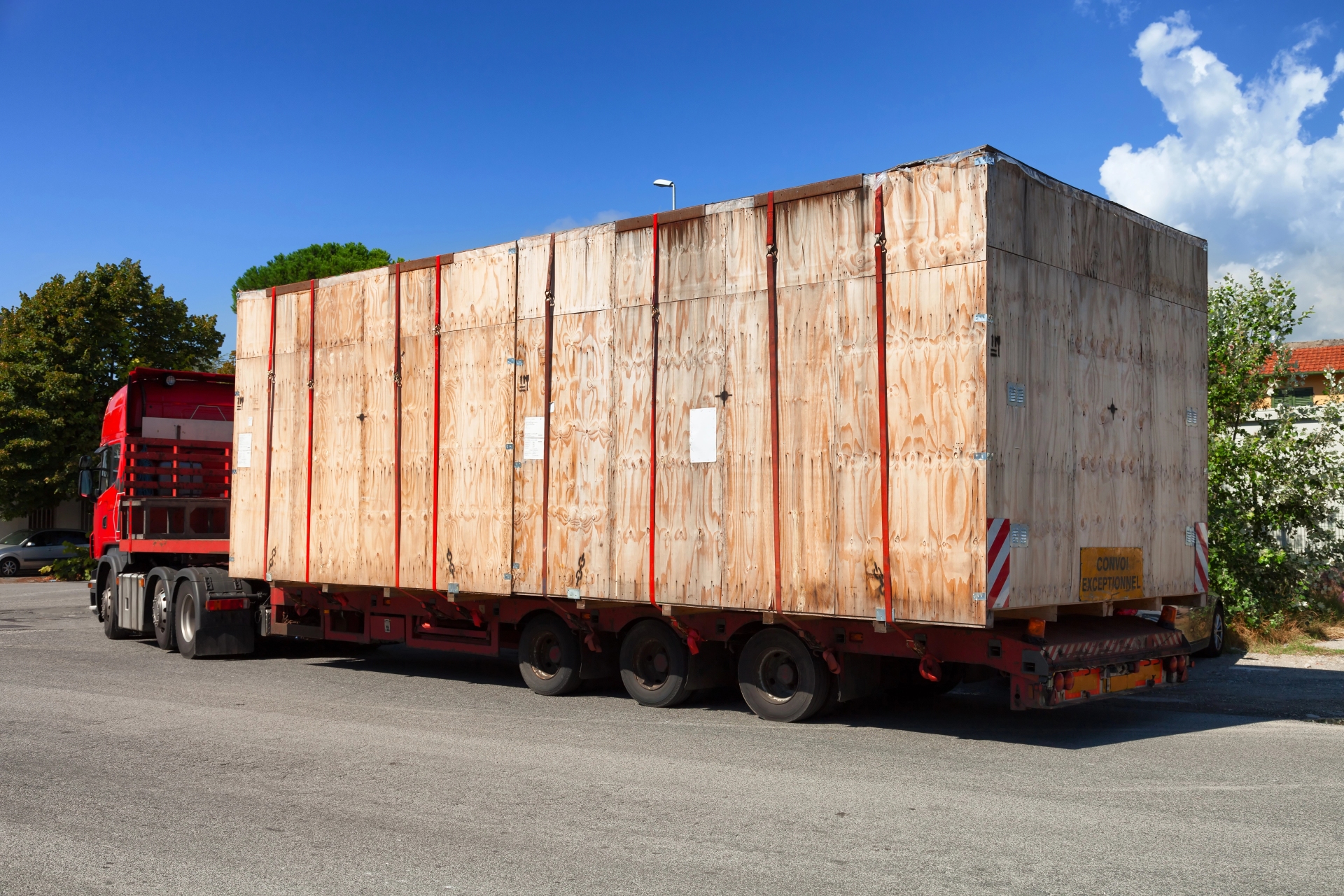
Penalties for non-normative transport without authorization
Polish regulations provide for penalties for carriers who do not comply with the imposed requirements or violate the conditions of permits. Their amount depends on the degree of exceeding the standards and the offense.
For lack of an appropriate permit, a fine of 5,000 PLN is imposed in the case of Category I or II permits, or 15,000 PLN for Category III, IV, or V.
Exceeding axle loads (for roads with lower standards) involves a penalty from 500 to even 5,000 PLN for each ton of excess, depending on its degree. On the other hand, exceeding the dimensions or total weight of the vehicle is punishable by a fine from 500 PLN to even 15,000 PLN.
– The decision to impose a penalty is, of course, not the only element to fear. The vehicle may be detained if the violation poses a threat to safety or road infrastructure, and the entrepreneur may be charged with the costs of additional actions, e.g., in the case of the need to organize a detour, piloting, or even road repair. The costs in this case may therefore turn out to be significant – points out Mateusz Pernak.
How to avoid a penalty for non-normative transport?
To organize non-normative transport in accordance with the law, first make sure that the vehicle has the appropriate permits for the given transport, and also analyze the requirements of the route and the technical parameters of both the vehicle and the load.
– In case of doubt, it is worth seeking the advice of specialists, for example from a law firm specializing in transport law, who will help both in identifying the vehicle and obtaining the appropriate permits – advises Mateusz Pernak.
Source: TC Kancelaria Prawna