











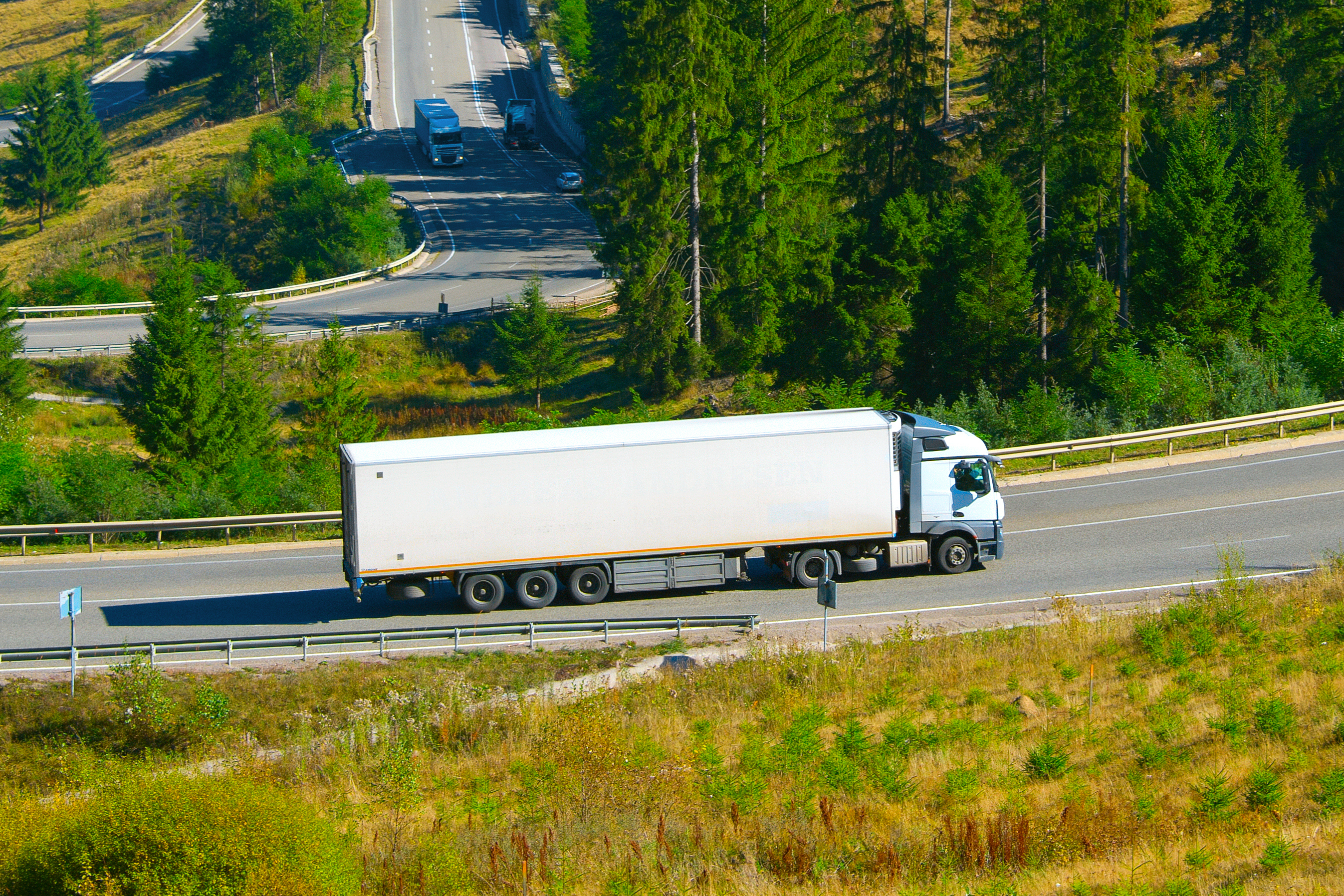
For several days now, inspection authorities in all EU member states have been required to equip themselves with DSRC devices for remote tachograph data collection. The new regulations came into force on August 19th of this year, and their main goal is to improve road safety through the rapid pre-selection of trucks for inspection. However, it is already known that not all EU member states have managed to adapt to the changes on time and are experiencing delays in this area. How are inspectors approaching this, and why is it important to start using DSRC as soon as possible?
Delays in EU countries
The first tests of remote tachograph data collection using DSRC began back in 2019, when smart tachographs of the first version (G2V1) started being installed in new trucks. Currently, several European countries are already using this solution, including Poland, Germany, Denmark, the UK, and Italy. Nevertheless, there are still countries that do not have the appropriate inspection equipment.
– Although EU regulations impose an obligation on inspection authorities to remotely read tachograph data via DSRC, some countries in the EU are not yet ready for it. We know that the procurement process for the appropriate devices is still ongoing and may even drag on until next year due to a lack of budget. Moreover, some may also lack the motivation to equip themselves with new gear, because there are currently no legal consequences for failing to comply with the new regulations, and thus they can afford delays – comments Małgorzata Pander, International Development Expert, Inelo from the Eurowag Group.
DSRC, or information in less than a second
DSRC technology significantly streamlines the work of inspectors on the road. A packet of information about a passing truck can be downloaded in less than a second. This allows services to quickly assess which vehicle is suspicious and therefore should be stopped for a detailed inspection.
– This technology increases the efficiency of inspection services by enabling the rapid pre-selection of trucks for stopping. Inspectors do not have to rely on intuition when making a choice. They subject only those vehicles to a full inspection for which they have information that tachograph manipulation may have occurred or that it was used improperly. Such a procedure increases the inspector’s work efficiency, which in turn increases the detection of violations on the road, which further contributes to increased safety on our roads, which is why we encourage all inspection services to quickly equip themselves with DSRC technology – points out Małgorzata Pander, an expert at Inelo from the Eurowag Group.
New tachograph, more data
Inspections can download 19 RTM parameters if the passing vehicle is equipped with a smart tachograph of the first version (G2V1). In that case, the remotely downloaded tachograph data will inform inspection services, among other things, whether the driver was driving without an inserted card, whether the truck’s speed was recorded, whether there are errors that could indicate that tachograph manipulation occurred, or what the current vehicle activity is. It is worth adding that inspection services will learn more if the vehicle has a new smart tachograph (G2V2).
– If the vehicle is equipped with the latest G2V2 smart tachograph, inspectors can remotely download as many as 25 RTM parameters for inspection. This means that in addition to the ability to instantly detect tachograph manipulation, inspectors can just as quickly check whether the driver has exceeded their continuous, daily, weekly, or bi-weekly driving time. This is of huge importance for road safety. It can help detect those who do not follow driving time regulations and are behind the wheel for too long, and thus may be fatigued and potentially dangerous on the road to all of us. It is worth noting that the TachoScan Control DSRC solution from Inelo contains all required parameters, including those related to driving time, and it is currently used by 125 inspection units from 16 countries in Europe – concludes Małgorzata Pander.
Source: INELO