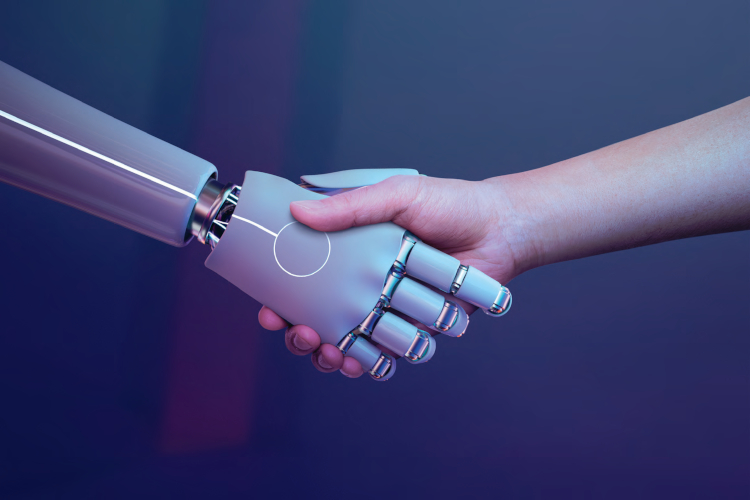
As humans, we prefer the robots we work with to be similar to us in terms of “personality.” In general, users prefer robots that exhibit an extroverted “personality,” as they perceive them as more socially attractive and intelligent. I know, such statements will meet with opposition from many people: what kind of robot personality are we talking about? These are machines, after all. And what level of extroversion can a robotic arm present?
It is not my goal to convince anyone whether it is right to write about the “personality” of robots. For me, the human is much more important in the human-robot tandem. A huge change is taking place in the work environment before our eyes. Machines are ceasing to be tools in human hands; thanks to the use of artificial intelligence, among other things, they are becoming partners at work. Managers who look at technology implementation in a broader context than just cost reduction and efficiency improvement should turn their attention to the area of Human-Robot Interaction.
There is no turning back from robotization. ABI Research forecasts that by 2025, more than four million commercial robots will be installed in over 50,000 warehouses; the need for flexible, efficient, and automated e-commerce fulfillment will drive rapid growth in the number of cobots.
Challenges
Wim Lambrechts, a Dutch scientist and co-author of an article on human factors influencing the implementation of cobots in distribution centers, identifies three challenges associated with the rapid development of robotization: first, implementation requires organizational changes and reworking existing processes according to a good plan; second, it is necessary to take care of people, as employees may be hesitant or even resistant to this change. The scientist notes that robots can support humans in many tasks, but this requires trust and cooperation from the human operator. Trust is an important factor, one could say as basic as a stable connection during online meetings, but we will return to it in a moment. The third challenge is related to the impact of increased robotization on human fear of job loss.
The defined challenges are relevant not only during the implementation of robots in warehouse centers. The use of cobots is becoming increasingly common: they are used for search and rescue, social robots help dependent people with daily duties, and robots are used in the military, logistics, or hospitality. A cobot is a collaborative robot designed to assist humans in the workplace. The fundamental difference between cobots and industrial robots is the shared workspace. The latter are surrounded by extensive fencing that prevents the operator from getting close to the machine. Collaborative robots can safely operate with humans because they can detect the presence and movements of a person, allowing them to adjust their behavior to prevent accidents. Working with cobots is something new for many people, and as a result, it is outside their comfort zone. Wherever a decision is made to implement robots into the work environment, we are consequently dealing with the creation of a new type of work team – Human-Robot Interaction Teams.
Much is said about the first and third challenges defined by Wim Lambrechts. The discussion over whether robots take away or generate jobs has no end, nor a clear winner. The area of the new type of teams remains, for now, on the margins of discourse. Human-Robot Interaction (HRI) is an interdisciplinary field, and such an assumption makes accurate exploration difficult from the start because it requires the involvement and coordination of analyses from various fields. The results of research conducted so far indicate the importance of various factors and areas in shaping the cooperation between humans and robots. These are often fundamental issues, such as a sense of safety when a human cooperates with a machine, through reliability or the ability to communicate and understand commands. But it turns out that at the foundation lies something deeper, namely: trust. In one study, it was defined as a human’s belief that a robot will follow the commands of human team members. Olga Simon, from the Salzburg University of Applied Sciences, notes that factors having a significant impact on the development of human trust in robots also include: appearance, operation, and the proximity of the human and the robot.
The issue of trust
A wide range of tasks can be delegated to robots or performed jointly by humans and robots, provided that human employees have the ability to supervise the robots’ actions and intervene if necessary. A sense of being in control and having authority over the robot is perceived by humans as a factor that facilitates building trust. It matters that a human knows what the machine will do. If the logic by which robots work is known to humans, it fosters an understanding of their functioning, and thus increases trust, which is probably not particularly surprising, as this principle also applies to purely human teams. Importantly, reliability and efficiency also affect the level of trust. The better a robot performs its job, the more trust it generates in the user. One of the most difficult management challenges concerns the dynamics of performance evaluation when humans and robots work as part of the same team. Researchers point out that inquiries conducted in the area of computer games have highlighted the need to include the issue of human limitations, especially the element of fatigue, in the evaluation of HRI team performance. Organizations will be forced to develop a relatively fair performance evaluation system to maintain the motivation of human employees and their willingness to continue interacting and cooperating with robots.
The issue of the impact of robot appearance on the quality of human-machine cooperation is complicated. People claim that it is easier for them to trust when a robot has a shape similar to a human. In the results of an experiment conducted by Olga Simon, the subjects insisted that robots should have a head and arms. At the same time, they expressed quite a skeptical attitude toward androids. The researcher traces the sources of such an approach to a theory popularized in the 1970s called the “uncanny valley.” Its creator, Masahiro Mori, argued that a moderate degree of similarity between a robot and a human creates a significant sense of safety, and thus lowers inhibitions in contacts with robots. As a robot becomes more human-like, the human reaction can shift from empathy to strangeness and horror. The physical similarity of cobots to humans causes people to attribute social traits or personality to robots, which unfortunately means they greatly overestimate their capabilities. Natalia Hatalska, in her book “The Age of Paradoxes. Will Technology Save Us?” writes clearly: the relationship with a robot is always one-sided. A robot is incapable of feeling, it does not care about anything, it can only imitate and read emotions if it has been programmed to do so. The relationship with a robot is an illusion. Perhaps “relationships” can be established faster between a human and a social robot, but is it excluded that we will “start talking” to an autonomous iGo Neo cart from Still, which follows us every day and helps us while picking orders? And is there anything strange about the fact that when working with such a cart, we must trust that it is capable of handling the task, that it will not cause an accident or run over our foot?

“Robot personality”
A noticeable factor affecting cooperation in an HRI team is human personality and the perception of a robot’s “personality.” American professor Lionel P. Robert Jr. prepared a review of scientific papers on personality in human-robot interactions. He structured the results and identified four areas: human personality and its impact on interactions with a robot, the impact of a robot’s “personality” on interactions with a human, similarities and differences in the personalities of humans and robots, and factors influencing a robot’s personality. Perhaps not surprisingly, it turned out that extroverts are more inclined to contact robots. They also show a higher level of trust in robots. Extroverted individuals talked to robots more often and also had a greater tendency to anthropomorphize machines. The subjects were not always able to accurately assess the “personality of robots” based on the machines’ behavior. Various traits influence the credibility, intelligence, capabilities, and perception of the persuasiveness of robots. The type of “personality” presented by robots directly and indirectly affects the degree of fun and pleasure that people had thanks to cooperating with the machines. In the area of similarities and differences in the personalities of humans and robots, it was noted that we tend to prefer robots that are more similar to ourselves. Matching the personality of the human and the robot yields positive results in several aspects: it improves the quality of interaction and promotes a positive perception of the robot. The study participants also considered the following to be important: the way the robot moves, the timbre of its voice, whether it speaks with a male or female voice, whether it gestures, whether it turns its head during a conversation, and whether it has a humanoid form. Our perception of cooperation with a robot is therefore dependent on personality traits, which are individual for every human. Should personality factors be taken into account when creating HRI teams, should robots be created with personalities matched to the members of existing teams, or is every human suitable for cooperation with robots? Now is a good time to realize what we will have to face and what management challenges lie ahead for the leadership of many companies. From the perspective of an organization, and more specifically managers who manage teams in which robots work, it should become increasingly important to seek answers to the questions: does a human-robot team work differently than a purely human one? What do employees feel when they perform tasks together with a robot? How do we define responsibility for task execution? Who in a human-robot team is responsible for a failure? What do robots need to cooperate effectively? Can the physical form of a robot and/or its “personality” influence how people react to it? How does the issue of safety and reliability affect human-robot contact? What if people attribute more intelligence to a robot than it actually has?
Instead of a conclusion
Even if we are at the beginning of the road today, robotization is accelerating with each passing year, so it is not too early to talk about a new type of team and prepare management staff to manage in a way that takes care of the well-being of people in HRI teams.
The article comes from the magazine LOGISTYKA 1/2022.
The e-edition of the magazine is available in our offer!
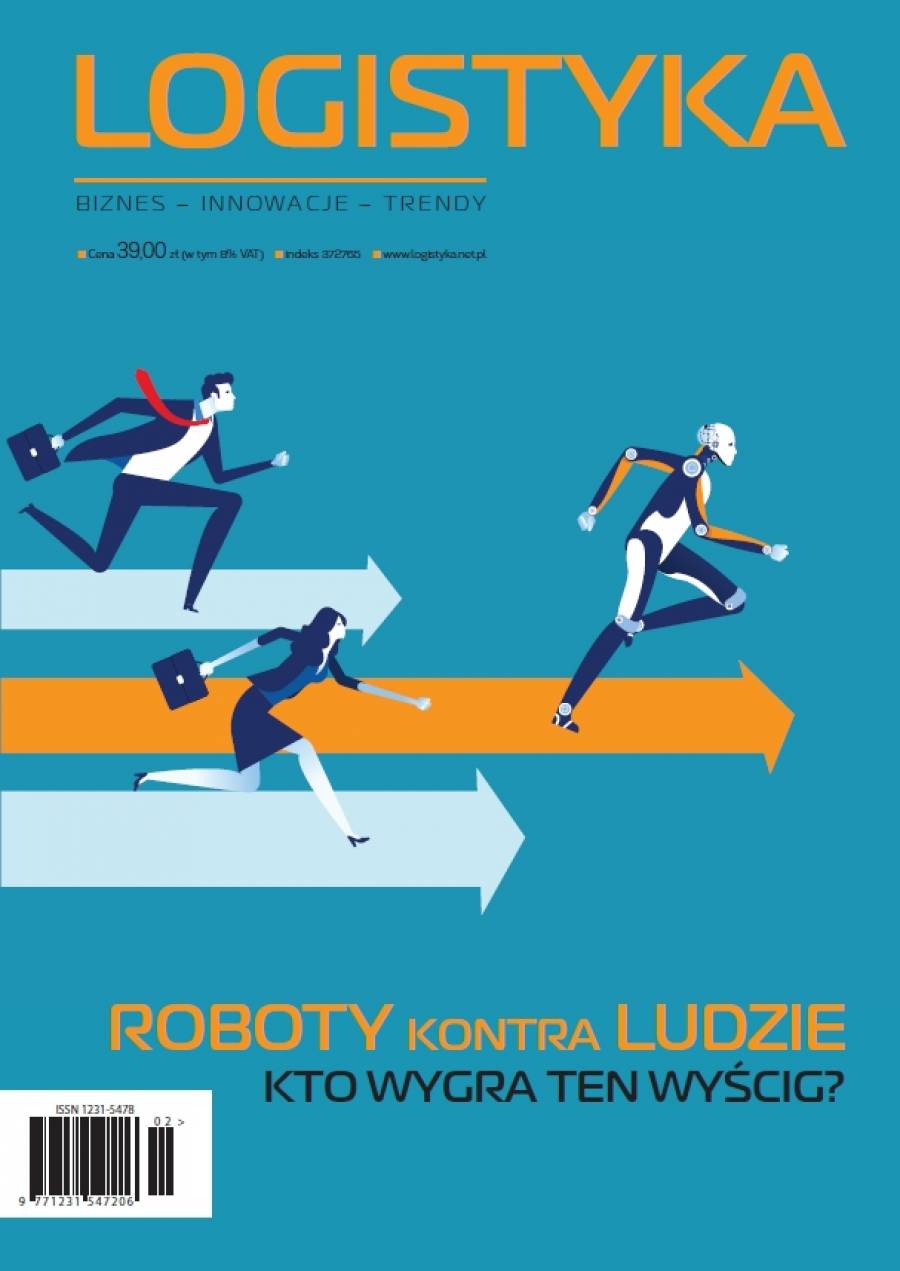
Stay up to date, order a subscription to the LOGISTYKA magazine!