








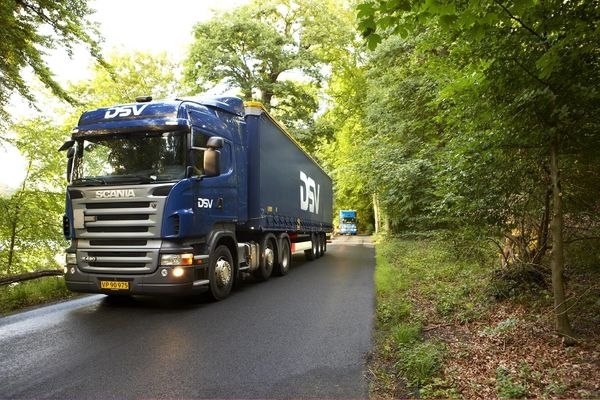
Transporting quickly and inexpensively – these are the primary priorities for most entrepreneurs when choosing a logistics operator. However, in search of the lowest possible transport costs, many companies forget about additional cargo insurance.
Entrepreneurs and manufacturers often ask themselves whether they should additionally insure goods for the duration of transport. It is certain that in today’s world, every such entity cares about both time and the costs associated with moving a shipment from one place to another. However, one must remember that the most important element of the entire goods movement process is that the shipment reaches its destination complete and undamaged. While it is impossible to completely eliminate the risk of loss of goods or loss of their value during transport, it is possible to transfer this risk to another entity, namely an insurer.
Carrier’s liability insurance vs. Cargo insurance
A large portion of transport company clients are unaware of the fact that commissioning a transport to an external company does not at all mean an automatic transfer of the entire risk. The role of a professional carrier is to explain to the client the principles of transport regulations and the resulting consequences, so that both parties can be completely at ease in the event of any damage or loss of cargo.
The regulations governing domestic and international transport of goods are the Transport Law and the CMR Convention. According to their provisions, the carrier is not liable for damages caused by circumstances that they could not avoid and the consequences of which they could not prevent. They are also not liable for damages arising from causes not caused by the carrier’s fault or resulting from the nature of the goods or force majeure. It is also necessary to remember the limitation of compensation, which in many cases is significantly lower than the value of the transported cargo.
Taking all this into account, we must be aware that a situation may arise where, despite the total loss or damage of the shipment, the carrier’s liability will not apply. In such circumstances, it may turn out that the client will not receive any compensation or will receive it, but in an amount significantly lower than the value of the goods themselves.
Considering the worst-case scenario is never pleasant, but the role of a responsible carrier is to make every effort to ensure that transport proceeds smoothly and safely. We should know that every insurance policy protects the insured, i.e., the policyholder. Consequently, the carrier’s or freight forwarder’s civil liability policy is intended to protect the interests of these entities, not the interests of the owners of the goods. Caring for the client’s best interest in the case of DSV means reliably informing about potential risks and consequences of unforeseen complications and helping to protect against them. The best way for such protection recommended by DSV is for the client to purchase Cargo insurance.
How does the insurance work?
Example 1: Let’s imagine a situation where we commission the delivery of cosmetic products on a route from Italy to Poland. The transport is carried out by a professional carrier. At no stage of the transport were any irregularities related to the condition of the shipment found. However, after unloading and after unpacking and counting, it turns out that part of the goods has been stolen. The police investigation into detecting potential perpetrators of the theft is discontinued due to failure to detect them.
Insurance mechanism: Due to the failure to detect the perpetrators, our potential claim against the carrier for the return of the value of the lost goods will be ineffective. This will happen regardless of whether we direct the claim directly to the carrier, the freight forwarder, or the insurers with whom their civil liability policies have been arranged. In such a case, the only chance to recover lost costs, and in full value, is provided by Cargo insurance.
Example 2: The carrier picked up a shipment for delivery to the client. The weather deteriorated during the day and it started to rain with hail. Hailstones falling with great force onto the tarpaulin of the truck carrying the goods damaged it, and the contents of the shipment were destroyed by soaking.
Insurance mechanism: This type of event was caused by force majeure, therefore the carrier will not be liable for its consequences. The general terms and conditions of the carrier’s civil liability insurance do not cover damages resulting from force majeure. Despite the fact that the goods are no longer suitable for further use and the client is not entitled to a refund of the value of the damaged property, they remain without the possibility of obtaining financial compensation from the carrier, the freight forwarder, or their insurers. The situation would look different if the sender of the goods had insured the goods using Cargo insurance.
Example 3: The transport concerns a shipment containing 15 laptops from Poland to Germany, each worth 3,500 PLN. The total weight of the goods is 30 kg. At the moment of delivery of the shipment to the recipient, it turns out that the carrier improperly secured the shipment in the loading space of the vehicle, as a result of which the pallet shifted, the cartons were crushed, and consequently, the equipment inside was also damaged.
Insurance mechanism: The recipient states that 4 laptops are not suitable for use, and therefore files a complaint for the return of their value in the amount of 14,000 PLN. The complaint is fully justified, therefore the carrier must acknowledge the client’s claim in accordance with the rules of the CMR Convention. Our surprise will be unpleasant when it turns out that the awarded compensation will amount to approx. 350 PLN, as such a limit of the carrier’s liability is set by Art. 23 of the CMR Convention. Despite the acknowledgment of the complaint, the losses are many times greater than the compensation obtained, therefore the client is dissatisfied with the services of this carrier. From the point of view of the law, the carrier acted in a proper manner, what’s more – they compensated for the losses to the extent they were obliged to. Unfortunately, such situations happen most often, thus constituting the basic argument for securing the transported property by purchasing a Cargo policy for the duration of transport.
How to be safe?
The above examples show how important it is to ensure proper insurance protection for the transported goods. The key importance in choosing the right security for the duration of transport will therefore be the widest possible scope of risks included in the policy. Such coverage is provided by Cargo insurance. Proving the fact of damage will be sufficient in this case to obtain compensation in the full value of the insured goods. It also does not matter whether the carrier is liable for the damage or not. Furthermore, in the case of Cargo insurance, the path to pursuing claims and paying compensation is shorter than in the case of ordinary insurance, which will allow the Client not only to minimize the loss but also to save time on tedious pursuit of claims with the carrier. To sum up – better safe than sorry.
Anna Kowalska-Zientek
Team Leader
Insurance and Claims Handling at DSV Road