










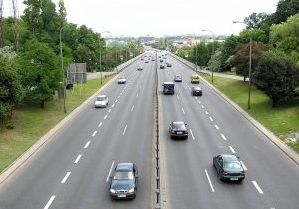
Alarming signals regarding delays in the construction of roads and stadiums are reaching us from all sides. The NIK (Supreme Audit Office) report from June 2011 on Poland’s preparations for Euro 2012 indicates that the greatest negligence occurs in the area of road infrastructure modernization. In the NIK statement, we read that “it will not be possible to commission another 14 road sections with a total length of 403.9 km before the championships, including seven sections of highways defined as key, with a total length of 318.9 km, and seven sections of expressways with a total length of 85 km, considered important.” It is also impossible to complete the construction of key expressways connecting the cities where matches will be played before the championships.
– Terminating contracts with contractors carrying out public procurement is an infrequent phenomenon. The entities responsible for the decision are reluctant to admit that they made a mistake when choosing the company to implement the project. Most often, the completion date of the facility is postponed – says Mariusz Pawłowski, an expert from Optima Partners. – In the case of projects related to Euro 2012, such a postponement is not possible. If we want to organize events of this format in the future, we must use appropriate project management methods. In my opinion, the Critical Chain Method is one of them, which gives a very high probability of completing the project on time and within the initially specified budget.
CCPM assumes abandoning intermediate deadlines, focusing on the only significant date – the project completion date. Thanks to skillfully placed buffers, projects are completed on time, despite individual tasks exceeding their time estimates. Task queuing eliminates resource overloads. Tasks performed individually, in the correct order and time, can be finished faster. Project success is based on finishing, not starting tasks. CCPM also allows for effective monitoring of project implementation, which is not the norm in traditional project management.
CCPM eliminates many negative phenomena that we deal with during traditional project management: student syndrome, Parkinson’s law, or harmful multitasking. It prevents contractors from setting the safest, i.e., the most distant, completion dates. Applying the Critical Chain Method would allow avoiding delays in the implementation of public procurement. Such a solution would bring benefits to both clients and contractors, as well as to the public, who would certainly appreciate the functionality of stations and sports facilities, communication amenities related to the second metro line, or new roads. It is worth using the experience of Japan, which has successfully introduced the Critical Chain Method as a standard for public procurement.