









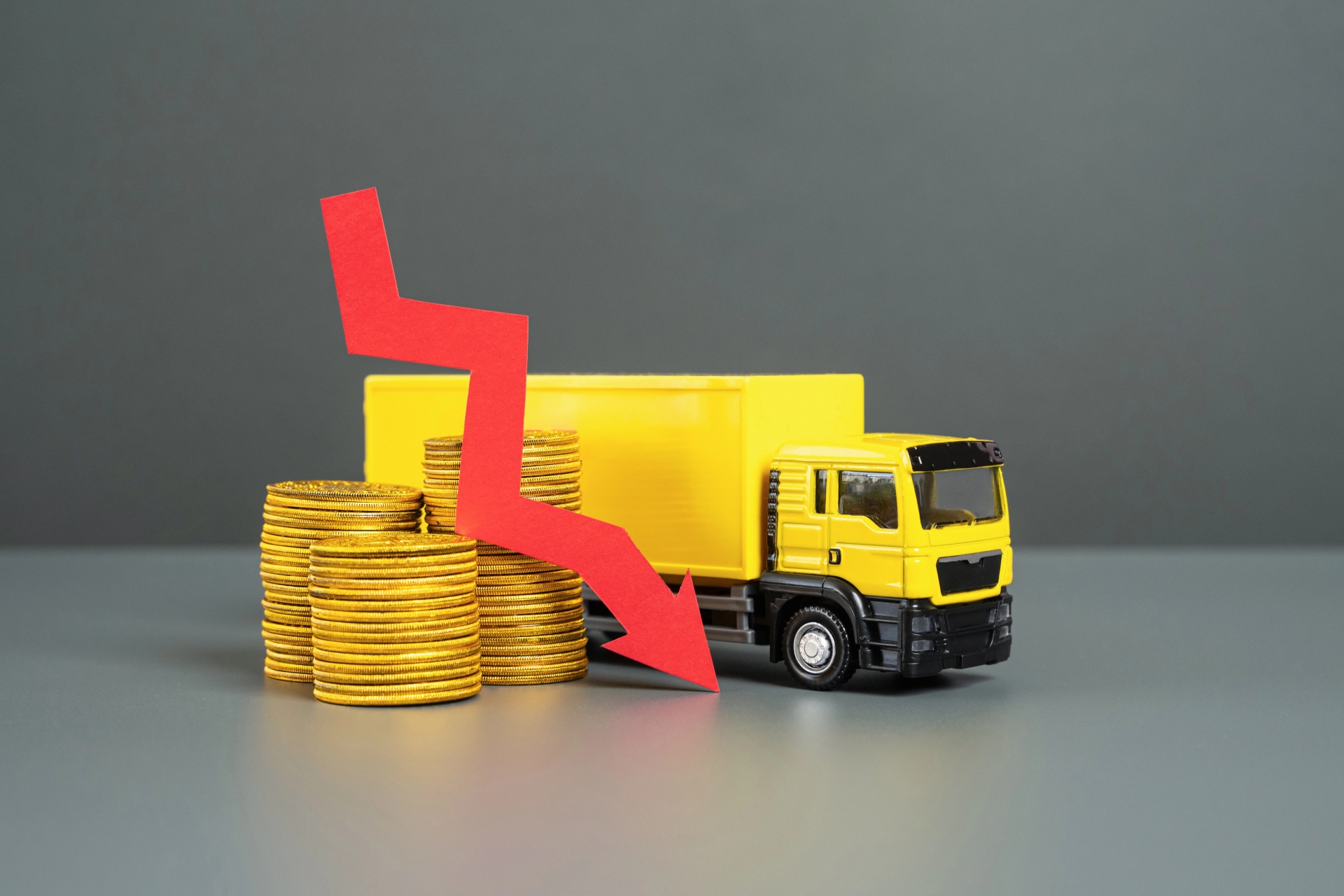
Transport, shipping, and logistics companies are struggling with payment bottlenecks, lack of liquidity, and rising operating costs. The TSL industry is one of the pillars of the Polish economy, generating as much as 7 percent of GDP[1], but sentiment in the sector is at its worst since 2020. The EFL barometer sub-index for the second quarter of 2026 for carriers, shipping companies, and logistics operators reached a level of less than 47 points, more than 5 points lower than in the first quarter[2]. Overdue debts in the sector at the end of March 2026 amounted to PLN 3.7 billion[3]. This is an increase of more than 4 percent year-on-year – the total amount of debt has grown by over 140 million zlotys. What should you do if you lack the funds to settle obligations to lessors?
Only 4 percent of transport companies expected an improvement in financial liquidity in the second quarter of 2026[4]. Carriers consider payment bottlenecks and long payment terms (63 percent), rates for transport orders (50 percent), and rising operating costs (42 percent) as obstacles to maintaining it[5].
Delayed payments affect the condition of the sector
In the TSL industry, the average waiting time for payment is 65 days. Every fourth entity waits on average more than 75 days. This is a serious warning signal: let us remember that the economy is essentially a system of connected vessels, and the problems of one entrepreneur do not remain without influence on the condition of other companies in the branch, and often also “spill over” outside the sector, in the form of, for example, unpaid leasing installments or fuel invoices. This also has an impact on business decisions: as many as 2/3 of respondents agree with the statement that they are becoming more cautious when it comes to planning expenses and investments.
– points out Dariusz Łupiński, an Intrum specialist.
Geopolitical shock, new regulations, and rising employment costs. What affects the poor financial condition of the TSL industry?
Carriers, forwarders, and logistics operators are currently facing numerous challenges. Some of these are global or at least international problems that come “from the outside” but exert significant pressure on profitability. This is partly due to low margins, which in the case of transport companies rarely exceed 5 percent[6]. This is a small margin of error that reduces resilience to “black swans” in global markets or the need to adapt to new regulations.
The closure of the Strait of Hormuz, caused by military actions, triggered a supply shock and led to a sharp rise in oil prices. At the peak, one had to pay an average of up to PLN 8.75 per liter of diesel at stations. Currently, prices have stabilized at a level of less than PLN 7 per liter, but this means a more than twenty percent price increase year-on-year[7] – and in the case of transport companies, fuel costs account for as much as 30-40 percent of all costs[8].
Road tolls are also rising. Since February, carriers with fleets of vehicles with a GVW exceeding 3.5 tons have been paying on average about 40 percent more for every kilometer traveled, and the e-TOLL system has covered another 650 kilometers of roads[9]. Road tolls are also rising in other EU countries, and the level of rates is increasingly linked to the emission standard met by the vehicle, which forces investment in the fleet. Financing such purchases is often an additional problem – the level of interest rates and the cost of borrowing capital worry more than 60 percent of entrepreneurs in the branch[10].
New regulations such as the Mobility Package, introduced successively since 2020, impose new obligations on carriers, and their fulfillment usually involves additional financial burdens. New regulations regarding driver working hours and the increase in wages and non-wage components of remuneration (the employment cost index in the TSL industry in the fourth quarter of 2025 reached 190 points, almost 20 points more than the average in the economy[11]) are additional factors threatening the margins of transport companies.
Added to this is the poor economic situation: although the number of transport orders increased in 2025, the total tonnage of transported cargo fell by as much as 13.4 percent year-on-year[12]. This means more partial loads and the need to look for additional ways to fill the space of a semi-trailer or van to maintain profitability. This trend continues in 2026 – from January to April, road transport shipments decreased by almost 4 percent[13].
What to do if the financial situation does not allow us to pay leasing installments?
As many as two out of three small and medium-sized companies consider leasing the most important source of investment financing. Poland is a European leader in terms of using leasing to purchase movable fixed assets – this form of financing accounts for 45% of the total amount allocated for this purpose[14]. However, what to do in a situation where we are losing liquidity or have overestimated our ability to repay obligations?
Communication is key
It is essential to maintain constant contact with the lessor and openly present your situation. The other party also wants to find the best possible solution, which is why we can often count on favor, help in drawing up a realistic repayment plan, and an analysis of available options. If we remain silent, we risk triggering collection procedures, and this may mean the seizure of the leased object, a court case, and bailiff execution.
– points out Dariusz Łupiński, an Intrum expert.
If the lessor has already transferred our case to a debt management company, let’s try to contact its representative to talk about the possibilities of settling overdue obligations. If the difficulties are temporary and result, for example, from the seasonality of the industry, changing the schedule may prove helpful. Suspending installment payments, along with extending the repayment period, may turn out to be a way to get out of “turbulence,” but sometimes it involves an increase in the amount of monthly obligations. A longer repayment period may additionally delay further investments in fixed assets, so we recommend caution. Another possibility is to extend the financing period and increase the buyout amount, which should allow us to reduce the amount of the monthly obligation.
A solution considered by some as a last resort is the assignment of the lease. The transfer of rights and obligations resulting from the concluded contract is, however, a better solution than its termination. Assignment requires the written consent of the lessor, and one of its conditions is the lack of arrears, so it is worth planning such actions even before liquidity problems make it impossible to pay installments.
Whatever we decide, let’s remember that in a situation where the ability to meet our obligations is threatened, it is worth acting quickly and in agreement with the lessor or the entity representing them. Amicable settlement of the matter will allow us to avoid costs associated with court and enforcement proceedings, and will also be a way to maintain the reputation we have worked for for years.
[1] Bibby, “Transport industry in survival mode. Challenges and expected support. Report 2025”, https://www.bibbyfinancialservices.pl/assets/documents/bltcaabb0e00358b2d2/blt8a23c16bfb65f67a/raport-transport-2025.pdf
[2] EFL, “EFL Barometer: transport and logistics are slowing down”, https://efl.pl/pl/barometr-efl-transport-i-logistyka-hamuja
[3] BIK, “Debt trends”. https://media.big.pl/dlug-trendy?utm_source=infomonitor.pl&utm_medium=link_raport-big&utm_campaign=infomonitor.pl
[4] EFL, “EFL Barometer: transport and logistics are slowing down”, https://efl.pl/pl/barometr-efl-transport-i-logistyka-hamuja
[5] Transcash, “Financial index of the TSL industry 2025”, https://s3.eu-west-1.amazonaws.com/landingi-editor-uploads/Y9qAdrS7wiVvgiWN/Indeks_Finansowy_Branzy_TSL_2025.pdf
[6] Bibby, “Transport industry in survival mode. Challenges and expected support. Report 2025”, https://www.bibbyfinancialservices.pl/assets/documents/bltcaabb0e00358b2d2/blt8a23c16bfb65f67a/raport-transport-2025.pdf
[7] https://www.bankier.pl/gospodarka/wskazniki-makroekonomiczne/on-pol
[8] https://trans.info/pl/przewoznikom-konczy-sie-paliwo-finansowe-gdzie-szukac-oszczednosci-w-transporcie-479618
[9] Timocom, “Road tolls in Europe 2026. Where and when will tolls increase?”, https://www.timocom.pl/blog/oplaty-drogowe-w-europie-2026-gdzie-i-kiedy-wzrosnie-myto-825840
[10] Intrum, European Payment Report 2026
[11] Portal TSL, “TSL among the leaders of high employment cost growth”, https://portaltsl.pl/zarzadzanie/tsl-wsrod-liderow-duzego-wzrostu-kosztow-zatrudnienia/
[12] E-commerce in practice, “Transport industry in Poland in a difficult situation despite a higher number of freights”, https://ewp.pl/branza-transportowa-w-polsce-w-trudnej-sytuacji-mimo-wiekszej-liczby-frachtow/
[13] GUS, https://ssgk.stat.gov.pl/Transport.html
[14] Leason, “Leasing industry in Poland 2025”, https://www.leason.pl/raport-branza-leasingowa-w-polsce-2025/
Source: Intrum