











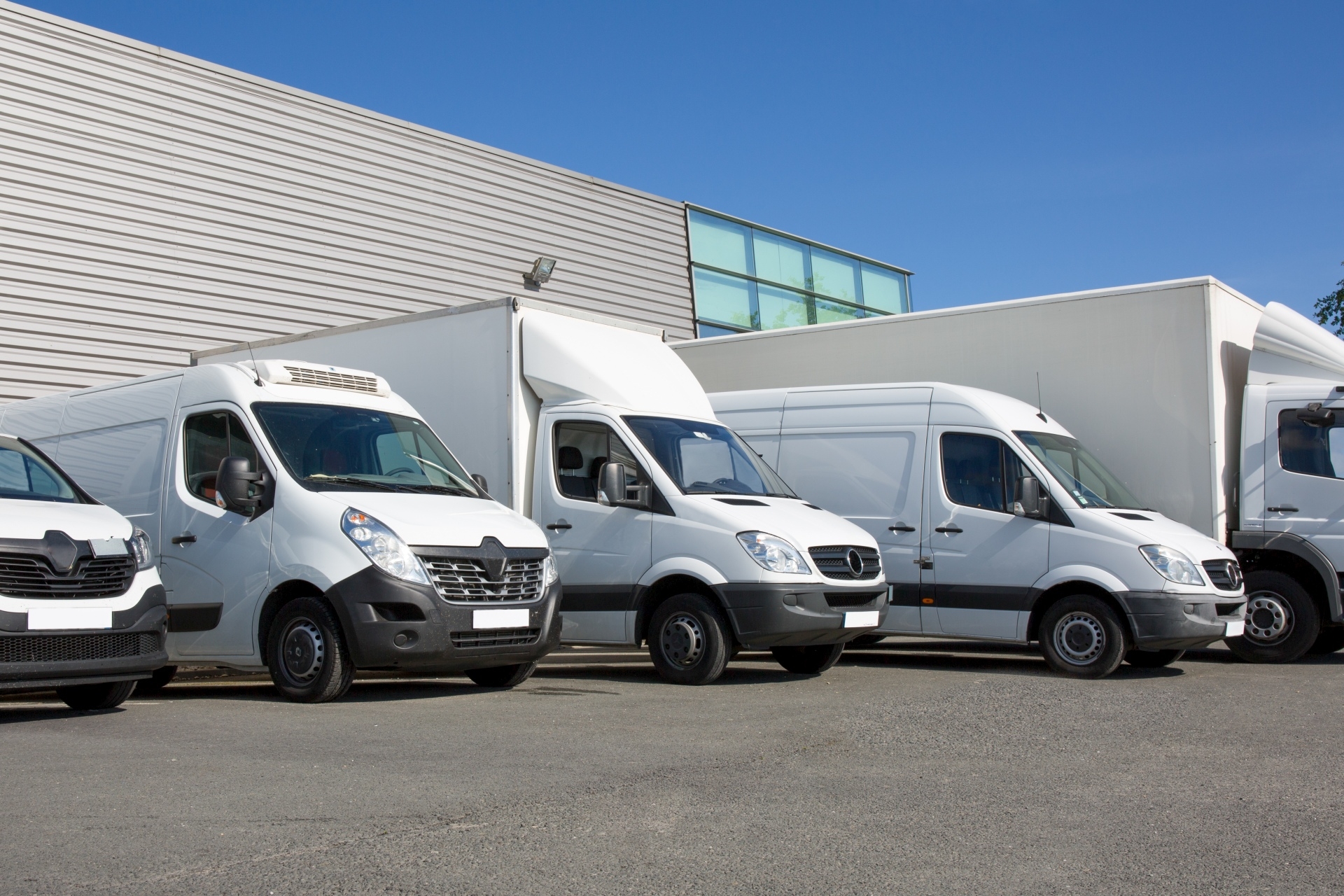
Commercial vehicles are an essential work tool in many industries, such as the courier sector. The number of these vehicles in Poland is estimated at nearly 2.5 million, with an average of 60,000 new ones registered each year. More than half of them come from the secondary market, which is dominated by post-long-term rental or post-leasing vehicles. This is because such cars are young, which means they are in good condition and priced significantly lower than a new car from a dealership. They are also technically verified, regularly and properly serviced, have an authentic mileage, and are available immediately.
The market situation for commercial vehicles, i.e., those with a GVW of up to 3.5 tons, is not weakening. Experts from IBRM Samar forecast that 67,500 such vehicles will be registered in 2025. High interest from companies in commercial vehicles is confirmed by data from PZWLP member companies. The results of the latest study (Fleet Barometer 2024), conducted among several hundred Polish companies, indicate that 39% of them intend to increase the number of commercial vehicles.
Poland runs on cars
Poland is one of the European leaders in terms of the number of cars per capita. Official data states that we have nearly 27 million registered vehicles. However, from this number, one should subtract the so-called “dead souls,” i.e., cars that are no longer on the roads but have not yet been deregistered. It is estimated that their number is about 7 million. Roughly every tenth car in Poland is a commercial vehicle up to 3.5 tons, a so-called “delivery van.” According to data from the Polish Automotive Industry Association for 2023, there are about 2.3 million of them in Poland.
Commercial vehicles have enjoyed almost constant popularity for nearly three decades. This is mainly due to the rapid economic growth of our country, which has been ongoing continuously since 1989. According to the latest data from the Central Vehicle Register, a total of 16,289 commercial vehicles have been registered in Poland since the beginning of 2025 (data as of the end of March). The reason for the continuous boom is, among other things, the rapid growth of the e-commerce market (approx. 10 percent per year) that has been ongoing for years, but also other industries that use commercial vehicles on a daily basis.
Used vans are holding strong
High interest in used commercial vehicles is confirmed by data not only from Poland but also from Europe. To understand the specifics of this market, it is worth looking at data regarding the age of these vehicles. Thus: 13% of them are cars (usually bought at a dealership or more often leased) that are less than 4 years old. Another 20% are 5-10 years old, while 43% are 11-20 years old. These data show that commercial vehicles have a long lifespan and can “earn for themselves” for even a dozen or more years. Interestingly, although we lag slightly behind the European average as in the case of passenger cars, the average age of a van in Poland is only 2 years higher than in the EU and is 13.6 years. For comparison, according to data from the Central Register of Vehicles and Drivers, the average age of passenger cars in Poland is 21.5 years. After subtracting “dead souls” – i.e., vehicles that are actually not in use – it drops to 15.9 years. This is still significantly more than the European Union average, where cars are on average 12 years old, which is almost 4 years less than in Poland.
Having a long-term perspective of using a commercial vehicle and deciding to buy on the secondary market, it is worth buying it from a good source. Such a car will have a reliable history of mileage, service repairs, and the certainty that it does not come from an illegal source.
– says Wojciech Jania, a PZWLP expert.
This is precisely why domestic offers dominate among commercial vehicles on the secondary market, and among them, one can most often find post-long-term rental or post-leasing cars previously used by companies.
The advantages I mentioned earlier are not the only reason for the popularity of so-called post-contract cars, i.e., after rental or leasing. Due to their young age, usually 3 to 5 years, these cars offer many amenities in terms of comfort and functionality as well as rich equipment. At the same time, they are also much cheaper than brand-new vehicles.
– adds Tomasz Bartnik, a PZWLP expert.
Buying a van after rental or leasing also reduces the probability that such a car was excessively used or that its mileage is relatively high in relation to the vehicle’s age. This is due to the fact that the rules under which users use such cars are detailed in contracts that regulate, among other things, the mileage limit or the necessity of performing regular service inspections of the car at an authorized service center or other reputable service networks.
It is worth adding that among Polish companies and entrepreneurs, there is a large increase in interest in electric commercial vehicles. They constitute an increasingly larger part of the fleet rented by companies associated with PZWLP. This means that in the near future, more and more of these cars will also appear on the secondary market.
– says Mikołaj Bąk, a PZWLP expert.
Small is beautiful
An interesting trend, both in Poland and the entire European Union, is the increased demand for used small and medium-sized vans. This results, among other things, from changes in shopping habits – mainly from the rapid growth of e-commerce. Poles have literally fallen in love with online shopping. The e-commerce industry is growing at a rate of about 10 percent per year, which entails the rapid development of courier companies. According to data from the Office of Electronic Communications, there are currently over 70 such companies operating in Poland, and each of them owns or uses a large fleet of cars. For example, Poczta Polska has 5,000 vehicles, and Inpost alone has over 1,000 electric delivery vans.
The dynamic growth of the e-commerce industry translates into increased competition in the “last mile” delivery segment, which makes the demand for small commercial vehicles available “off the shelf” grow. Buying a used car gives such an opportunity because handling sales formalities takes a few days, and the customer gets a functional, verified car in good condition and ready for “work” immediately.
– adds Mikołaj Bąk, a PZWLP expert.
Source: Polish Vehicle Rental and Leasing Association (PZWLP)