











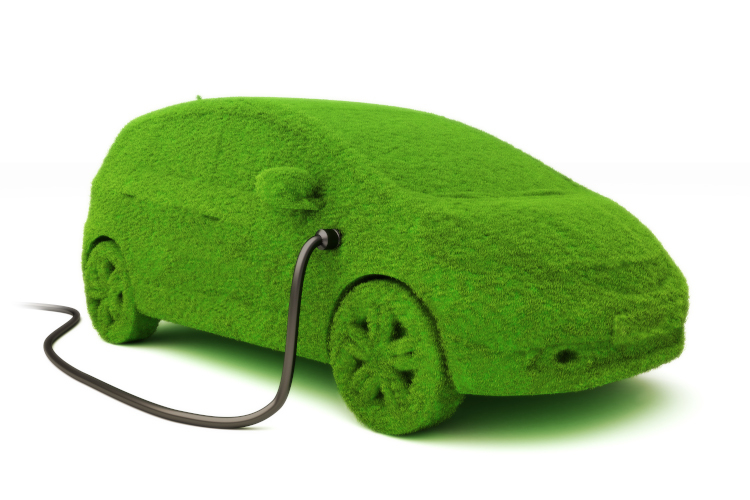
Changing the transport model is a key challenge for Poland in the coming years. Costs, which are already beginning to dominate the calculations of transport companies, will be important. Appropriate legal regulations are also necessary, both at the level of Poland and the European Union – these are the main conclusions from the debate “Green transport. Current state and prospects”, which took place at the PAP Press Centre.
– Poland is not among the wealthiest countries, so it should carry out changes in a rational and sustainable manner. The costs of transformation will be key. “Greening” transport should not lead to transport exclusion or poverty for broad social groups – emphasized Leszek Wiwała, President and CEO of the Polish Organization of Oil Industry and Trade (POPiHN). He also noted that EU sanctions on Russia will play a key role in shaping prices and thus influencing the market.
– As an industry, we are ready to cut ourselves off from Russia. Not all European countries are as prepared as Poland. Actions to reduce fossil fuel consumption are essential to reduce CO2 emissions in transport – pointed out President Wiwała. According to him, companies and organizations are aware of the inevitability of changes in transport, the scale of challenges, costs, benefits, but also the risks associated with them. – Our members are taking numerous actions to develop green transport – stated the President and CEO of the Polish Organization of Oil Industry and Trade.
As indicated by the report “Green transport. Current state and prospects” by the Polish Organization of Oil Industry and Trade, fortunately, the automotive business and the world of politics are interested in this field.
– In the long term, we need to accelerate changes towards green transport. What is important – as we have shown in the report – is the efficiency of new drives, which is much higher than that of internal combustion engines – stated Grzegorz Brycki from the Bridge agency, who participated in the preparation of the report.
The analysis calculated that Poles spend approximately 142 billion zlotys annually on fuel at gas stations. Only about 25 percent of the energy from traditional engines is converted into movement, and the rest is lost.
– It is necessary to popularize more efficient types of drives – stated Brycki, adding that not only electric engines are considered in green transport technology, but also biofuels, hydrogen, biogas, and synthetic fuels. For now, it is not known which of the options has a chance of dominance.
LNG gas, as well as bio-LNG, already constitute an excellent source of propulsion for heavy transport today. And as research has shown, biomethane is a very good substitute for them.
– This is one of the technologies that could catch on in Poland if certain barriers were overcome. A promotional campaign is needed to change thinking. Legislative changes are also needed, e.g., regarding environmental decisions. We also need to think about possible support – said Jacek Nowakowski, Vice President of the Polish LNG and bio-LNG Platform.
– This is one of the paths to decarbonizing transport – added President Nowakowski, reminding that ultimately it can be assumed that bio-LNG may soon account for up to 20 percent of the fuel market in green transport.
Michał Wekiera, Executive Director at the Polish Automotive Industry Association (PZPM), emphasized in turn that he is an optimist when it comes to changes in the transport sector, but “the industry would like to have a choice”. According to the PZPM representative, “we will certainly reduce CO2, because it pays off”.
– We will save on energy, lower costs, and become competitive. Almost 80 percent of transport is carried out on wheels. According to the latest data, about 30 percent of goods in the EU are transported by Polish companies. This is a key issue for the Polish economy – pointed out Michał Wiekiera.
Tomasz Bęben, Managing Director of the Association of Automotive Parts Distributors, drew attention to the issue of companies adapting to EU requirements.
– It is estimated that there are one-third fewer parts in electric vehicles compared to a vehicle with a traditional drive. These companies must very quickly adjust their portfolios to cope in the automotive market, and in extremely unfavorable economic circumstances – stated Director Bęben. – This year, 23 percent of European automotive parts manufacturers will record losses. Next year it will be about 27 percent. If we add regulatory pressure to the currently noted problems and challenges, the prospects are extremely pessimistic – he added. In his opinion, one should strive for climate neutrality while respecting socio-economic interests.
– Let us remember that 8 percent of Poland’s GDP is the automotive industry. We must not kill this goose that lays the golden eggs. We should not bet solely on one technology when others can also make a significant contribution to reducing CO2 and exhaust emissions. It is not technology that is the problem, but CO2 or exhaust emissions, and it is them that we should fight. – appealed Tomasz Bęben.
– The industry agrees on the goal, which is to strive to reduce CO2 emissions. But we do not agree on the choice of tools to achieve it. The electrification of transport pushed by politicians is not and should never be the only way to reduce the carbon footprint in road freight transport – indicated Maciej Wroński, President of the “Transport and Logistics Poland” Employers’ Union. According to him, and this was also stated in the “Green transport. Current state and prospects” report, CO2 emissions in our country have been reduced by 30 percent.
– We want to reduce CO2 emissions and we are already doing it effectively, without EU coercion – said President Wroński. – In transport, we are dealing with about 20 percent of so-called empty runs, among other things due to the Mobility Package. If we increase efficiency in this area, then emissions will decrease by another dozen or so percent – added the representative of “Transport and Logistics Poland”.
– It is important to maintain technological neutrality, and not to decide on one direction of change from above. Green transport is a key issue for the Polish economy and changes should be carried out reasonably – concluded the debate Leszek Wiwała, President and CEO of POPiHN.
Source of information: PAP MediaRoom