











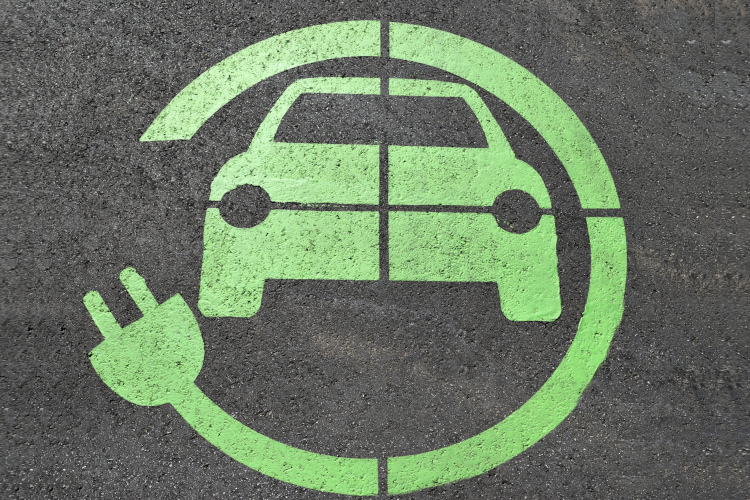
Changing the transport model will be a key challenge for Poland in the coming years, due to, among other things, European Union policy and investments by fuel and automotive companies. The latest POPiHN report, created in cooperation with industry organizations related to the transport sector, is devoted to the topic of “green transformation”.
Due to the Russian aggression against Ukraine, 2022 turned out to be one of the least stable periods for the fuel and automotive industry. “This year’s events should prompt us to discuss the future of transport, including how it is powered. The solution is a gradual move away from fossil fuels towards the use of low-emission drives,” says Leszek Wiwała, President and CEO of the Polish Organization of Oil Industry and Trade (POPiHN). In his opinion, an argument for discussing this topic will be the EU embargo on the import of crude oil from Russia by sea, which enters into force on December 5, 2022.
The issue of the future of transport is addressed in the report titled: “Green transport. Current status and prospects” prepared by POPiHN in cooperation with the National Chamber of Biofuels, the Polish Coalition for Biofuels and Protein Feed, the Polish Liquefied Gas Chamber, the Polish LNG and Bio-LNG Platform, the Polish Automotive Industry Association, the Association of Automotive Parts Distributors and Producers (SDCM), the “Transport and Logistics Poland” Employers’ Union, and the Polish Electricity Committee, as well as the National Centre for Emissions Management (KOBiZE) and the Oil and Gas Institute. The report presents, among other things, trends related to the “greening of transport” in Poland and around the world, discusses available technologies and solutions, and points to the costs and challenges facing the economy.
“The SARS-CoV-2 pandemic and the war in Ukraine have not stopped the changes, although the transformation is proceeding differently in various countries. Against the background of the European Union, they are still not significant in Poland, but we must prepare for the fact that sooner or later they will reach us too,” says Maciej Wroński, President of the “Transport and Logistics Poland” Employers’ Union.
Apart from ecology and reducing CO2 emissions, the argument for transport transformation is not only state security, but also the balance of benefits. High fossil fuel prices increase inflation and limit investment. “Although climate change forces the development of ‘green’ technologies in transport, there are divergent opinions on how and when ambitious goals can be achieved. Key factors influencing the inevitable changes are the regulatory policy of the European Union and investments in the fuel and automotive industry. European car manufacturers plan to spend over $245 billion on investments related to the production of electric cars and the batteries that power them. The offer in this segment will become more attractive year by year, and the purchase and operation of classic combustion vehicles may become more expensive,” says Michał Wekiera, Executive Director of the Polish Automotive Industry Association.
“Green transformation” in transport is often associated mainly with electromobility. In reality, there are a number of technologies that allow for the replacement of fossil fuels with more environmentally friendly alternatives, e.g., biofuels, fuel cells using so-called green hydrogen, or biogas. A technological race is underway globally, and it is by no means decided which technologies we will use in the future.
At the end of October 2022, the electric passenger car fleet in Poland numbered 56.9 thousand units, including almost 28.4 thousand battery electric vehicles (BEV). Electric cars currently account for less than 3 percent of all newly registered cars in Poland, while in the entire European Union it is four times more. According to Eurostat information, the share of so-called green energy in powering transport in Poland was 6.58 percent in 2020, while in the European Union it was over 10 percent.
The argument for moving away from combustion engines is their low efficiency, which averages 25 percent. This means that only a small part of the energy generated by burning fuel is used to set the vehicle in motion, while the rest escapes, among other things, in the form of heat coming out of the exhaust pipe. Despite the efforts of engineers, the most technologically advanced combustion engines achieve only 30–40 percent efficiency. Meanwhile, the efficiency of electric motors is over 85 percent.
“Apart from ecological considerations, it is the efficiency of engines that is a factor in favor of changes in the way transport is powered. In the long run, humanity cannot afford to waste energy on such a scale as it has until now,” says Jacek Nowakowski, Vice President of the Polish LNG and Bio-LNG Platform.
In 2021, drivers spent PLN 142 billion on fuel at gas stations in Poland. In total, after taking into account direct sales to the business sector, taxes (VAT, excise duty, fuel fee, and emission fee) paid by the fuel industry exceeded PLN 75 billion. The process of moving away from fossil fuels means that it will be necessary to find other sources of budget revenue.
“Transport transformation will be the biggest challenge that Poland will face in the coming years. Due to the enormous costs, it is extremely important that the changes do not hit the poorest part of society or lead to transport exclusion. It is not said that green transport is only electric cars. In Poland, we must look for and focus on solutions that take into account the specifics of our country and make maximum use of our resources. An example is increasing the share of modern types of biofuels in the fuel mix, which will also benefit Polish agriculture,” says Tomasz Bęben, Managing Director of SDCM. He adds that the “greening of transport” will also not be possible without rebuilding, or rather a massive expansion of, the energy system towards increasing the share of energy from renewable sources. Instead of energy from fossil fuels, which is currently mainly imported, low- and zero-emission vehicles will be powered by energy from RES produced in Poland.
The report “Green transport. Current status and prospects” is available at the link.