











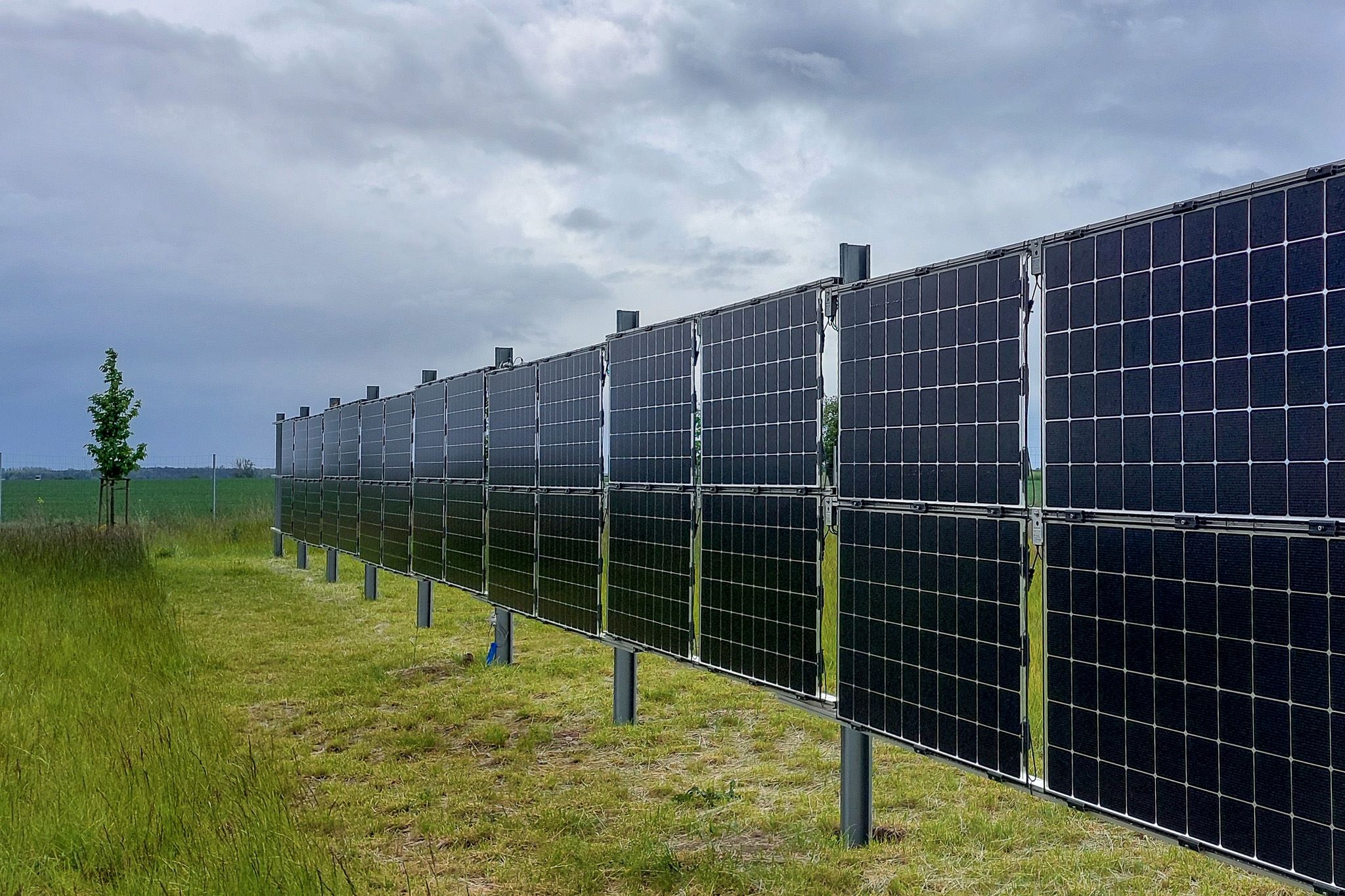
Since February 2025, pilot installations using renewable energy sources have been operating at two service areas (MOPs) along the S5 expressway. The research is being conducted by the Poznan University of Technology as part of the Road Innovation Development (RID) program, implemented jointly by the National Centre for Research and Development and GDDKiA.
The research project concerns a comprehensive system for the generation, storage, and distribution of electricity from renewable sources using infrastructure located within the road corridor. The system developed under the RID program is intended to change the way road infrastructure is perceived. Instead of being merely a passive element of transport, the road corridor is to become an active participant in the energy transition. As a result, electricity obtained from RES is expected to reduce the operating costs of road infrastructure, increasing the energy independence of the road authority. Surplus energy can be sold to the grid or used to power electric vehicle charging stations. The research project is also intended to provide answers to questions regarding the most effective way of generating and storing energy, as well as the financial viability of individual solutions.
Solutions under investigation
For the purposes of the project, unique solutions have been developed to allow for the installation of photovoltaic panels and wind turbines in the road corridor without interfering with traffic safety. Various types of electricity generation solutions have been mounted on the pilot installations: horizontal and vertical axis wind turbines, a photovoltaic micro-installation (in a vertical east-west layout, using bifacial panels and power optimizers), and photovoltaic panels with microinverters (single-sided, double-sided, and double-sided with a modified design) mounted in various layouts and locations. In addition, there is an electricity storage unit with a capacity of 10 kWh, an electric vehicle charger, and a heat pump for domestic hot water.
Data for analysis
Since the launch of the installations, researchers from the Poznan University of Technology have been collecting data on current power production generated by solar and wind sources, as well as energy storage parameters. Environmental parameters (irradiance, wind speed and direction, temperature, pressure) and the loads of the facilities connected to the installation (including road equipment, electric vehicle chargers, heat pumps, and lighting) are also being archived.
The analysis of the obtained data will allow for the determination of the structure of a hybrid energy generation system (using various renewable sources) tailored to the current load profile of GDDKiA facilities. Furthermore, the test installations allow for measurements and studies of actual energy yields for various system configurations, resistance to damage, assessment of glare risk, and, through structural testing of support structures, the determination of the feasibility of integrating PV systems with acoustic screens.
The results obtained will form the basis for selecting the most economically, environmentally, and functionally advantageous system for the generation, storage, and distribution of electricity from renewable sources using infrastructure located in the road corridor. It will also serve as a compendium of knowledge covering the full life cycle of hybrid RES installations working with energy storage and electric vehicle chargers.
Proposals for changes to current legislation will also be developed, particularly regarding the use of energy from one’s own RES installation for charging electric vehicles of other users.
Source: GDDKiA