











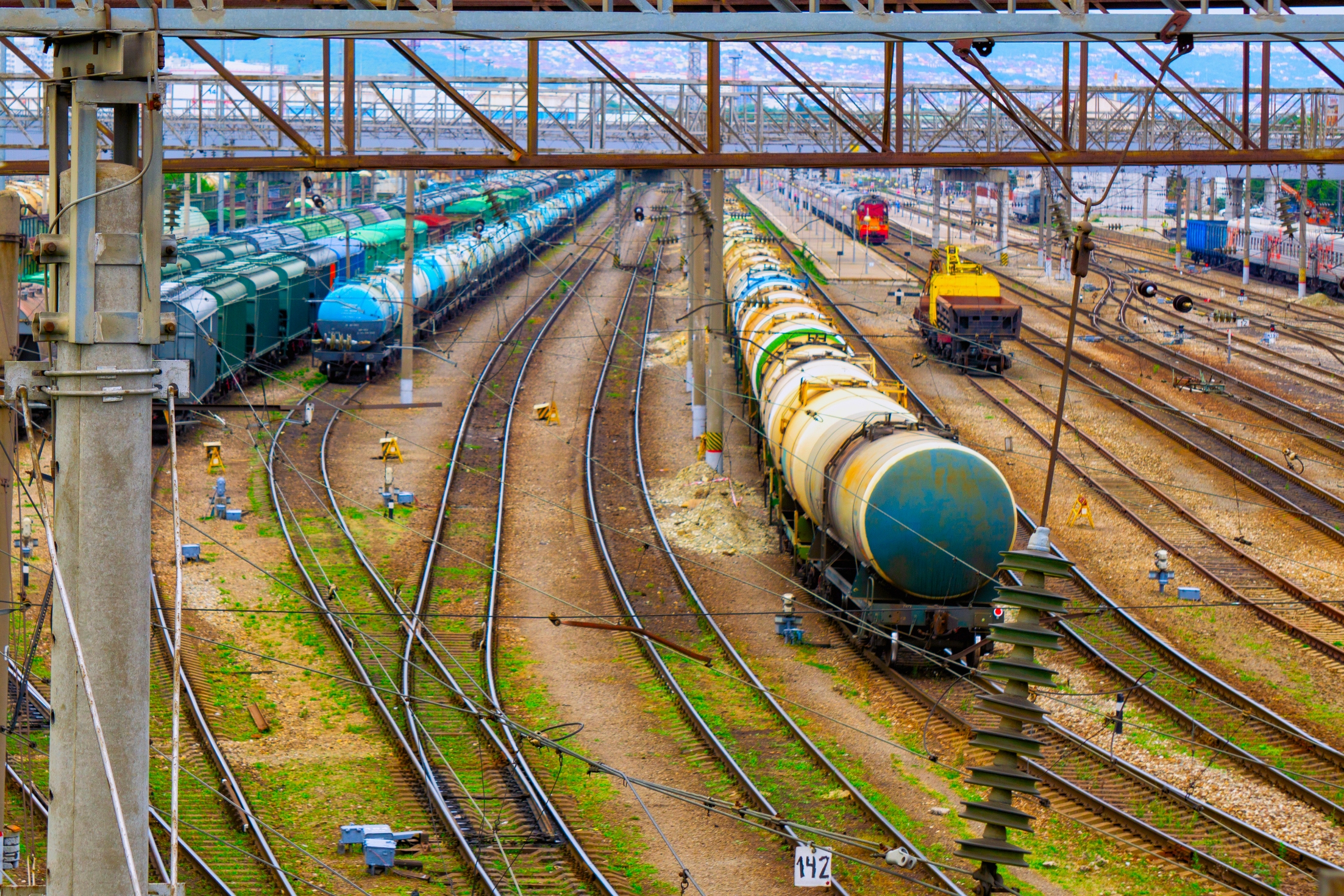
The first half of this year brought weaker results in rail freight transport. This was the case not only in Poland, but also in most European countries.
In the Polish market, this represents a 5.5% lower level of transport performance achieved by freight trains. In European countries, the rate of decline was 0.7% year-on-year. In the first half of 2024, rail freight transport remained under conditions of high uncertainty and turbulence related to the geopolitical situation in the region. Data from the rail market in Poland for the first half of this year are not optimistic. Freight trains in our country achieved a transport performance nearly 1.7 billion tonne-kilometres lower compared to the level from a year ago. How did rail freight function in other European countries during this time?
From January to June 2024, freight trains in 30 European countries generated over 206.3 billion tonne-kilometres of transport performance. More than half of this volume is accounted for by 3 countries: Germany, Poland, and France. Rail freight in Germany amounted to 62.8 billion tonne-kilometres in this period (30.4% share). Poland, with 29.1 billion tonne-kilometres of transport performance, holds the second position (14.1% share). Over 16.6 billion tonne-kilometres is the result achieved by rail freight in France (8.1% share).
On the other end of the scale is Ireland, where in the first half of 2024, freight trains achieved a transport performance of less than 37 million tonne-kilometres (0.02% share). Slightly more (79 million tonne-kilometres) was recorded by North Macedonia (0.04% share). The situation was similar in the case of Luxembourg (82 million tonne-kilometres and 0.04% share). These 3 countries with the lowest transport performance values together account for less than 0.1% of the transport performance in the list of surveyed countries.
More information about the situation in the freight transport market can be found in the report “Freight transport in Poland in the first half of 2024 against the background of other European countries”.