











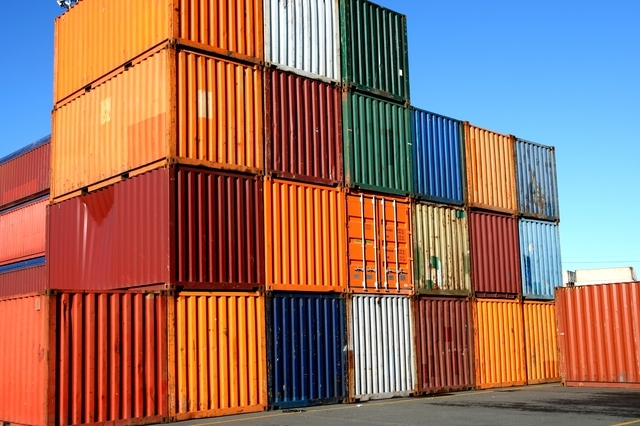
In long-distance transport, especially in international shipping, container transport plays a significant role. It allows for the transport of products without the need for transshipment and reduces the risk of both product damage and theft. Furthermore, it allows for the avoidance of certain customs procedures if the goods have a TIR carnet. Container transport is most often carried out by rail or sea, depending on shipping options and the requirements contained in the transport contract. Road transport usually acts as a link between railway stations and logistics centers and the final recipient.
In international rail transport, products are most often transported using containers on flat wagons. In local transport, however, Simms-type wagons are used to reduce the risk of theft, or flat wagons if such risk is relatively low. In local road transport, classic tarpaulin or box trailers are used. On the other hand, shipments of high-value goods are usually carried out only using box trailers or containers and special container trailers.
Large manufacturing plants, especially in heavy industry, very often use rail transport for products. Finished goods intended for export are almost always shipped via rail container transport. For this reason, the processes of loading containers in production-site finished goods warehouses significantly affect the efficiency and operating costs of the warehouse.
Overview of modern solutions
The revitalization of rail freight transport is one of the key priorities of the European Union’s Transport Policy. To achieve this goal, many initiatives aimed at improving various parameters affecting the efficiency of the rail system have been considered, including the rational management of rolling stock. In Europe, railway wagons can be divided into two main groups depending on their owner, i.e., state railways and private carriers. State-owned railway wagons are most often used by many private carriers based on agreements concluded between them. Private wagons, on the other hand, are managed and used most often only by their owner. Currently, about 180,000 private wagons are used in European transport. They must meet the appropriate technical and safety standards of the International Union of Railways (UIC – Union Internationale des Chemins de fer) to be able to move freely on the railway network.
To optimally use railway resources and their cargo space, it is necessary to adjust the wagon capacity to the transport of a specific load, change departure times, change train routes and send them to different terminals, and in the case of partial loads, transfer them to road transport. Some of these measures require improved information exchange, and decisions made at the management level should be aimed at strengthening logistics activities through the implementation of decision support systems.
The article contains 20,010 characters.
Source: Logistyka Magazine