











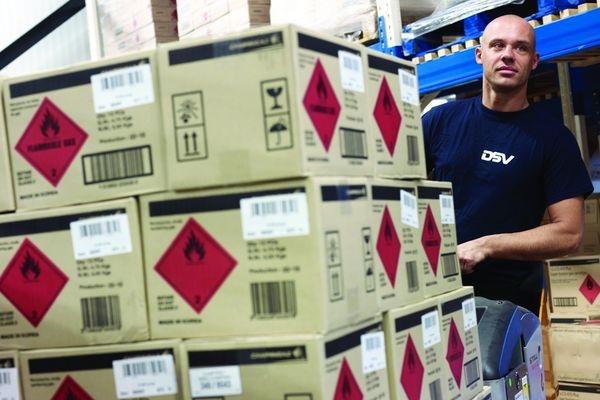
The term ADR is most often interpreted as hazardous material. However, the abbreviation ADR means much more, as it stands for an entire set of regulations and rules of conduct that ensure the safe transport of materials, not necessarily just hazardous ones.
There are many industries where logistics will require the transport of chemical products and substances. This includes the chemical, petrochemical, and energy industries, including nuclear energy. In all of these, full control over the transport process is crucial for ensuring safety.
– Loss of control over this process can lead to, for example, the release of significant quantities of substances with flammable, corrosive, toxic, radioactive, or explosive properties, etc. Also, the expansion of liquids or gases under pressure, different from atmospheric pressure, poses a threat to human life and health and can lead to the destruction or serious contamination of the environment – says Krzysztof Matusiak, Operations Manager of Domestic Forwarding for the Central Region, DSV Road.
In 1951, the United Nations Economic Commission for Europe identified the need to standardize requirements for the rail, road, and inland waterway transport of hazardous materials. As a result of the work undertaken by a working group (WP 15), the European Agreement Concerning the International Carriage of Dangerous Goods by Road (ADR) was drawn up in Geneva on September 30, 1957.
– These regulations are modified in 2-year cycles, so maintaining continuous compliance of transport operations requires constant monitoring and periodic training. However, compliance with regulations is only the beginning, because at DSV we focus primarily on safety. That is why all persons involved in loading, unloading, and performing transport and its organization, if their duties concern the carriage of dangerous goods, are periodically trained in the requirements related to such transport, according to their responsibilities and duties. The purpose of the training is to familiarize them with the rules and requirements related to specific activities in the field of broadly understood transport of hazardous materials – says Krzysztof Matusiak.
The share of hazardous materials in the flow handled by the DSV Group is steadily increasing every year. Hazardous materials contained in customers’ products include not only household chemicals, paints, and varnishes, construction chemicals, and plant protection products, but also pharmaceutical products or components for their manufacture.
Equally important as adhering to safety rules is the ability to confirm high quality standards by independent bodies. And this is where SQAS comes in.
Safety & Quality Assessment System (SQAS) is a tool used to examine and determine the level of safety and quality of operational activities undertaken in the trade of chemical products, both neutral and hazardous, subject to the European ADR agreement. Companies in the TSL industry working for chemical manufacturers undergo this assessment: distributors, warehouses, road transport, and transshipment terminals. SQAS introduces detailed industry requirements from chemical and related manufacturers, increasing the number and scope of controlled elements, and consequently, improving the safety of operations.
– In the first quarter of 2014, DSV Road underwent an SQAS assessment in the field of chemical product transport to confirm the high safety standards implemented during the transport of chemical products. DSV Road serves companies in the chemical industry, meeting the requirements of a quality, safety, and environmental management system, in which developed standards reduce business risk. Procedures for non-standard (emergency) situations have also been developed, which define actions to minimize losses – says Jacek Poszust, OHS Specialist at DSV Road.
The general principle of the SQAS system includes shared responsibility for one’s own activities and for the subcontractors of partners in the full supply chain. This principle is particularly important in the case of forwarding activities: when subcontracting transport to another company, the logistics operator must first thoroughly examine whether it meets all statutory and legal requirements and a number of additional requirements of the chemical industry related to responsibility for the transported product, people, and the environment.