








At the turn of the 20th and 21st centuries, the flow of materials became the second most important need of economic powers, after the flow of information. Progress is evidenced by the level of sophistication of these activities. Currently, in the European Union, the transport of goods is highly developed. To such an extent that the emphasis is placed not so much on its growth, but on the sustainable development of available modes of transport.
Freight transport in the European Union has been dominated by road transport. It is more flexible than the others. Due to the dynamic development of the road network, it is the only one that allows for transport in the so-called “door-to-door” system. However, it creates problems related to road congestion, environmental pollution, and noise. For this reason, efforts are being made to shift cargo transported over longer distances to other, less burdened modes of transport. This is mentioned, among others, in the White Paper.
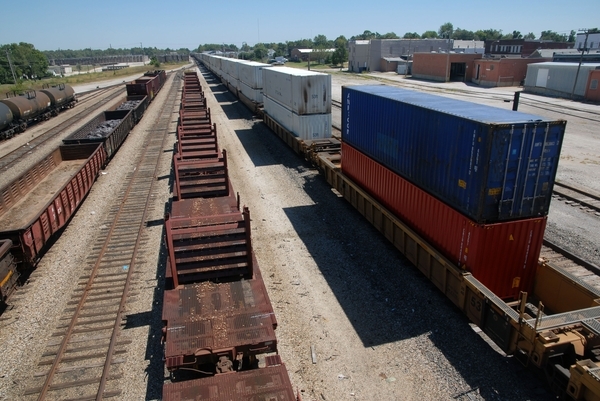
An alternative to motor vehicles is rail, followed by air transport, inland waterway transport, and maritime transport. Among those mentioned, shipping is characterized by the lowest external costs and unused capacity. In Poland, the use of inland waterway transport is negligible, but under favorable conditions, river transport could become a complement to the intermodal system. This would increase its flexibility, reliability, and transport capacity. The paper presents an intermodal transport system based on rail and shipping. Transporting cargo using these modes would have a positive impact on relieving road congestion and reducing air pollution – especially in cities. Other so-called external costs are also important. Road transport generates high losses recorded as a result of numerous accidents. On the railway, fatal incidents or those causing high cargo losses are relatively rare. In shipping, they practically do not occur. Rail transport vehicles, like those of shipping, can only move along strictly defined routes. Some undesirable events can result in the accumulation of delays. For this reason, it is important to analyze disruptions and determine the flexibility of such a system. The results of the analyses are presented in the further part of the work. (…)
The article contains 25,380 characters.
Source: Logistyka Magazine