









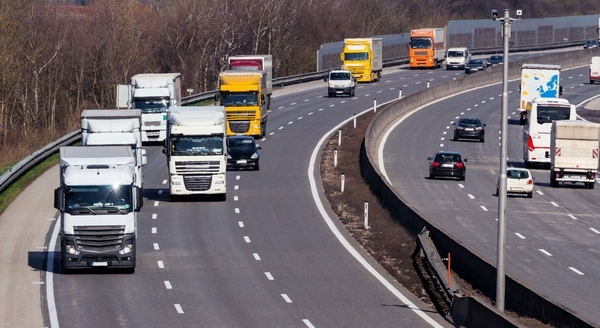
One of the greatest challenges in the automotive market in the near future will undoubtedly be the regulation regarding CO2 reduction. The new thresholds adopted by the European Union concerning so-called decarbonization, i.e., limiting carbon dioxide emissions, are raising controversy. The automotive industry in Poland is still focused on conventional technologies. The pressure on truck manufacturers is high because the targets for reducing CO2 emissions are extremely ambitious. Emissions will have to be 15% lower in 2025 than they are now and 30% lower in 2030.
There are two premises behind this decision. First: road transport is one of the main factors contributing to global warming. Second: progress in this area is being realized in vehicles. Although the above statements are not incorrect, they should be refined.
Ubiquitous and often overlooked, road transport is involved in all branches of the economy. Most goods and products reach us by land. In Europe alone, there are about 500,000 road transport entrepreneurs with a turnover of nearly 300 billion euros. The development of road transport entails negative consequences, in particular the emission of pollutants from internal combustion engines into the atmosphere, soil, and water. Furthermore, the Energy Saving Trust states that the percentage share of cars in atmospheric pollution is 30% in total. According to a report presented by the Daimler concern, trucks are responsible for 4% of global CO2 emissions, of which 10%, or 0.4% of emissions, falls to Europe. Citing data from the Central Vehicle and Driver Register for 2017, trucks in Poland accounted for about 3.5 million units out of the total number of registered vehicles, which was about 30 million units.
– To reduce emissions and improve the ecological balance, the Polish Automotive Industry Association (PZPM) has launched the “Electromobility Counter”. Electromobility is currently one of the key areas of development for the automotive industry and results, among other things, from the responsibility of vehicle manufacturers for the environment. The industry’s actions are also stimulated by legislation at the national and EU level – says Jakub Faryś, president of PZPM.
Technological progress has made modern vehicles much more environmentally friendly. Interesting initiatives have appeared in France, such as the TK’Blue agency, which offers shippers and carriers the ability to calculate pollution, noise, or accident indicators to highlight their level of environmental commitment.
Maxime Legardez, CEO of Everoad, which currently connects over 800 transport companies across Europe and over 200 shippers, minimizing empty runs, believes that there is a growing desire on the part of shippers to buy “green transport” or comply with CSR standards. Maxime adds, however, that this progress is insufficient in the face of ecological challenges and growth prospects.
– The OECD, in the ITF Transport Outlook 2017, estimates that the volume of road freight will triple by 2050. If we follow the trend of the last 60 years, where the energy efficiency of trucks grew by 1% per year, the impact of CO2 would double by 2050. The calculations may be wrong because we would have to assume that truck manufacturers will comply with new European standards and that carriers will massively renew their vehicle fleets. In other words, the biggest challenge currently facing road transport is the ecological problem. Despite the worrying situation, the OECD report points out that route optimization, the ability to share trucks, and the availability of warehouses between companies would increase load factors and reduce the number of so-called empty runs. The efficiency gained in this way could lead to a one-third reduction in CO2 emissions by trucks. “Empty transport”, which represents as much as 35% of kilometers traveled, is the hope for optimizing CO2 reduction by the transport industry – says Maxime Legardez.
Unfortunately, few carriers have the tools to calculate, plan, and cooperate with other carriers. Tools and technologies are usually too expensive and complicated for small transport companies to use. As a result, most trips cannot be optimized and 1/3 of trucks run empty, which has a huge impact on the environment. Over the last fifty years, the road transport sector has remained largely outside the modernization of the rest of the economy. The European road transport market is highly fragmented – as many as 90 percent of transport companies have fewer than 10 trucks in their fleet or employ fewer than ten people. Due to the lack of tools, small, often family-owned companies still manage their business in a very artisanal way.
A digital platform seems to be the solution, which could allow numerous players to be brought together to share information about free vehicles in real-time in a simple, fast, and inexpensive way. A digital platform allows for the collection of a lot of data and information regarding road transport and helps with the problem of labor shortages and reduces empty kilometers, and the above are key to optimizing loads. Even the smallest carriers can gain access to advanced technologies or Track&Trace vehicle tracking tools, thereby improving environmental efficiency, quality, and the price of services offered to customers, which obviously affects competitiveness. A digital platform such as Everoad can already help reduce CO2 today because it is based on advanced algorithms. The European Union must certainly work out a compromise between ecological, economic, and social priorities. Road transport is extremely important. Without it, e-commerce and companies such as, for example, Rossmann, Biedronka, Empik, or Zalando, and practically all branches of industry, cannot function.