








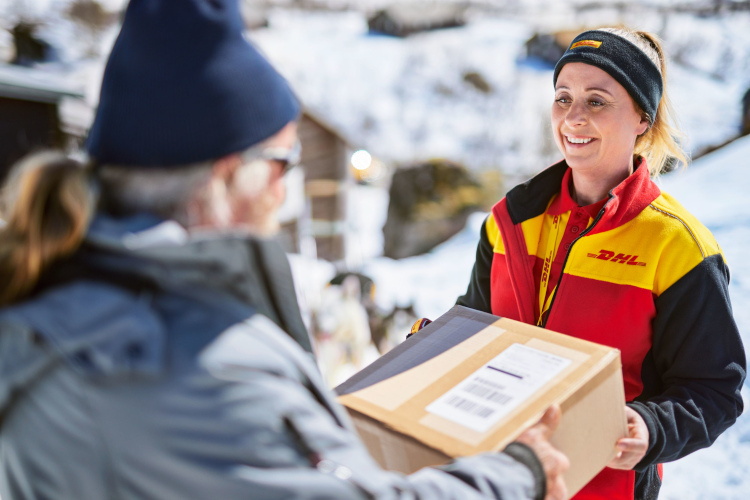
The TSL sector is still perceived as a typically male industry, although the reality is quite different. Women in the management board, female managers, warehouse workers, sorting facility staff, and couriers. Their competencies are in no way inferior to those of men. They are increasingly contributing to the transformation of the logistics sector while building the economic value of enterprises, as confirmed by the example of DHL Parcel.
Logistics has a woman’s face
Almost 40% of all DHL Parcel Poland employees are women. Women hold nearly 50% of managerial positions and make up 40% of the management board. As the management of DHL Parcel Poland admits, such a diverse structure allows for creative discussions. These, in turn, translate into better results of actions taken compared to those undertaken in a homogeneous environment.
– Today, the distinction of which industry is male and which is female does not matter. The change has occurred within us, women. We are strong, aware of our strengths, and we break taboos. When I look at our wonderful female couriers and warehouse workers who are doing an excellent job, our managers, and colleagues from the management team, I see what great strength diversity provides. The intelligence of diverse teams grows, making them work more effectively. When we discuss the company’s strategy during a board meeting, no one wonders whether a woman or a man is speaking; what matters is what they have to say – says Agnieszka Świerszcz, CEO of DHL Parcel Poland.
High competencies and many challenges
Supply chains are huge, complex, and dynamic ecosystems where cooperation is very important. In such an environment, female competencies take on special significance. According to the study “Women’s Leadership in Logistics – Where Are We and What’s Next?” conducted by the Women in Logistics Forum, women have a lot to offer to companies in the logistics industry. 86% of respondents regularly supplement their education in soft skills, mainly in the areas of: leadership, mentoring, communication, self-presentation, public speaking, and foreign languages. 41% of those surveyed regularly expand their skills in developing hard competencies, such as: change management, project management, legal changes, and industry knowledge, e.g., training in forwarding or warehouse operations. However, as the study indicates, women still face many challenges, such as balancing professional duties with private life, e.g., raising children (51%), or the lack of recognition of women’s competencies as equal to those of men (41%). Difficulties also arise within companies and concern human resources management strategies and policies, as indicated by as many as 42% of all respondents. That is why a policy promoting diversity and drawing on its potential is so important. Among the companies where success is determined by competencies and results, not gender, is DHL Parcel.
DHL Parcel supports women
DHL is the first courier company that began consciously building an offer for women in this profession. They are present in videos, interviews, or photos in job offers. The company appreciates their knowledge, experience, talents, passions, charisma, and character, and attaches great importance to their development, which it expresses through special programs. For example, “Leaders in Logistics” is a unique project aimed at women in managerial positions, but also future leaders preparing for this role, where women can exchange experiences, opinions, and knowledge. The program serves mutual support and the development of women at DHL Parcel. Just recently, the number of participants has increased by as much as 50%.
DHL Parcel also supports working parents, e.g., through the “Wonder Parents” project, which helps combine professional and private roles at different stages of life. DHL Parcel convinces that logistics is an industry for everyone who demonstrates the appropriate competencies, predispositions, and commitment. It is these factors, not gender, that should always be decisive.