











According to data published by the International Air Transport Association (IATA)[1], the amount of Sustainable Aviation Fuel (SAF) exceeded 1.3 billion liters in 2024, which is twice as much as in 2023. SAF accounted for 0.3% of global aviation fuel production and 11% of global renewable fuel production. In 2025, SAF production is expected to reach 2.7 billion liters, representing 0.7% of total aviation fuel production and 13% of global renewable fuel production capacity.
Many airlines have declared that by the end of the decade, at least 10% of the fuel they use will come from cleaner sources. According to IATA estimates, the share of SAF in aviation fuel will increase globally from 0.3% to 0.7% in 2025.
European airlines are leading the way, significantly outpacing their American competitors in the race for more “sustainable” flights. This is the result of regulations under which the European Union and the United Kingdom mandate that airlines use a minimum of 2% SAF. Other governments, including those of Singapore, British Columbia, Indonesia, and Brazil, are introducing their own solutions. By comparison, the United States has adopted a voluntary approach. The government offers lucrative incentives for SAF use but does not require airlines to purchase cleaner fuels, which are nearly three times more expensive than conventional jet fuel.
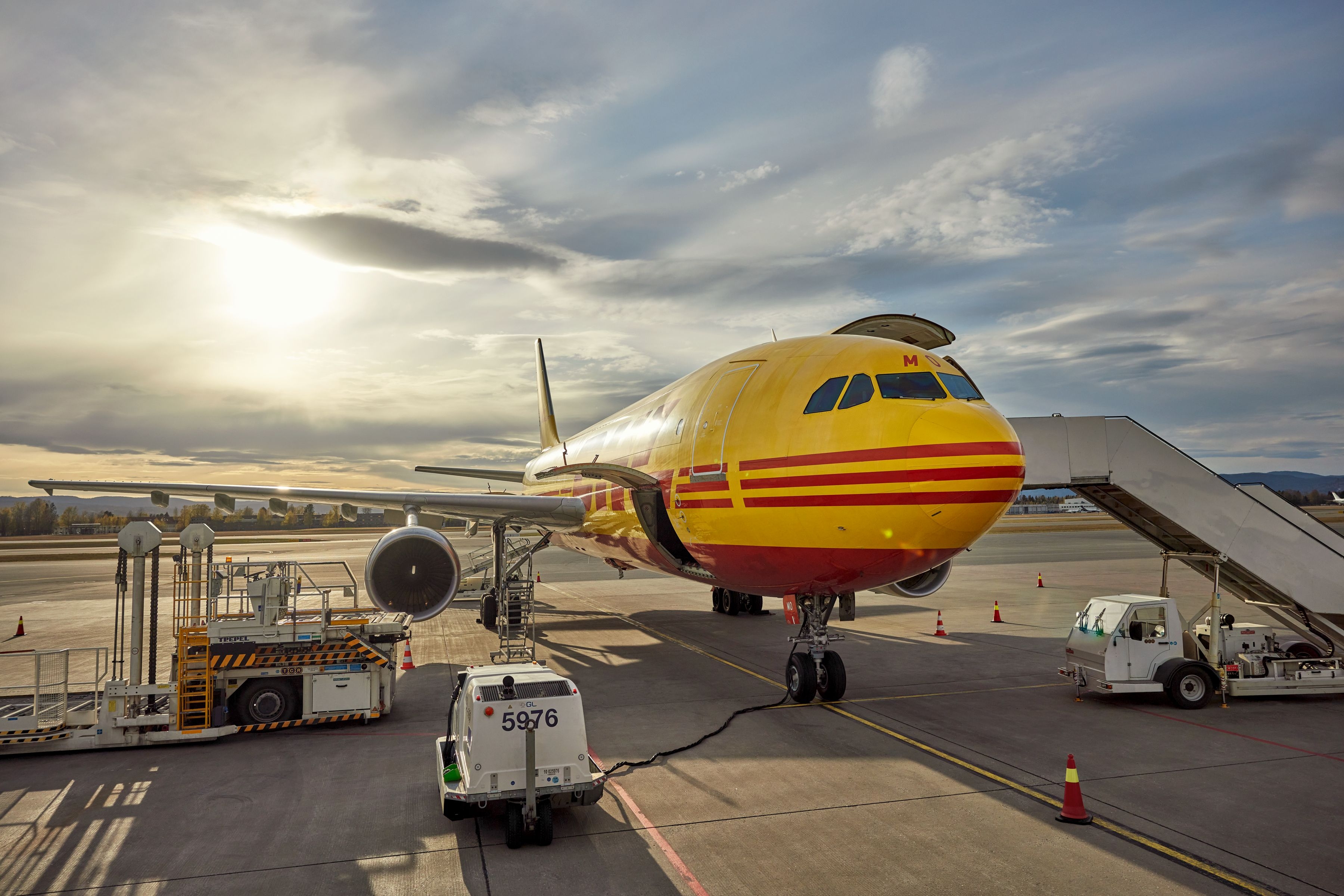
According to an analysis by Bloomberg Green[2], the DHL Group sourced 3.52% of its aviation fuel from cleaner sources last year. This puts us, once again, on the global podium. We are well ahead of all leading commercial airlines and cargo carriers in the active use of SAF fuel. This is an important step in our long-term strategy, which aims for the DHL Group to achieve a 30% share of SAF in air transport by 2030. Consequently, partnerships have been established with bp and Neste for the supply of over 800 million liters of SAF by 2026. A seven-year agreement with World Energy has also been concluded, which will provide 668 million liters of this fuel. This is one of the longest and largest SAF agreements in the aviation industry, and it is estimated to contribute to a reduction of nearly 1.7 million tons of carbon dioxide emissions over the entire lifecycle of the aviation fuel.
– comments Tomasz Buraś, CEO of DHL Express Poland.
DHL Express, one of the divisions of DHL that handles international express air shipments, was one of the first global express carriers to launch the GoGreen Plus service, which allows customers to reduce their carbon emissions. According to internal DHL Express data, the service continues to enjoy steady interest in Poland. In March of this year, there were an average of 16 international shipments per customer, whereas in the same period of 2024, there were 10 fewer shipments. Comparing the fourth quarter of 2024 to the first quarter of 2025, the service recorded a 234% increase in the number of shipments and a 75% growth in new customers using GoGreen Plus. Companies from the technology and life science & healthcare sectors are among those leading the way in choosing more environmentally friendly transport fuels.
[1] https://www.iata.org/en/pressroom/2024-releases/2024-12-10-03/
[2] https://www.bloomberg.com/news/articles/2025-07-21/airlines-cleaner-fuel-is-no-match-for-rising-emissions-as-people-fly-more?cmpid=BBD072125_GREENDAILY&utm_medium=email&utm_source=newsletter&utm_term=250721&utm_campaign=greendaily
Source: DHL Express (Poland) Sp. z o.o.