











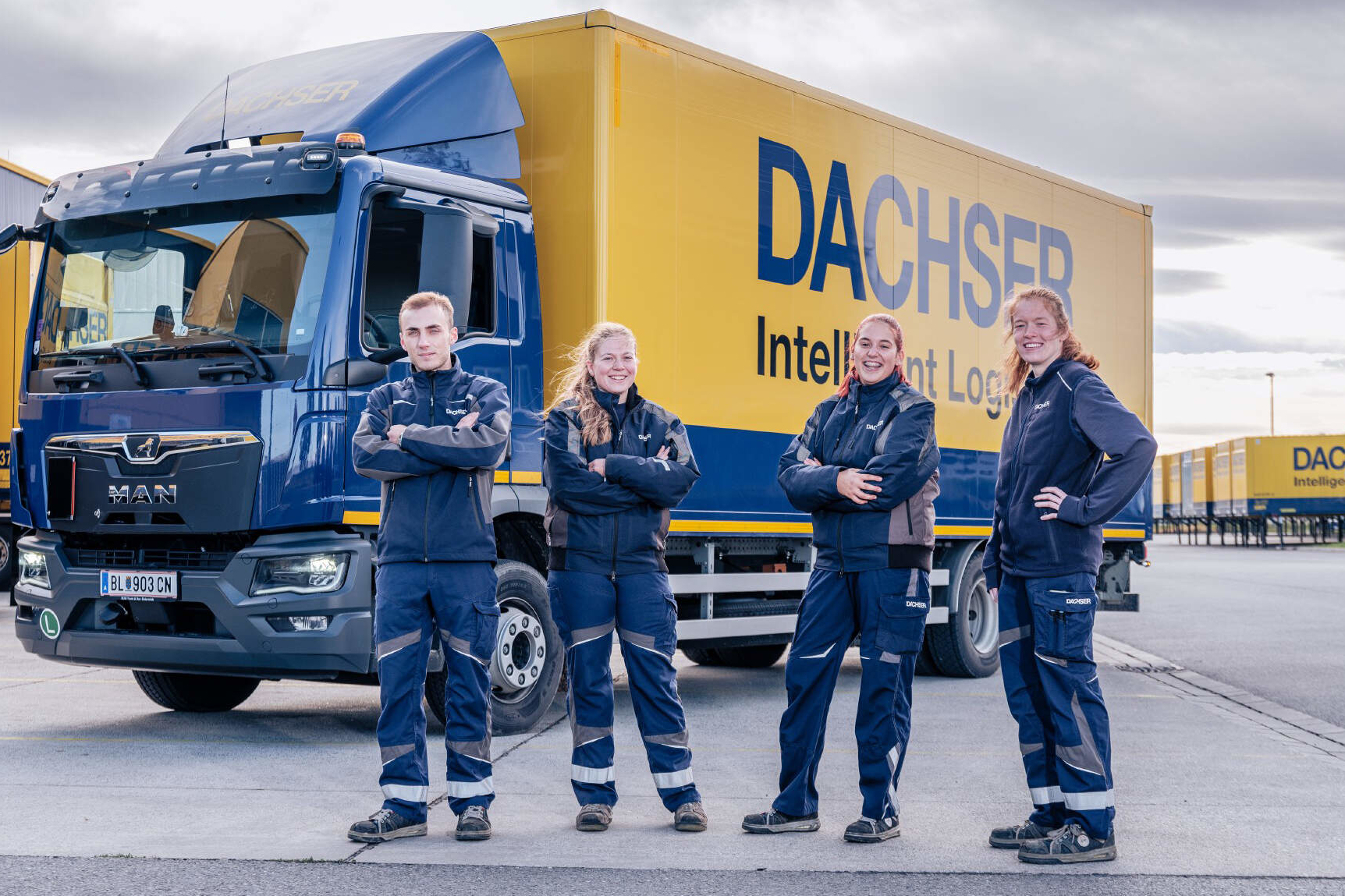
The shortage of drivers in the logistics industry is one of the key factors hindering future economic growth. In Germany, the deficit of skilled workers has already reached over 70,000, and this problem is global in nature. In response to these challenges, companies like DACHSER are taking initiatives to attract and train a new generation of drivers, offering them attractive prospects for professional and personal development.
Almost nothing works without professional drivers. The economy would grind to a halt, and shelves in supermarkets and shopping malls would be empty. However, the shipping industry is lacking young drivers. The results of the study “Solving the problem of bottlenecks in logistics with a special focus on drivers,” published at the beginning of 2023, indicate that about 20,000 additional driver positions could remain unfilled in Germany each year. Among the reasons for this state of affairs, researchers cite: unattractive working hours, uncompetitive wages, but also a lack of social respect. As a result, the transport industry is struggling with an image problem, and the profession of a driver is often perceived negatively. The International Road Transport Union (IRU) even views the driver shortage as a European and global problem, with more than three million unfilled truck driver positions across the 36 countries analyzed.
– The shortage of skilled workers is a general market phenomenon that affects the entire logistics industry – says Alexander Tonn, COO Road Logistics at DACHSER. – This requires us to make increasing efforts to fill existing vacancies.
That is exactly why, ten years ago, DACHSER became one of the first logistics companies to start a qualification program by establishing “DACHSER Service und Ausbildungs GmbH.” The goal: to attract young people to the driver profession, inspire them, train them, and ensure long-term job security in the market – and later on as independent transport partners.
– Recognition, prospects, personal responsibility, and remuneration are the most important factors increasing the attractiveness of the profession – said Hendrik Jansen, Managing Director of DACHSER Service und Ausbildungs GmbH, who has been involved in the initiative from the very beginning.
How to find drivers and encourage them to work?
Since the subsidiary was founded, about one hundred trainees have started training to become professional drivers each year. “We have refined our TQ1 (professional driver qualification level) training and further education and have tested all processes related to the driver environment,” says Hendrik Jansen. For example, this also included hiring fleet managers at DACHSER, who play a key role within the concept and are dedicated to supporting drivers.
– At DACHSER, employees from every operational level are important and have their own status. This recognition and work culture is also reflected at the level of professional drivers performing their tasks in modern, comfortable workplaces – Hendrik Jansen
– At DACHSER, employees from every operational level are important and have their own status. This recognition and work culture is also reflected at the level of professional drivers performing their tasks in modern, comfortable workplaces. This means addressing topics such as healthy eating, exercise, and addiction prevention – explains Hendrik Jansen. Value stream analyses, which DACHSER regularly conducts at its branches, map all processes related to the daily work of drivers and identify potential for optimization and development opportunities. In this case, too, the drivers’ concerns and their opinions are always taken into account.

Making changes in mutual relationships
– Finding good drivers is one thing. It is equally important to retain them and keep them motivated – says Hendrik Jansen. It should be remembered that people’s approach to work can change – Today it is about issues such as work-life balance, changing communication, or work that has meaning and signifies something. And these are the levers we are working on. If we can succeed in changing the way we treat our drivers – and this does not only apply to DACHSER – we will be able to bring about a cultural change and the resulting greater appreciation for this profession and the people who perform it – he adds.
Even if this alone will not solve the structural and global shortage of drivers, DACHSER Service und Ausbildungs GmbH is an example of how: – Sustainable logistics depends on the quality of services and the people who provide them every day – says Alexander Tonn – We want to empower them, provide them with the best possible conditions, and appreciate them for what they do. The foundation for this is training and further education. This is where our initiative comes in.
DACHSER Service und Ausbildungs GmbH
DACHSER founded DACHSER Service und Ausbildungs GmbH in 2014. The goal of the subsidiary is to interest young people in the driver profession, inspire them, and prepare them for work through an exemplary training and further education program, and to ensure their long-term job security. Key elements of the initiative’s success are the quality of training, recognition, and communication.
Drivers trained by DACHSER usually work for DACHSER transport partners, who have also completed training as part of the initiative. The logistics company is therefore particularly committed to keeping the next generation of drivers close to the DACHSER family. Furthermore, the DACHSER Service und Ausbildungs GmbH team helps trained drivers, for example, in making the decision to become self-employed.
Source: Dachser