










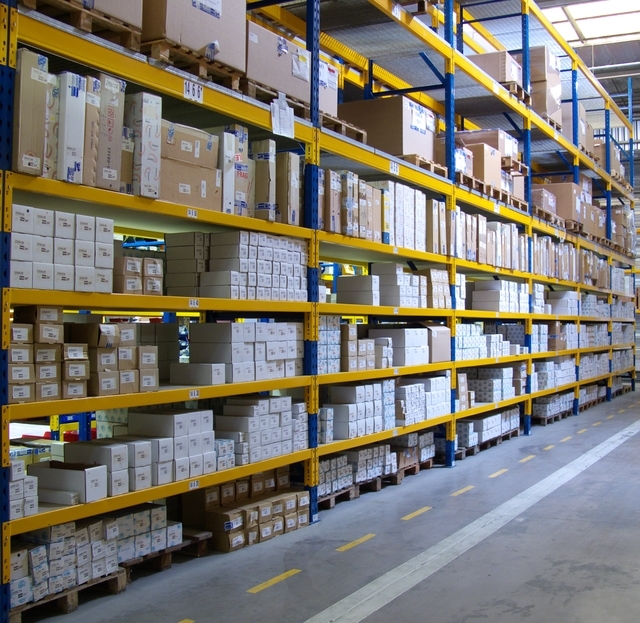
The handling of palletized load units by the “invisible hand of the market” was described in issue 4/2012 of “Logistyka”. The article posited that “it is faster to count palletized load units formed on safe pallets than those that pose a risk in the warehouse”.
This is a result of the constant drive to reduce logistics costs, including transport “packaging”. In high-bay warehouses, safety standards regarding the placement of palletized load units in pallet racks are increasingly being violated. Furthermore, a lack of agreements regarding delivery and requirements for pallets (marking with the EUR symbol or other technical requirements) sometimes creates enormous risk. Goods placed in a rack, delivered on a one-way pallet in accordance with a contract, can lead to changes in production plans. Direct costs resulting from a pallet falling from a rack include: the goods, “emergency” purchases, and sometimes accident compensation. There is also a risk that the costs indirectly resulting from the incident must include changes to production and distribution plans. In such a case, costs must often be increased by the costs of a marketing campaign and lost market share (unmet, yet generated, customer needs).
Parallel to the financial problems, there is an area of non-compliance with European Union and Polish labor law. The employer’s duty is, on one hand, to take actions that maximize workplace safety and, on the other, to minimize risks associated with the use of tools. A description of the basic requirements for a transport carrier (including: dimensions, load capacity, etc.), which is a flat loading pallet, can be found in Polish and international standards as well as UIC technical manuals.
The article contains 8880 characters.
Source: Logistyka Magazine 4/2013