











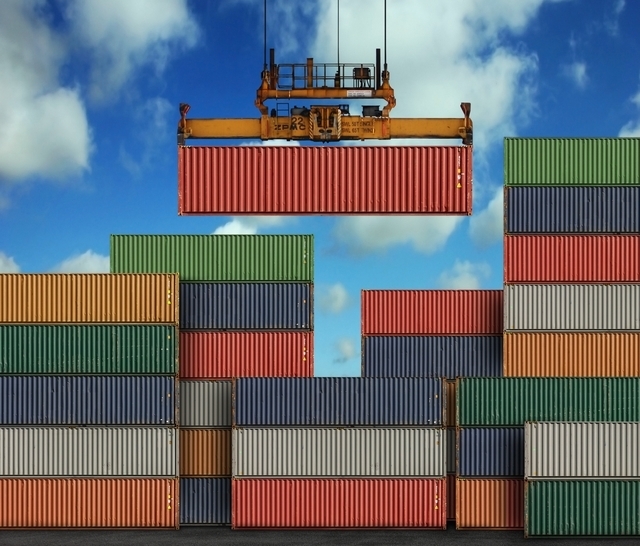
Changes that have occurred in the global economy over the last few years, such as globalization, deregulation, increasing competition, the rapid development of new technologies, and the emergence of new concepts in transport and logistics, have made containerization an increasing challenge for its participants. In turn, economic growth and increasing global trade are driving the dynamic development of the containerization market.
Pressure to reduce costs and the increasingly common tendency among companies to focus on core business activities mean that transport and logistics functions are more often entrusted to specialized companies, which leads to a rapid increase in demand for all types of containerized cargo transport. This is reflected in the strategy of transport and operator companies, which, in the face of opening opportunities and growing customer expectations, are expanding their operations into new market segments (geographical and service-based) and are constantly developing their offerings to provide customers with comprehensive logistics solutions tailored to individual needs in the field of container handling. Undoubtedly, one of the possibilities for reducing costs in international transport is the carriage of unitized cargo – containers.
Containerization has contributed, on the one hand, to the specialization of transport unit carriage, and on the other hand, to the emergence of specific solutions in the field of transport systems. The development of containerization has provided an impetus for seeking systemic solutions enabling the economical movement of containers. Furthermore, the increasing cargo weight of transported containers has led to the development of transport techniques and technologies. As a result, solutions regarding the development of the transport system can be considered from the point of view of container transport: by land, by land and sea, or by land and air.
Integration of sea and road transport in the context of containerized cargo carriage
In maritime shipping, the basic model functioning in containerized cargo transport for many years was the multi-port system (see Fig. 1). The multi-port system was implemented by shipping carriers who focused on increasing the frequency of vessel calls at maritime container terminals. This type of transport solution was dictated by changing previously serviced connections and/or by increasing the average travel speed of vessels and/or as a result of introducing an additional vessel and/or increasing the cargo capacity of vessels previously servicing a given shipping route. This type of solution generated high capital costs for the sea carrier, as they had to put a larger number of vessels into operation to maintain or increase the frequency of vessel calls at maritime container terminals. At the same time, the increase in the frequency of calls at maritime container terminals generated higher port and terminal costs. Within this transport system, sea carriers focused mainly on maritime container transport. They were not, however, significantly involved in container transport by land.
The article contains 21,470 characters.
Source: Logistyka Magazine
062_Marek_Konteneryzacja_jako_integrator_systemow_transportowych.pdf