









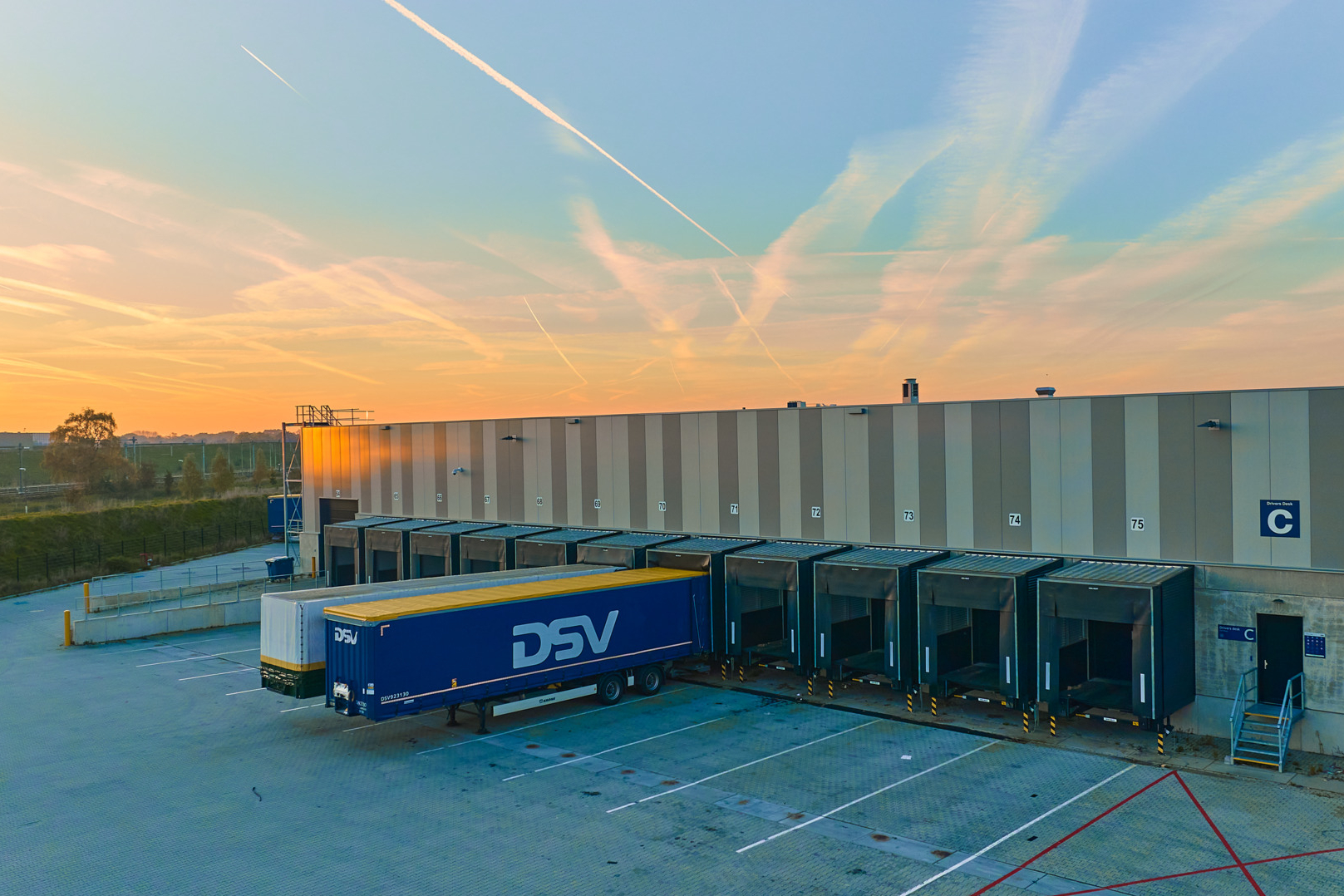
Growing awareness of sustainability challenges among Polish consumers is translating into a lasting change in expectations towards manufacturers. A new study by DSV – Global Transport and Logistics confirms that an increasing number of Poles want to receive information not only about the products themselves but also about the journey they took before reaching store shelves. What does this change mean for business?
56% of consumers want supply chain transparency
Recent years have brought changes in the expectations of Polish consumers. In addition to the most basic product parameters, such as price and quality, Poles are increasingly taking into account issues related to sustainable development. As shown by a study conducted by K+ Research for DSV – Global Transport and Logistics on a group of 1,010 adult Poles, 49% of respondents pay attention to the actions taken by a given brand in this area when making a purchase.
Moreover, the majority of Poles covered by the study, as many as 56%, declared that it is important or very important to them that companies provide information about the environmental impact of the transport and logistics operations of the products sold. The results suggest that a unique opportunity is opening up to build a competitive advantage for those companies that decide to implement solutions to reduce emissions in their supply chains.
There is no transparency without self-awareness
To be able to responsibly meet consumer expectations regarding information about the environmental impact resulting from product logistics, the basis is to have mechanisms for monitoring emissions generated during transport. Importantly, such calculations must be supported by a reliable methodology. Failure to exercise due diligence may expose companies to accusations of misleading customers and greenwashing, and consequently, loss of trust and high financial penalties.
Implementing solutions related to monitoring and reporting emissions on one’s own requires building appropriate human and technological resources within the organization. Consequently, it involves high costs, especially at the initial stage.
An alternative to this process may be to use the support of a logistics operator that has ready-made facilities to carry out this process. Their assistance can be particularly valuable in the area of coordinating data collection from carriers, who are not always prepared to monitor emissions. Operators act as a link between the client and the carrier, supporting mutual understanding and the efficient implementation of CO2 emission monitoring.
Due to changing market expectations and ESG reporting regulations, solutions enabling the calculation and ongoing monitoring of transport emissions have become a standard element of the offer of logistics operators. At DSV, we provide clients, from family businesses to international corporations, with the ability to develop both periodic reports and emission calculations at the level of a specific shipment. For calculations, we use the EcoTransitIT World emission calculation tool, based on recognized methodologies compliant with, among others, ISO 14083:2026 and the GHG Protocol. The entire process is also overseen by dedicated reporting experts. This is a guarantee for our clients that the data they receive and communicate externally, whether to business partners or consumers, is reliable.
– says Kinga Daniszenko, Sustainability Coordinator at DSV – Global Transport and Logistics.

From awareness to savings: how to actually reduce emissions?
Awareness of generated emissions is the first step towards taking action to optimize and reduce them. Analyzing the collected data allows for identifying those elements of the supply chain where emissions are highest in relation to the route length or the quantity of transported goods. This, in turn, enables the setting of clear priorities – and an action plan.
One of the most common challenges in transport is the proper use of loading space and the reduction of empty kilometers resulting from trips between the unloading point and the next loading point. In such cases, the solution may be groupage transport (LTL), which consists of consolidating the loads of many clients within a single transport, which allows for maximizing the use of transport capacity.
Deliveries and collections of shipments are planned to achieve the highest possible efficiency in terms of the route taken, its length, and the driver’s working time. They are carried out in a predefined, limited area, the center of which is the operator’s local transshipment terminal. In such a facility, shipments collected from the subordinate region from various senders are combined. Then, they leave in collective vehicles running daily on fixed routes between the logistics operator’s terminals. Thanks to this, it is possible to use loading space more efficiently, limit the number of trips, and lower emissions per unit of goods. This solution also fits into the growing expectations of business clients regarding more frequent but smaller deliveries.
As the operator of the largest groupage network in Europe, we have access to data that shows that this type of service is enjoying growing popularity among entrepreneurs. It is also worth being aware that groupage services can be combined with other decarbonization solutions. For example, at DSV, on the Poland – Sweden – Poland line, we have introduced double-deck trailers, thanks to which we can ship a larger number of shipments in a single trip. Moreover, vehicles on this route also use HVO100 – a biofuel that allows for a reduction in emissions by up to 90%.
– says Marta Kućmińska-Mróz, Key Account Director at DSV – Global Transport and Logistics.
Transport optimization possibilities go, of course, much further than just using the groupage model. DSV provides clients with support in, among other things, route planning and optimization, the purchase of biofuels, or emission offsetting through the coordination of the purchase of Gold Standard carbon credits.
Decarbonization is an investment for the future
Implementing actions for transparency and supply chain decarbonization is more than just an expression of social responsibility. It is an investment on two levels.
The first is a response to the real expectations of consumers – who are increasingly choosing brands that openly communicate their environmental impact. The second is long-term business optimization – the costs of high-emission solutions will systematically rise, and companies that start implementing changes gradually will avoid the need for costly and abrupt changes in the future or costs resulting from adapting to climate change.
Research methodology
The K+ Research study for DSV – Global Transport and Logistics was conducted in the form of a computer-assisted web interview (CAWI) between March 20 and 23, 2026, on a sample of 1,010 adult Poles. The selection of the research sample was random-quota based. Quotas were imposed on the gender, age, and size of the respondents’ place of residence.
Source: DSV – Global Transport and Logistics