








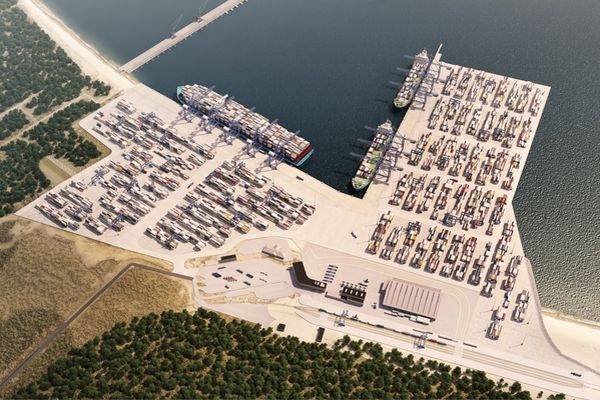
DCT Gdansk, the largest Polish container terminal, has begun the construction of a second deep-water quay at the Northern Port. DCT has secured 290 million euros for this investment. On Thursday, January 22, the investor handed over the construction site to the Belgian company N.V. BESIX, the general contractor and designer of the new terminal.
– The DCT Gdansk team, our shareholders, clients, and the people who support the T2 construction project have been waiting for this day for over two years. Reaching this stage was not easy, but today we can be proud that we have taken a significant step for the Polish container sector. With the second deep-water quay at DCT, capable of simultaneously handling several vessels, including the world’s largest container ships, Poland and the entire Baltic Sea region have gained a new quality in handling ocean connections – said Maciek Kwiatkowski, CEO of DCT Gdansk.
Construction work, including site preparation, will take 19 months. Site preparation will take approximately 6 weeks. Once completed, the construction of the quay will begin. DCT is the largest and fastest-growing Polish container terminal and the only deep-water terminal in the Baltic Sea region that receives direct calls from vessels from the Far East. The DCT terminal, located in the heart of the Baltic Sea – in the Port of Gdansk, is the easternmost terminal in the group of deep-water North European ports between Gdansk and Le Havre.
The terminal handles Polish imports, exports, transit, and maritime transit. Thanks to good access from the sea provided by an approach channel with a depth of 17 m and up to 16.5 m along the quay, lack of icing, and excellent operational capabilities, DCT is a natural hub for containerized cargo turnover in Central and Eastern Europe. Thanks to infrastructure investments carried out by the Polish government and the city of Gdansk, the DCT terminal is very well connected to inland locations and is a true gateway to Central and Eastern Europe.