











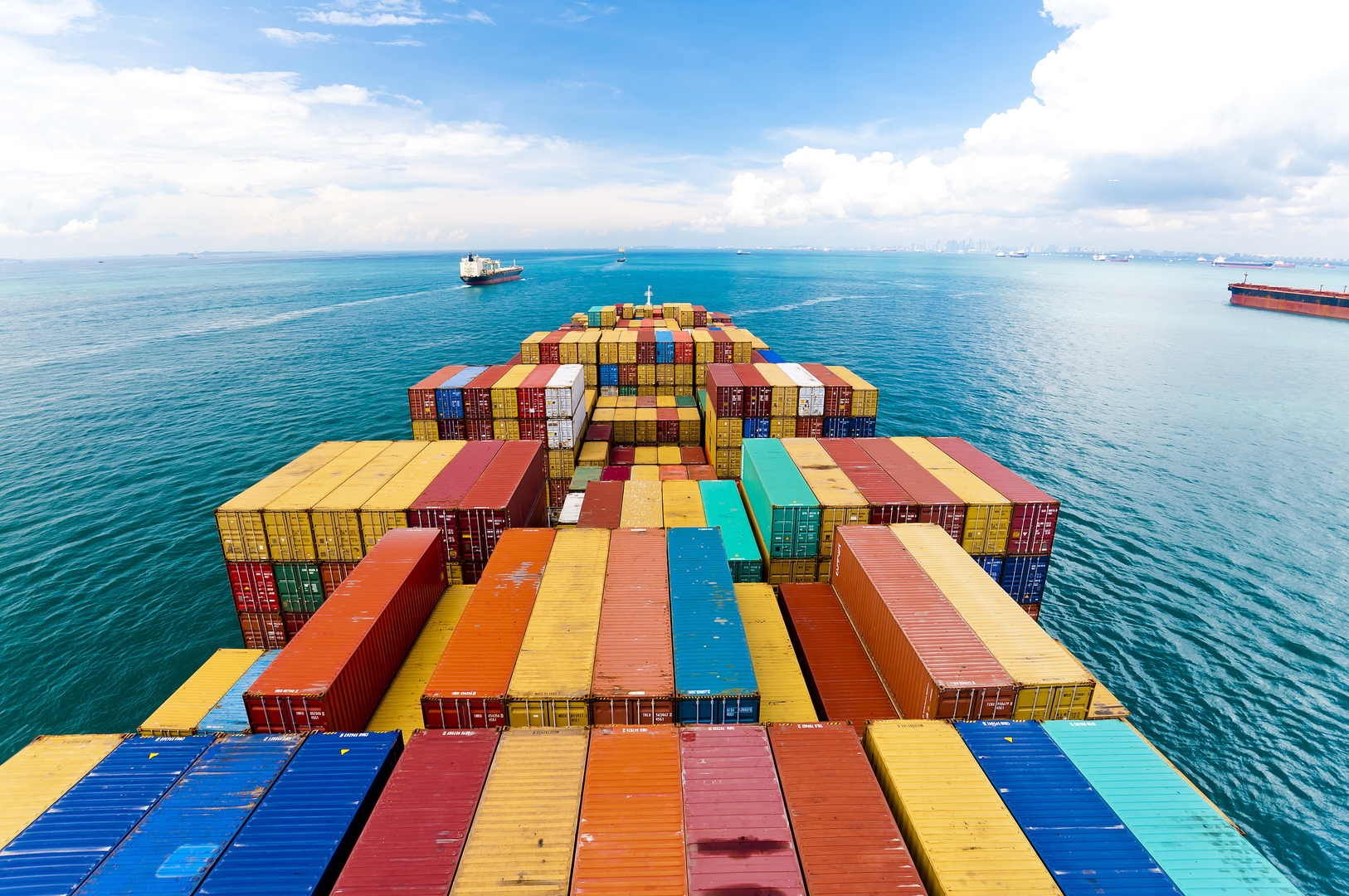
At the beginning of February, 9% of the global maritime fleet was affected by congestion. In total, the equivalent of over 2.8 million twenty-foot equivalent units (TEU) was blocked. Experts from DSV – Global Transport and Logistics have analyzed the current situation in seaports, with a particular focus on the European perspective. What consequences might this have for Polish companies?
Congestion is a global problem
As analyses by sea freight experts at DSV – Global Transport and Logistics show, high levels of congestion—meaning port overload leading to extended vessel waiting times at anchorages—are being observed on all continents. The reasons for this phenomenon vary by region.
In Central American countries and Mexico, the number of days ships must spend at anchor is reaching extreme levels. For example, at the port of Ensenada, waiting times have at times reached 22 days. The cause in this case is the disproportionate pace of port infrastructure development relative to volume growth.
In February, major delays also affected the ports of Norfolk and Savannah on the US East Coast—due to difficult weather conditions, waiting times for entry reached 6 days.
Important from the perspective of supplies for European and Polish importers, Chinese ports in Shanghai, Ningbo, and Qingdao had slightly lower, yet still relatively high, anchorage waiting times of 2-3 days. This was largely due to the dynamic growth in demand for transport from Asia. According to the latest available data, from January to November 2024, demand for freight to Europe increased by 8%, and to North America by as much as 15%.
In the case of European ports, where, for example, the waiting time for container ships to enter the Port of Rotterdam in February was as high as 5 days, the source of congestion is the inability to sail through the Suez Canal. Although shipowners have adjusted all vessel routes to sail around the Cape of Good Hope, local ports in South Africa, which have become a key transshipment point, have been overwhelmed by the additional volume. This overload, combined with the longer route, translates into a higher number of delays that destabilize port operations.
Congestion negatively affects business stability
Regardless of the reasons, the effects of congestion are felt directly by all companies that import or export goods using sea freight. Delivery delays associated with port overload can result in exporters losing contractors and facing very high financial penalties for failing to meet contractual deadlines. Importers, in turn, may experience reduced product availability, which can even lead to the interruption of their business continuity.
The risks associated with congestion—for both the sender and the recipient—are well illustrated by the automotive industry. In this sector, it is standard practice to charge penalties, often exceeding hundreds of thousands of dollars, for every hour of delivery delay. This is because many manufacturing companies maintain very lean inventories. This means that a failure to deliver components on time creates a risk of lost operational continuity for one party and costs of interrupting production processes, while for the other, it can lead to penalties that, in extreme cases, could disrupt the company’s financial liquidity.
For Europe, the situation in the Red Sea is key
In Europe, the most important cause of congestion for many months remains the situation in the Red Sea. The ongoing activity of the Yemeni Houthis, who continue to prevent safe freight via the Suez Canal, forces shipowners to change how they manage connections between Asia and the Old Continent. Instead of using the fastest possible route, ships are sailing around Africa.
In addition to the aforementioned delays caused by the longer route and the overload of ports in South Africa, a major challenge for European ports is the increase in the number of smaller vessels arriving in Europe. This is due to the operational model adopted by shipowners, under which a large batch of containers from Asia is transported to the South African Port of Durban and transshipped onto smaller vessels that sail to their final destinations.
At the same time, in the assessment of the DSV expert team, a potential return of shipping to the Suez Canal will not cause the situation in European ports to improve immediately. In the first few weeks, it might be… quite the opposite.
Ships that set off via the Suez Canal route will reach Europe up to twice as fast, which will translate into an increase in the number of vessels requiring service. European ports are not currently prepared for such an increase. According to experts, clearing the resulting congestion could take up to about 3 months.
Rates are currently falling
Interestingly, despite the high level of port load, freight rates are currently on a downward trend. This is due, among other things, to an increase in available cargo space. In January 2025 alone, 34 new ships were delivered, increasing global transport capacity by an additional 175,530 TEU. As a result, the active container fleet has reached a record level of 26 million TEU.
For example, according to the SCFI index, which shows the average cost of freight departing from the port of Shanghai, at the local peak in early December 2024, one had to pay $3,030 to transport a container. At the beginning of February, the same index indicated a price of $1,805, which means a 40% drop in about 2 months.
As DSV experts point out, no significant decrease in global congestion should be expected in the coming weeks. In the current situation, entrepreneurs importing and exporting goods should monitor the current offerings of individual carriers in terms of available transport space, punctuality levels, and offered rates in order to optimize their shipments.
Source: DSV – Global Transport and Logistics