The latest study, conducted by Roland Berger and FM Logistic, identifies the challenges facing developing urban logistics.
The urban logistics market will grow by an average of 8 percent annually until 2030, experts predict in a study conducted by FM Logistic and the consulting firm Roland Berger. Given that road transport accounts for about 20 percent of traffic and 30 percent of carbon dioxide emissions in cities, and that logistics support for the growing e-commerce sector is very difficult when its infrastructure is fragmented, it is easy to conclude that action must be taken to ensure urban logistics operates in accordance with sustainable development principles. The study “Urban logistics faced with economic and environmental challenges” was based on internal analyses and a series of 20 interviews with experts in the field of urban logistics and freight forwarders operating in various industries. It points to the collaboration of private logistics companies, IT firms, and state and local authorities as the only way to ensure the optimization of goods flow into and within cities, while simultaneously meeting customer needs.
More home deliveries
10 percent of city residents in the 13 countries covered by the study receive one parcel per day. More than one-third (37 percent) of city residents in France use home delivery for groceries, with this rate reaching as high as 60 percent in Paris. As part of the fight against air pollution, more and more cities are passing regulations restricting the use of vehicles powered by liquid fuels. From Copenhagen to Stuttgart and Paris, cities across Europe are planning to introduce or are already implementing bans on diesel-powered vehicles.
Three steps toward a sustainable economy
The study results point to three opportunities for optimizing the efficiency of the logistics industry in urban areas:
– introducing common standards, for example regarding parcel dimensions, to streamline handling operations;
– sharing storage and transport resources among individual entities;
– optimizing the use of existing urban infrastructure: using bus lanes for goods transport at night, multimodal transport (combining road, rail, and sea transport), etc.
Where to invest?
The study also describes three investment priorities in the area of new technologies:
– collecting and sharing data on urban spaces to ensure better route planning and parcel tracking;
– automating warehouse operations to increase speed and improve order fulfillment accuracy;
– using environmentally efficient means of transport (vehicles powered by electricity, gas, or hydrogen) that provide high operational value and reduce the impact on the natural environment.
– Entities in the urban logistics industry must rethink their current practices together to respond to customer needs while also taking care of the economic bottom line and the natural environment – said Xavier Prévost, Director of Business Solutions and Information Systems at FM Logistic.
Important initiatives
Numerous projects have been launched around the world to optimize the flow of goods and information in urban agglomerations.
– Innovative technical and organizational solutions are emerging at every stage of the value chain, from transport and warehousing to returns management. They are changing the current way the last mile of delivery is handled by logistics companies, as well as the attitude of clients and consumers, by improving the cost-to-guaranteed-value and customer service ratio, while simultaneously reducing the impact on the natural environment – said Gabriel Schillaci, Director of Transport, Logistics, and Mobility Services at the Paris branch of Roland Berger.
The company Mole Solutions in the UK has launched a pilot project using capsules for underground goods transport in Southampton. In France, FM Logistic and the real estate company Novaxia have partnered to launch temporary logistics service centers in abandoned urban facilities. Co-financed by the Ile-de-France region, the project is called “PLUME”. In 2018, in Chapelle, an international district of Paris, “The Logistics Hotel” was opened, a multi-story warehouse with a rail terminal, enabling a reduction in road transport.
Source: FM Logistic
Read more about urban logistics:
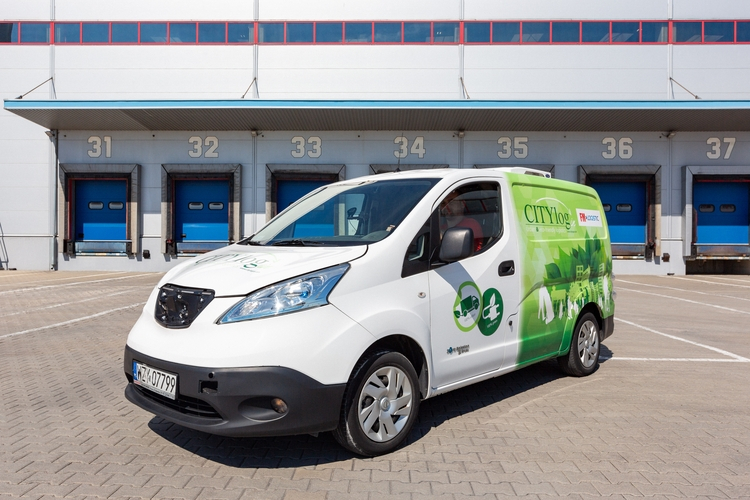
– CityLogin – ecological urban logistics by FM Logistic
– Hydrogen taxis in The Hague’s social fleet
– Underground logistics, or SEGRO’s innovative investment in Paris
We write more about last-mile logistics in the magazine Logistyka 5/2020.
The e-edition of the magazine is available in our offer!