











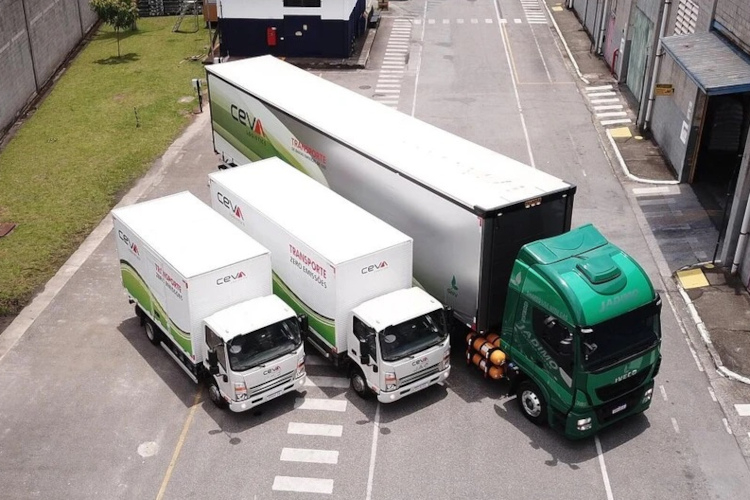
CEVA Logistics plans to expand its electric vehicle (EV) fleet to 1,450 by the end of 2025. This will be another step in fulfilling its commitment to achieving net-zero emissions by 2050.
A sustainable approach to achieving the goal
CEVA’s electric vehicle fleet will grow by 1,000 vans, 300 trucks, and 150 tractors. They will be used in CEVA’s dedicated fleet operations, LTL delivery fulfillment, last-mile pickup and delivery, as well as special projects such as the recently launched European Clean Transport Network. The expansion of the electric vehicle fleet is estimated to contribute to a reduction of 67,000 tons of CO2 emissions annually, which is equivalent to 30,000 truck trips between Paris and Munich.
CEVA is implementing an “asset-right” strategy for its electric vehicle fleet. In addition to vehicles belonging to its own operating model, CEVA will also enable selected subcontractors to transition to electric vehicles. In the case of shared networks, where trucks are not dedicated to serving a specific client, CEVA will sell CO2 emission savings certificates to clients to further support investments in the development of the electric vehicle fleet.
Knowledge through experience
CEVA has identified electric truck technology as the most promising alternative to fossil fuels and began transforming its fleet several years ago. This decision allowed the company to gain experience in operating over 200 electric vans through its subsidiary Colis Privé
and over 20 e-trucks across all continents.
An example is the use of 7 JAC iEV1200T electric trucks in Brazil since the end of 2021. These vehicles have a range of 200 km per charge and a load capacity of 3.5 tons thanks to 26 cubic meters of cargo space. After a year of use, the trucks covered over 14,000 kilometers and transported over 150,000 packages. It is estimated that their use will result in annual savings of 56 tons of CO2 emissions, which is equivalent to protecting over 1,600 trees per year.
This year, CEVA also increased its electric vehicle fleet in Thailand. They carry out deliveries for the Decathlon store chain. Both companies began cooperation in 2021 in the field of domestic ground distribution. The fleet, which initially consisted of 1 electric van, now includes 3 electric vans and 2 EVO G9 trucks with a gross vehicle weight of 16.5 tons. In 2023, the electric vehicle fleet will be strengthened by another 2 G9 trucks.
A broader approach for “Better Ways”
As part of its ground operations, CEVA is implementing various initiatives aimed at further reducing CO2 emissions. These include increasing the use of biogas and biofuels, testing hydrogen fuel cells and other low-emission heavy-duty vehicles, as well as using rail transport solutions whenever possible for full truckload shipments.
CEVA Logistics, committed to finding better ways to transport and manage customer shipments, made a commitment last year regarding the sustainability of warehouses, many of which support ground operations. By the end of 2025, thanks to an investment of 180 million USD, CEVA wants to triple the surface area of solar panels. The company will also use low-emission electricity to power all global warehouses and, by the end of 2023, 100 percent LED lighting.
– A fleet of this size of electric vehicles represents a significant and real step in our journey toward a more sustainable future. Such a large investment is possible thanks to the knowledge of the Ground&Rail teams, the commitment of the CMA CGM Group, and our clients. This decision perfectly demonstrates both our constant focus on finding better ways to transport our clients’ goods and the dedication of our colleagues at CEVA to reducing emissions in logistics operations. Change can sometimes be difficult, but innovation and learning benefit our planet while motivating our teams. We believe in the future of electric vehicles and are committed to making it a reality – says Xavier Bour, global ground leader, CEVA Logistics.