











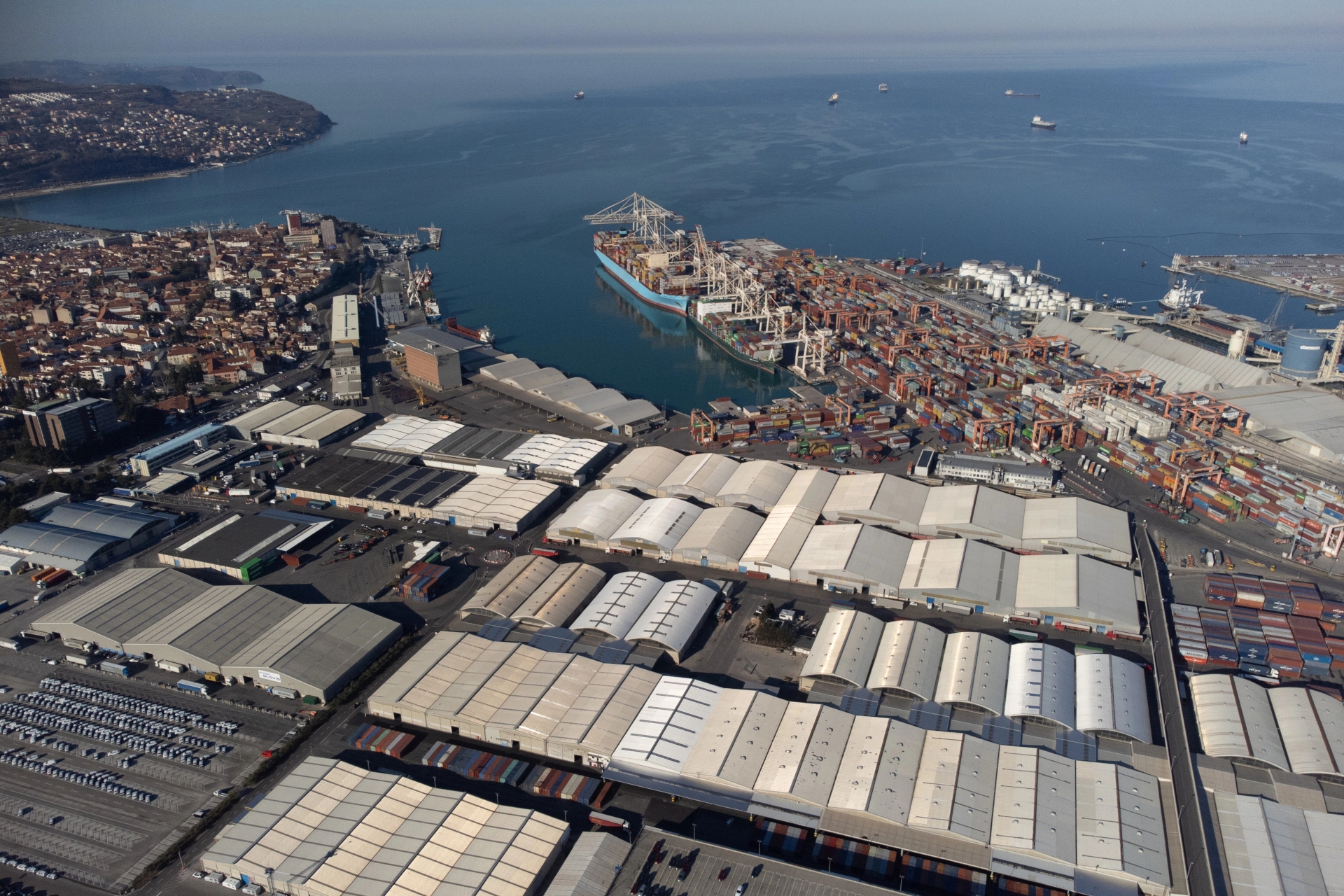
Although Slovenia’s coastline is only 44 km long, it boasts one of the fastest-growing ports in the Adriatic region. The Port of Koper has recorded strong results for another consecutive year, handling over 1.13 million TEUs in 2024 and setting a new throughput record. What drives this growth dynamic? What are the components of this success?
The Port of Koper ended 2024 with strong results, strengthening its position as the leading container port in the Adriatic. Despite the crisis in the Red Sea and numerous uncertainties, the port achieved a 3% year-on-year increase in total maritime throughput, a 6% increase in container handling, and an 8% increase in general cargo. Car transport, for which the Port of Koper is famous, was 3% lower year-on-year. This is a result of a general decline in vehicle sales, which accurately reflects the state of the industry.
Slovenia as a strategic link in global trade
The results achieved, which improve year after year, are influenced by a unique combination of strategic location, consistent investment, advanced infrastructure that enables the handling of versatile cargo (including containers, vehicles, dry and liquid bulk, general cargo, and agricultural products), and the ability to transport them further via road, rail, or intermodal transport deep into the continent.
As Rohlig SUUS Logistics, we have been present in Slovenia since 2019, with branches in Koper and Brnik, among others. We see growing customer interest in this direction, especially due to the possibility of creating flexible logistics chains adapted to the dynamically changing situation in global markets. The Port of Koper is a gateway for countries such as Hungary, Austria, Slovakia, and the Czech Republic. It is a strategic hub in two important trans-European transport corridors: the Mediterranean and the Baltic-Adriatic. The expansion of the railway line to the Port of Koper is linked to the latter connection. The main line under construction is a key project within the international Baltic-Adriatic intermodal corridor.
– notes Rok Žakelj, Operational Manager, Rohlig SUUS Logistics
Achieving the set goals will be possible by doubling the capacity of the railway line through the addition of a second track between Divača and Koper. According to the plan, after construction is completed, it will be possible to handle as many as 231 trains per day instead of the current 72. This will significantly increase the port’s efficiency and create new transport opportunities. However, due to unforeseen geological conditions requiring additional work and costs, the completion of the investment may be delayed. At the end of 2023, Luka Koper adopted a new strategic business plan for the period up to 2028, taking into account the key challenges of the coming years. The planned development is based on four pillars: increasing infrastructure capacity, accelerating the implementation of the smart port concept, ensuring appropriate human resource structures, and focusing on sustainable development while reducing negative impacts on the environment and society.
It is impossible not to notice that the growth dynamics of Adriatic ports are also influenced by geopolitical turmoil – the war in Ukraine has caused a significant portion of trade routes for Central and Eastern European countries to shift westward. Adriatic ports, including Trieste in Italy, Rijeka in Croatia, and Koper in Slovenia, have gained importance as key transshipment points for goods from Central and Eastern Europe. On the other hand, the crisis in the Red Sea poses a challenge for southern ports, which have lost their advantage over northern ports in terms of shorter delivery times to Europe. Nevertheless, despite these circumstances, the Port of Koper continues to achieve good results.
Source: Rohlig SUUS Logistics