








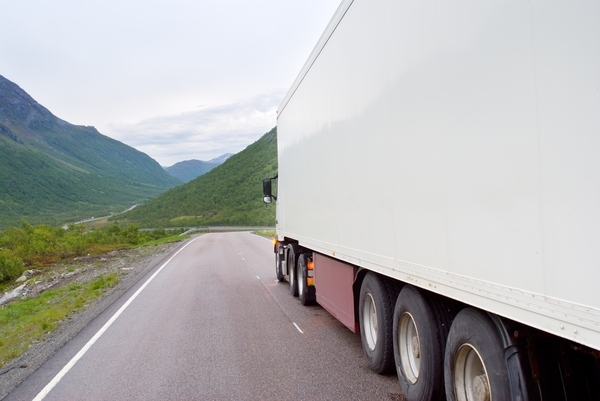
In 2017, drivers of Polish transport companies covered over 335 million tonne-kilometres (tkm)1 – the most in the European Union, of which nearly 18 million tkm was the result of cabotage operations. Journeys within a country other than the company’s headquarters increased by 38 percent compared to the previous year. Furthermore, Poland was the only member state among those actively operating in the road transport sector that managed to increase its share in European markets between 2010 and 2016.
Since 2013, cabotage has been recording the highest growth rates continuously – in terms of market value, it is currently 65 percent more than five years ago. Why, then, is it performed mainly by companies from Poland (nearly 40 percent), followed by Romania and Lithuania? Drivers from France, Austria, Italy, or Germany also like to drive short distances, so MEPs in Brussels decided to restrict internal transport markets for hauliers from Central and Eastern Europe. Is this the end of the Union of freedom and the free movement of goods and services?
– The Mobility Package is a set of rules and regulations governing the operation of transport companies in the Community states. The current legislative state leaves much to be desired and raises doubts, causing hauliers in Europe to operate in legal chaos. Over the last three years, Polish entrepreneurs have managed to adapt to the rules of the game introduced by Germany, France, or Austria, which were intended to hinder the transport business for owners of companies from Poland, Romania, or Lithuania. This mainly concerns minimum wages and the activities of inspection services abroad. Now, under populist slogans, the founding countries of the old Union are doing everything to push companies from Poland off the main trajectory to the margins of cabotage transport. Protectionism is winning over the defense of the freedoms and liberties that the same Union was supposed to ensure – comments Łukasz Włoch from the Nationwide Center for Transport Driver Accounting (OCRK).
The Democratic Republic of Cabotage
According to the latest Eurostat data, across Europe, cabotage represents 2.3 percent of all tkm performed in 2017 and 1.1 percent of tonnes of goods transported within the Union. This type of transport grew from 2.9 percent in 2013 to 4.3 percent in 2017, when it reached a result of 44.3 billion tkm. It is a type of cargo transport whose value has been growing continuously for five years. Germany remains the territory where the most cabotage is carried out in the EU. This is over twenty billion tonne-kilometres recently, which is 46 percent of the entire Community market. Second is France – 25.4 percent. And third is Italy – 5.2 percent.
The Federal Office for Goods Transport (BAG) reports that Polish transport companies increased their efficiency fivefold between 2004 and 2017. It was our domestic companies that performed the most cabotage operations within German states last year.
– Trade exchange between Germany and France, based on the largest volume of turnover in the EU, is carried out mainly by German and Polish hauliers. We are supported by Romanians and Lithuanians, as well as Spaniards. The dominance of Eastern European countries does not please politicians from the countries of the old Union, i.e., our western neighbors. Why? It turns out that their drivers do not like to set off on long and demanding routes. They are happy to return home daily or every weekend. Currently, the trend is that short cabotage is preferred, not long-distance transfers. Changes have occurred in the supply chain, which have efficiently and solidly filled trucks from Poland. Under the slogan of equal opportunities and improving working conditions, attempts are being made to limit the possibility of performing cabotage, which was created to eliminate empty runs and increase the efficiency of road transport. Now all this may change – argues Łukasz Włoch.
Uncertainty breeds anxiety
Germany, France, the United Kingdom, Spain, and of course Poland – these countries dominate in Europe and transported the most tonne-kilometres in 2017. Eurostat data shows that between 2004 and 2016, the total number of transported goods tripled, and Polish hauliers increased their importance in this sector year by year. In 2016, the share of domestic companies in international road transport was 17.1 percent, and now we are talking about a share of 25-30 percent. One might get the impression that TSL entrepreneurs are doing great and our position is secure. Nothing could be further from the truth.
– Although we dominate in so-called transfers, i.e., transporting goods within a country or countries that are not the company’s headquarters, the current balance of power may soon be shaken. Why? Nearly 40 percent of the cabotage market performed mainly in Germany, France, or the UK may turn out to be a thing of the past in two years. If the new composition of the European Parliament accepts the proposals contained in the Mobility Package in such a form, the vacatio legis period and the entry into force of the new rules, according to which companies from Central and Eastern Europe should function, is about two years. During this time, hauliers will have to prepare for changes, and thus for the loss of some orders and a significant increase in operating costs. Without support in terms of regulations and the consolidation of the Polish haulier market, many small and medium-sized businesses may collapse – says Łukasz Włoch.
According to the latest OCRK study, the moods of entrepreneurs rightly point to concerns related to the situation in the European Parliament. More and more surveyed transport company owners (58 percent) assess the future of cabotage as unfavorable and worrying.
– This is related to the fact that we are beginning to understand that the so-called Mobility Package, i.e., a set of regulations that will disrupt, among other things, the operation of Polish cabotage on the international arena, will be introduced sooner or later. One cannot count on the EU legislator withdrawing from attempts to establish new law for road transport. The only question is whether the newly elected MEPs, together with members of the Council of the European Union, will send the provisions back to the TRAN committee in order to develop good law, and not protectionist mandates of a few countries. Currently, political groups are being formed, and the first meeting is scheduled for July. The situation in the EP should be monitored on an ongoing basis and respond to every attempt to limit market freedom – concludes the OCRK expert.
1 https://ec.europa.eu/eurostat/statistics-explained/pdfscache/9217.pdf