











Interest in service robots for commercial and industrial applications is constantly growing. According to the International Federation of Robotics (IFR), 121,000 intelligent machines for professional use were sold worldwide in 2021, representing a 37% market growth compared to the previous year. Their application is possible in many areas: from the hospitality and restaurant industry to medical technology, agriculture, and industrial cleaning.
The functionality of mobile robots is largely determined by software, the creation of which requires extensive knowledge in the field of robotics and is often associated with high costs. Thanks to the new software platform from Bosch, the automation of service robots can now be implemented quickly, easily, and efficiently. Machine manufacturers can therefore focus on the core of their development work, i.e., implementing a specific robot function for a given application.
“With our new software platform, we are simplifying the development of service robots and facilitating access to the growing robotics market, especially for small and medium-sized manufacturers,” said Philipp Kurek, responsible for the Off-Highway operating unit at Bosch Engineering GmbH.
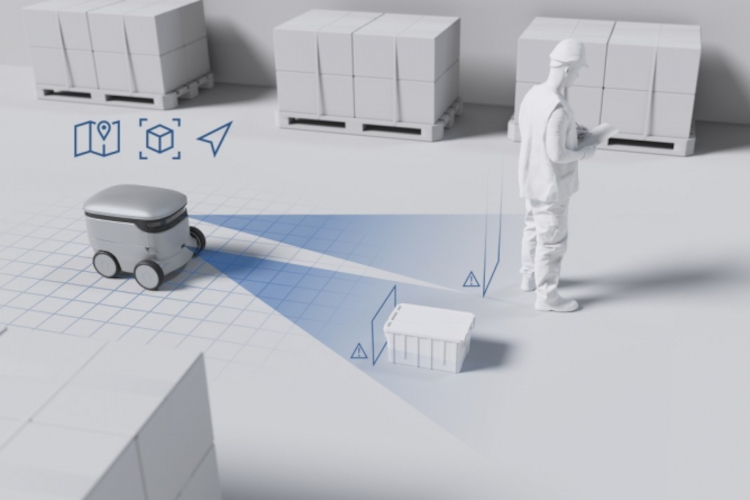
The new Bosch software platform has a modular structure and offers all the functions necessary for full robot automation in the form of three sub-elements: localization and mapping, obstacle detection, and motion planning (navigation). Individual software modules can be integrated into the robot’s control unit individually or as a synchronized package. The Bosch Group boasts vast experience and extensive research knowledge in navigation, driver assistance systems, and automation – for example, through solutions for the automotive sector.
- Modular software platform enables fast and easy development
- Bosch software facilitates access to the developing service robot market
- Highly precise and efficient function ensures safe obstacle detection and collision avoidance
- Modular software with flexible sensor connection options facilitates integration with various robotic devices
“On this basis, we have managed to create software for robots with particularly precise and efficient environmental perception, reliable signal evaluation, and intelligent navigation functions. This makes it possible to safely avoid obstacles and prevent collisions,” added Isabell Maier, Head of Automation and Robotics at Bosch Engineering GmbH.
The software parameters can be freely adjusted to the specific requirements of a given application. For example, for cleaning robots, a narrow obstacle avoidance path can be defined, while for robots transporting potentially dangerous substances (such as hot liquids), a correspondingly larger one can be set. The software also provides great freedom regarding the necessary structural components. Depending on the robot’s operating conditions, lidar sensors, cameras, or other types of sensors can be integrated into the system. Standardized Robot Operating System (ROS) interfaces facilitate the integration of software modules into the machine’s software architecture.
After about three years of development, the Bosch robot automation software has been successfully operating in a pilot application since the beginning of 2023.